
Look, I’ve sat through a lot of movies this year. Marty Supreme made me question my life choices, No Other Choice nearly gave me an existential crisis, but nothing—and I mean nothing—prepared me for the Shaker-tastic fever dream that is The Testament of Ann Lee. Picture this: 18th-century England, a group of religious radicals who believe in absolute celibacy, and yet somehow the most electrifying dance numbers of 2026. I left the theater with my jaw on the floor and my Spotify queue suddenly full of Shaker hymns. How did we get here?
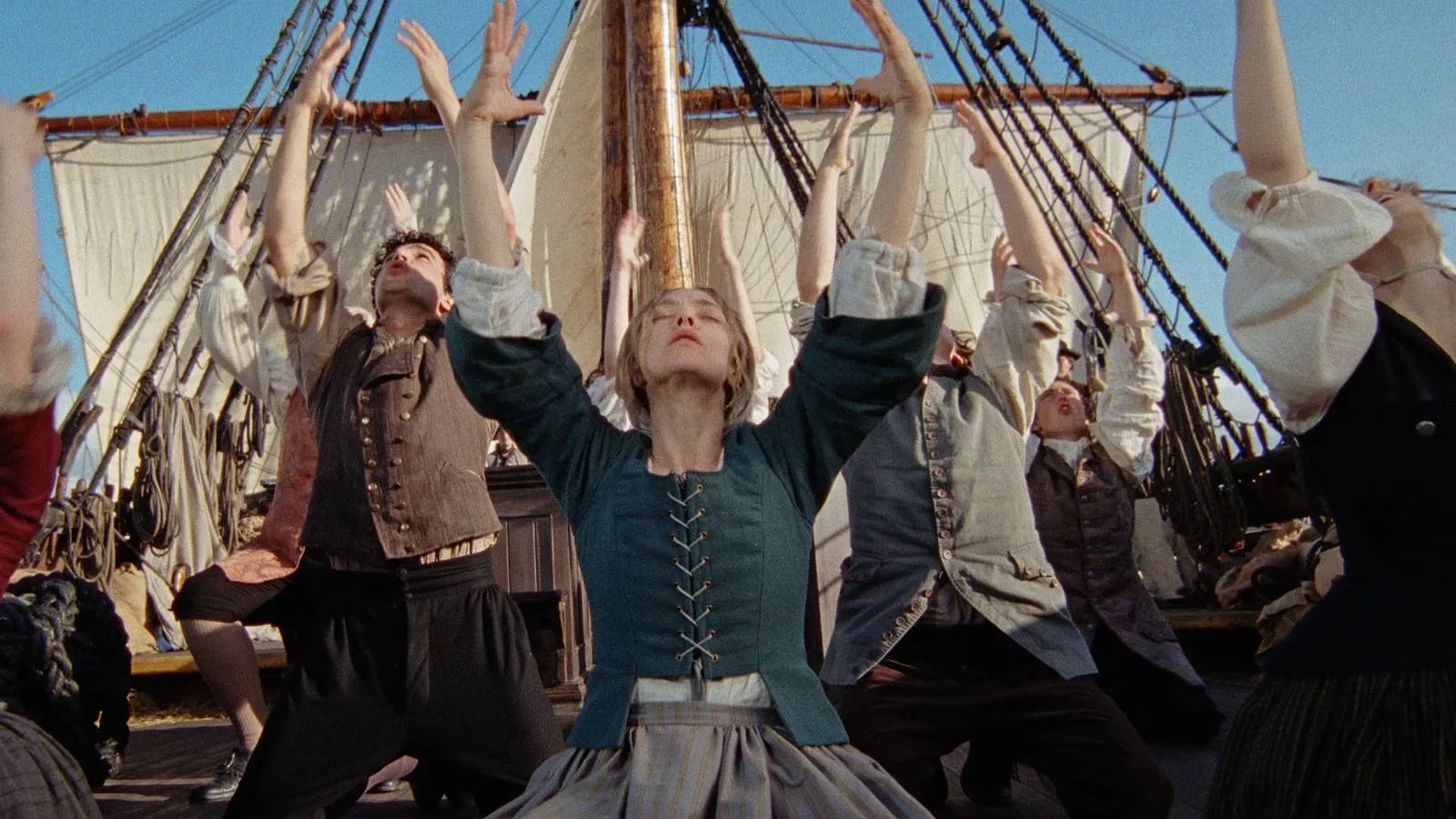
Mona Fastvold and Brady Corbet—the duo who gave us the heavyweight The Brutalist—decided to follow up their Oscar-winning triumph with something completely bonkers. A period musical biopic about Ann Lee, the founder of the Shakers, starring Amanda Seyfried in full prophetess mode. The teaser trailer dropped late last year and immediately hooked me. It wasn’t the usual costume-drama snoozefest; it was sweaty, trembling worshippers whirling on a boat, Seyfried’s piercing eyes cutting through the frame, and Daniel Blumberg’s score rattling my bones. I knew I had to witness this in a theater.
Fast forward to January 2026. Venice Film Festival buzz had already earned it a perfect 100% on Rotten Tomatoes before settling at a still-spectacular 88%. Critics raved about Seyfried’s performance, calling it a career high. As someone who’s watched her slay in Les Misérables and Mamma Mia!, I thought I was ready. I was not ready. Seyfried doesn’t just play Ann Lee—she becomes a force of nature, radiating sorrow, ecstasy, and terrifying certainty. When the Shakers start believing she’s the Second Coming of Christ, you kind of buy it, even if your rational brain is screaming, “This is absolutely batty!”
The film’s secret weapon? The music. Blumberg wove actual 19th-century Shaker hymns together with original songs, creating something that feels ancient and avant-garde at the same time. Imagine a Wes Anderson acid trip choreographed by someone who’s spent way too much time researching religious ecstasy. There’s stomping, spinning, and harmonies so haunting that I’m still humming them three months later. Thomasin McKenzie narrates as the devoted disciple Mary Partington, her voice a gossamer thread guiding us through the madness, while Lewis Pullman’s William Lee simmers with unhinged devotion. The whole cast dives headfirst into the discomfort of celibacy, divine visions, and the sheer physicality of Shaker worship.
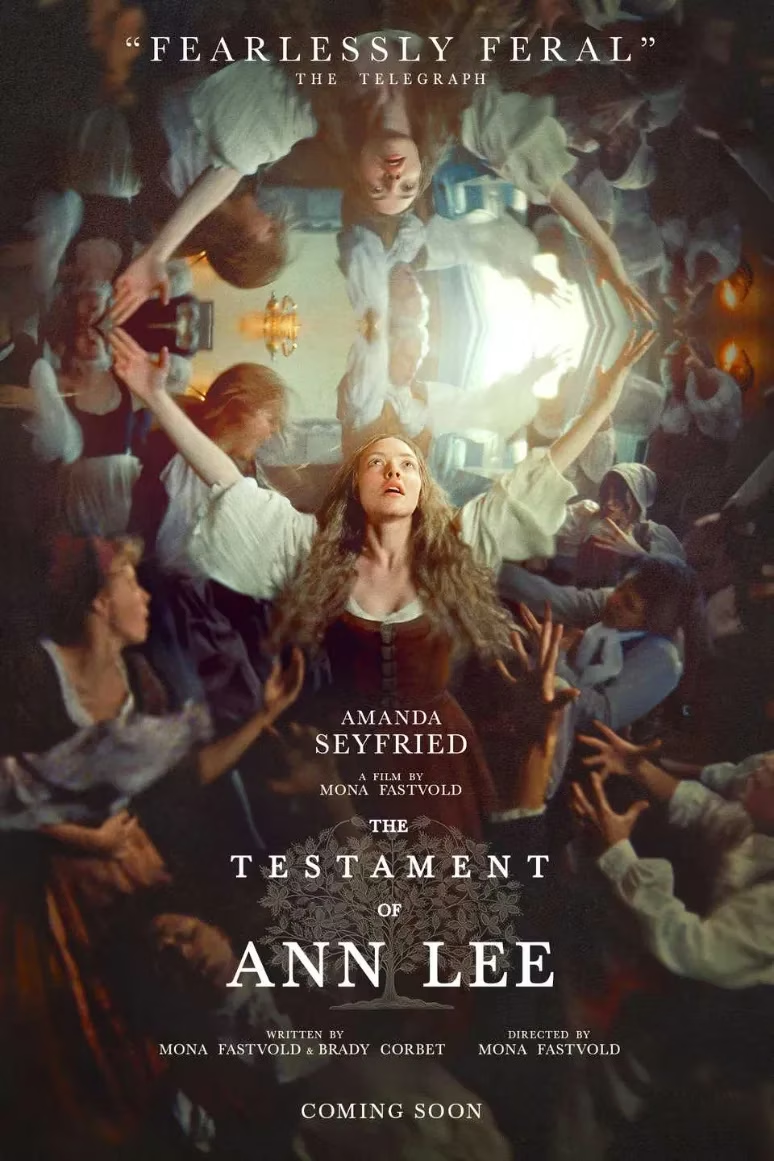
Let’s be honest: 2026’s awards season is a bloodbath. Cynthia Erivo and Jessie Buckley are breathing down Seyfried’s neck for Best Lead Actress, and I’m already losing sleep over the snubs. Ann Lee might get edged out of the big categories because this year is so stacked, but I’m betting it snags nods for Costume Design, Production Design, and—please, Academy, use your ears—Sound Design. The way the theater rumbled during the worship scenes made me feel like I was on that boat, seasick and spiritually unmoored.
Christmas Day 2025 was a ridiculous release date. While families were unwrapping slippers, I was unwrapping my psyche in a dark room with 100 strangers. It faced off against Marty Supreme and No Other Choice, and while it didn’t make bank like those blockbusters, it carved out a devoted cult following. People who need their musicals to be more than jazz hands and high kicks found their holy grail. The fact that the Shakers practiced celibacy yet produced some of the most ecstatic art I’ve ever seen is a divine joke I’m still chuckling about.
If you haven’t seen it yet, track down a screening near you. Don’t expect a tidy biopic. Expect a ritual. Expect Amanda Seyfried making you believe in miracles, even if you’re a hardened cynic like me. And maybe bring a friend who won’t judge you for tearing up when the final hymn hits. I’m not saying The Testament of Ann Lee saved my soul, but I haven’t danced the same since.