
I'm telling you, it's an absolute travesty! Here we are in 2025, with Avatar: Fire & Ash once again blowing minds and breaking box office records, and the acting community is still being treated like they're just fancy motion-capture puppets. It's infuriating! The Academy has showered James Cameron's epic sci-fi saga with technical Oscars—13 nominations and 4 wins across the first two films—but when it comes to honoring the beating heart of these movies, the actors who pour their souls into these digital avatars, there's just a cold, blue wall of silence. It's like they're saying the breathtaking visuals of Pandora were created in a vacuum, completely ignoring the human emotion that makes us care about this world in the first place.
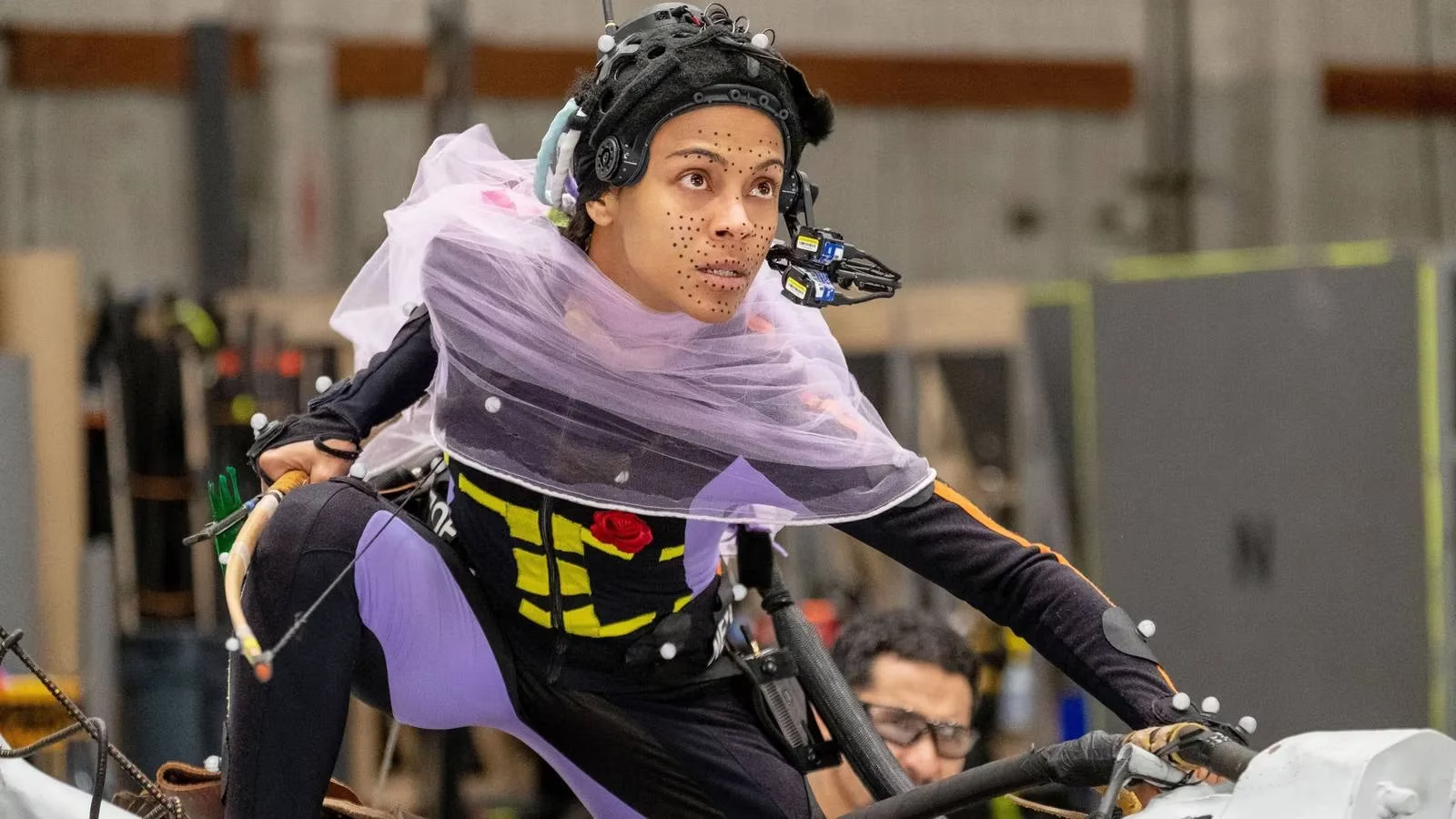
Let's get something straight. The Academy's snub isn't just about Avatar; it's about a fundamental, and frankly outdated, misunderstanding of what film acting is. Think about it! They act as if a "pure" performance is one captured in a single, uninterrupted take with zero interference. But that's a fantasy! Every single film performance is a construction. It's filmed out of sequence, over weeks or months, pieced together from dozens of takes, and then shaped in the editing room with music and camera angles. So why is painting an actor blue and putting dots on their face seen as some kind of contaminant, while lighting, makeup, and editing are celebrated tools of the trade? It makes no sense! This prejudice goes way back—they used to look down on actors who wore heavy prosthetics, too, until legends like John Hurt in The Elephant Man proved the soul could shine through anything.
And oh, the soul on display in Fire & Ash! People call the story "elemental" or "simplistic," but I call it a canvas for raw, primal emotion. The movie doesn't work unless you feel it, and that feeling comes directly from the cast. Sam Worthington's Jake Sully carries the weight of two worlds on his shoulders, and you see every ounce of that burden in his eyes, even if those eyes are rendered in CGI.
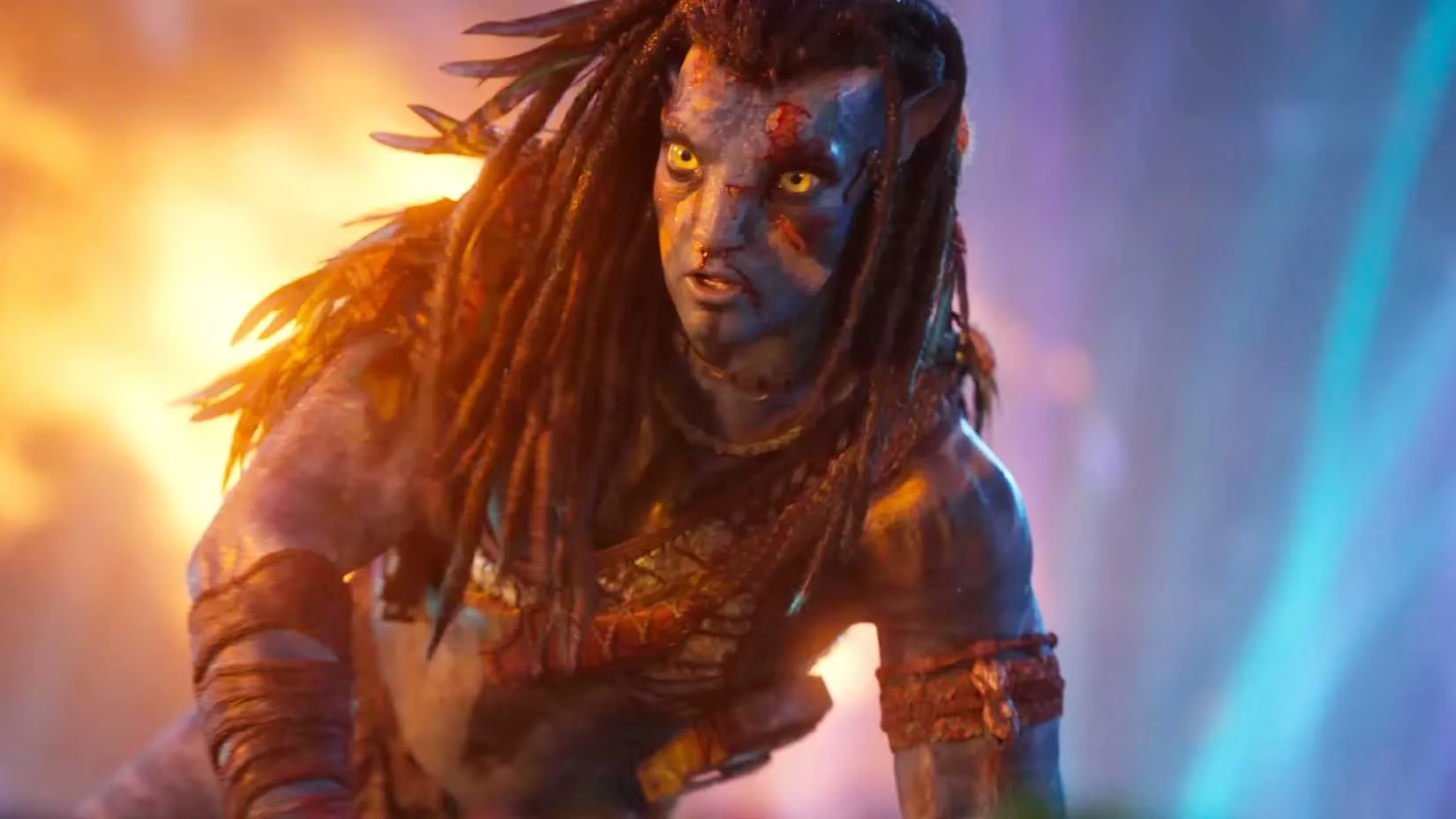
But let's talk about the real scandal of this awards season: Oona Chaplin as Varang. I was floored. Her performance is a masterclass in charismatic villainy. She's fierce, unpredictable, and utterly captivating. In any other movie—any movie where she wasn't a ten-foot-tall, blue alien—this would be the performance everyone is talking about. The narrative writes itself: a scene-stealing turn from the talented granddaughter of Charlie Chaplin, finally getting her due! But because she's a Na'vi? Crickets. It's a supporting actress campaign that should be a lay-up, and the Academy is just refusing to take the shot.
The hypocrisy is staggering. They call performance capture "digital makeup" to try and compartmentalize it. But ask yourself: what's the real difference between the performance that brings Gollum to life and the one that brought John Merrick to life? If an actor makes you believe in a character, makes your heart race or brings a tear to your eye, does it matter what tools were used to translate that performance to the screen? The answer should be a resounding NO.

And don't even get me started on Zoe Saldaña. This is a woman beloved by Hollywood, a cornerstone of two of the biggest franchises in history. Her portrayal of Neytiri is the defining role of her career—a fierce, maternal, warrior spirit that has grown and deepened with each film. If the Academy thinks it's less "embarrassing" to give her an award for a live-action role like Emilia Pérez (as fantastic as she was in that) than to recognize the decade-plus of iconic work she's done as Neytiri, then they have completely lost the plot. As this franchise continues, this oversight is only going to look more and more ridiculous.
Here's my hope, though. I think change is coming, and it's going to be forced by the very technology the Academy seems to fear. Right now, the biggest debate in Hollywood isn't about blue aliens—it's about AI actors, or "synthetic performers." As studios and unions clash over the use of AI to replace human actors, we're going to have to have a serious conversation about what makes a performance human. What is the irreplaceable spark that an actor brings?
To answer that, they'll need to look at the very frontier where human and digital merge. They'll need to appreciate the nuance Sam Worthington brings to Jake's weariness, the ferocious love Zoe Saldaña imbues in Neytiri, and the chilling menace Stephen Lang resurrects in Quaritch. When we're faced with the prospect of performances generated entirely by algorithms, the monumental achievement of these Avatar actors will suddenly become crystal clear. They are not just providing data points; they are providing humanity.
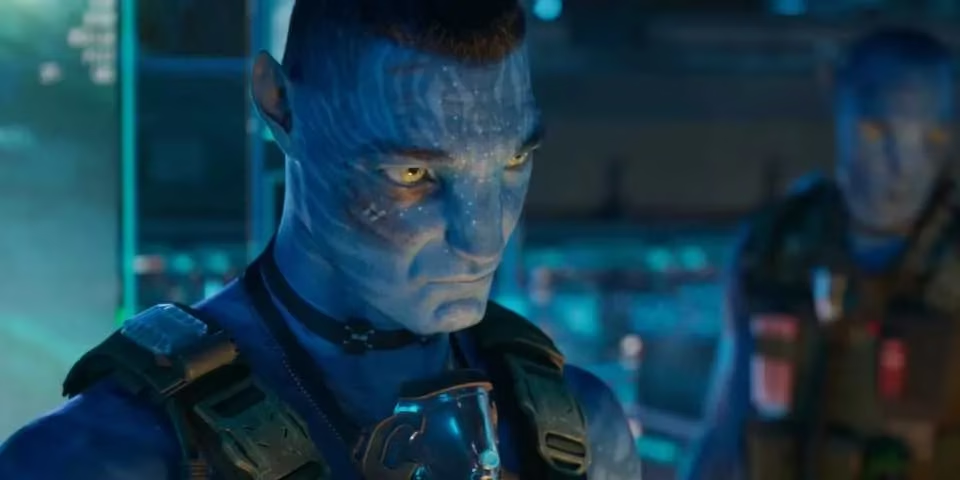
The evidence is right there on screen in Fire & Ash. Just look at the emotional beats that land the hardest:
-
🎭 The quiet moments: Jake and Neytiri sharing a worried glance, communicating volumes without a word.
-
🎭 The explosive anger: Neytiri's snarl of protection, all teeth and fury, fueled by Saldaña's raw intensity.
-
🎭 The villainous charm: Varang's sly smile, which Chaplin delivers with a wit that transcends the digital rendering.
-
🎭 The physical struggle: Every arrow drawn, every leap through the forest, originating from a real actor's physical commitment.
This isn't just animation. This is human experience, digitally translated. The Academy's continued refusal to see this is, in 2025, not just an oversight—it's an active rejection of where cinematic performance is headed. They are honoring the paintbrush but ignoring the painter's hand. It's time to wake up. The actors of Pandora have earned their place at the table. It's long past time the Oscars set a seat for them.