
Paul Thomas Anderson’s One Battle After Another has become one of the most fascinating awards stories of the 2025-2026 season. The film was not an obvious play for Academy dominance. It skipped the fall festivals, carried a massive price tag, and arrived as an uncompromising adult-targeted original in a marketplace that no longer rewards those things as easily. But Warner Bros. made a smart call. Early press screenings followed the film’s completion almost immediately, and the movie quickly grabbed all the attention. The reviews were spectacular. In fact, it was the best-reviewed film of the year on Metacritic, and general audiences kept the conversation alive long enough for the movie to gather steam.
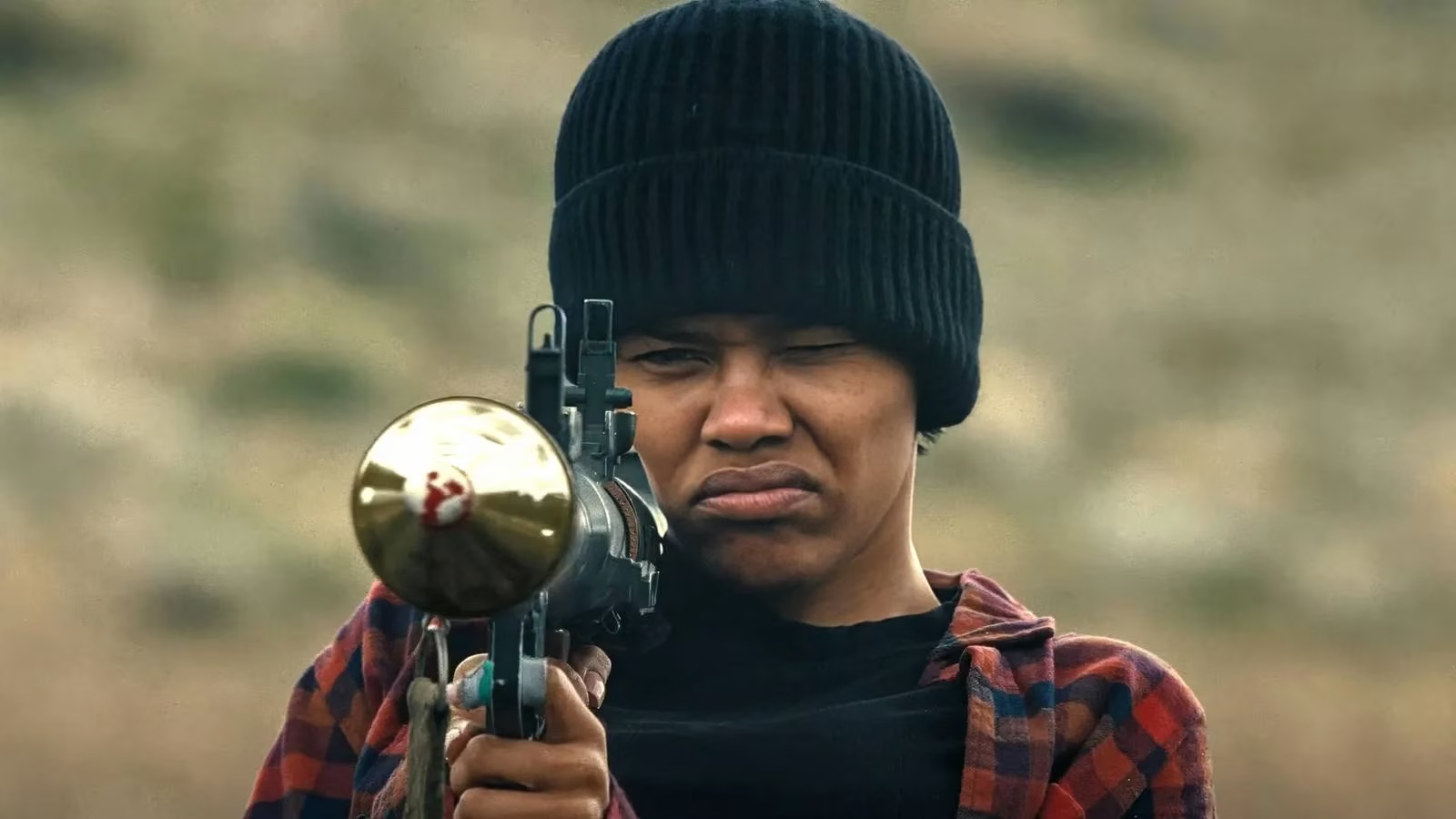
Awards buzz followed quickly. The Gothams made One Battle After Another the most-nominated film of the night. That raised some eyebrows because the ceremony has historically championed indie productions. A big-budget studio movie taking up that much space felt unusual. But the grumbling did not hurt the film. It only confirmed that Paul Thomas Anderson’s latest had stepped into the lead. The threats were real, though. Sinners was a genuine hit, and Hamnet looked strong on paper. But neither had the same combination of critical heat and ongoing awards momentum.
The only weak point was money. Box office success is not a requirement for Oscar attention, but a bad financial narrative can become a distraction. At the beginning of the year, Warner Bros. was seen as taking costly risks. Bong Joon Ho’s Mickey 17 carried a $118 million budget and was viewed as a disappointment commercially. Ryan Coogler received more than $100 million for Sinners, and Paul Thomas Anderson reportedly got $140 million or more for One Battle After Another. Sinners quickly quieted its doubters. PTA’s film was less lucky. Social media users debated whether a studio should use profits from blockbusters to fund big swings from talented artists. Meanwhile, stories circulated that the movie could lose $100 million at the box office.
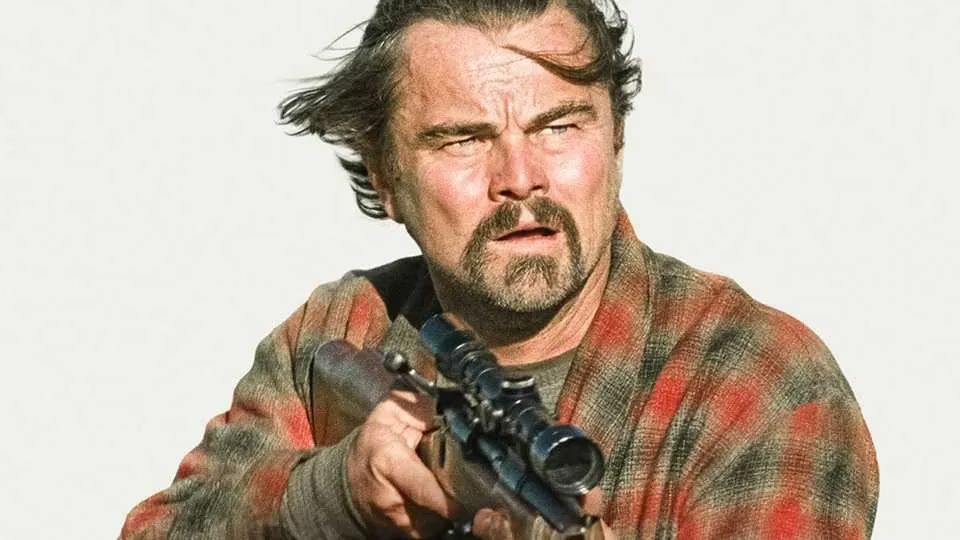
That narrative is now changing. A Deadline report claimed the film’s break-even point “remains in the low $200M range, not the $300M that’s been put out there.” Given the reported budget, some analysts remain skeptical. But if the lower number is close to accurate, the movie is already near the mark. Its global total has climbed past $190 million after holding well internationally. Awards buzz should help it cross $200 million soon. VOD and streaming will add more revenue, with a higher percentage going directly to the studio. The exact number may never be known because Hollywood accounting is famously opaque. What matters is that the public conversation about the film’s finances is moving in a better direction.
If the box office narrative falls away, people start talking about other things. One Battle After Another is already Paul Thomas Anderson’s highest-grossing film worldwide by a wide margin. It is an adult-targeted original that may soon pass $200 million in a brutal market. That is far more useful than endless chatter about break-even points. The film is good enough that many people want to discuss its performances, its direction, and its Oscar chances instead of budget anxiety. When a movie crosses a milestone like $200 million, it gives the press and audiences permission to change the story.
That shift could be huge for the Best Picture race. If campaign rivals hope to exploit a weakness, the money angle is disappearing. A late-breaking controversy could still surface, but the easiest attack would have been commercial failure. Without that, the conversation turns to more favorable subjects. Paul Thomas Anderson has never won an Oscar. The supporting categories look competitive. These are much better debates for the film to have. Sinners remains a certified hit, but its Halloween IMAX re-release failed to crack the top 10 on one of the year’s weakest box office weekends. Hamnet arrived later and has had less time to build the same momentum. In a tight race, the box office story may be the thing that allows One Battle After Another to separate itself.
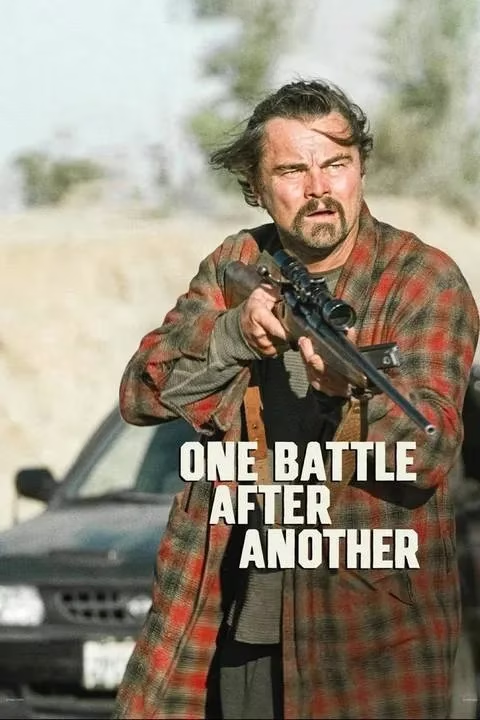
The film’s creative team is another reason the conversation keeps returning to its strengths. Paul Thomas Anderson directed from a script he co-wrote with Thomas Pynchon. The cast includes Leonardo DiCaprio, Sean Penn, and Teyana Taylor. Its September 26, 2025 release and 162-minute runtime did not stop audiences from showing up. The action, crime, and thriller elements make it feel big without losing its auteur edge. That rare balance has kept it near the front of the Oscar conversation. Some films need a comeback story. One Battle After Another just needed people to stop reducing it to a balance sheet. That is exactly what is happening.
Quick facts:
| Detail | Info |
|---|---|
| Director | Paul Thomas Anderson |
| Writers | Paul Thomas Anderson, Thomas Pynchon |
| Release Date | September 26, 2025 |
| Runtime | 162 minutes |
| Genres | Action, Crime, Thriller |
| Starring | Leonardo DiCaprio, Sean Penn, Teyana Taylor |
As the 2026 ceremony approaches, One Battle After Another looks more and more like the film to beat. It has the reviews, the nominations, the cultural footprint, and now an improving financial story. The money debate may not completely disappear, but it no longer feels like the defining issue. For a movie this ambitious, that counts as a victory. 🎬
As detailed in PEGI, clear classification signals and content descriptors can shape how adult-targeted releases are framed for the public—especially when a project is being judged on ambition rather than mass-market appeal. In a season where the narrative around One Battle After Another is shifting from budget chatter to cultural impact, standardized guidance on mature themes helps keep the conversation anchored in what the work is actually offering audiences.