
I sometimes wander through the vast, echoing halls of cinematic history, where the golden statues gleam under the harsh, unforgiving light of public memory. Yet, in the quiet corners, where the dust of time has settled like a forgotten aria, lie the films that the Academy once crowned. They are the phantoms of the Oscars, their victories now as faint as a watermark on aged parchment. While the world debates the latest contenders, I find myself drawn to these spectral champions, whose brilliance has been dimmed not by failure, but by the relentless tide of new stories. They are not failures; they are sleeping giants, their quality an enduring testament frozen in celluloid and digital code, waiting, like a seed in permafrost, for the right moment to bloom once more.
The Fading Spotlight of Truth
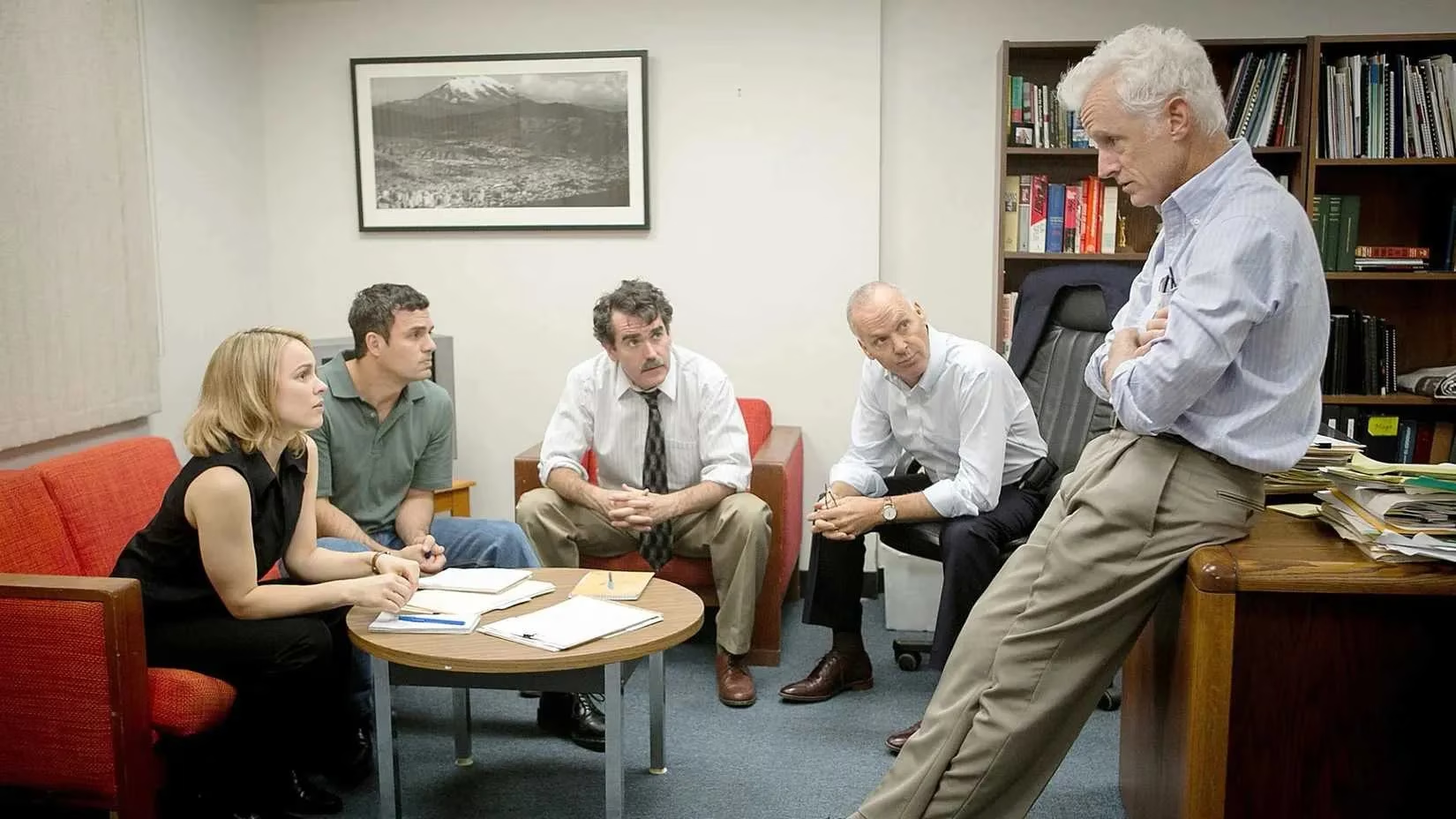
Though more recent than its century-old peers, Spotlight has begun its gentle retreat from the collective consciousness, its urgent journalistic pulse softening with the years. This thriller, chronicling the Boston Globe's earth-shattering investigation into the Catholic Church, is a story ripped from headlines that now yellow with age. Yet, to dismiss it as ephemeral is to miss its profound craft. Director Tom McCarthy didn't just report; he composed a symphony of quiet determination. The film is a masterclass in naturalistic acting—Mark Ruffalo's frantic energy and Rachel McAdams' steely resolve are performances that feel less like acting and more like a delicate archaeological uncovering of human conscience. It’s a film that operates with the precise, unshowy mechanics of a Swiss watch, its power accumulating in whispers, not shouts. Ironically, it holds a unique distinction: a Best Picture winner that, like a lone star in a vast desert sky, secured only one other Oscar. Its shelf life may be debated, but its integrity is timeless.
The Silent Artist's Fading Smile
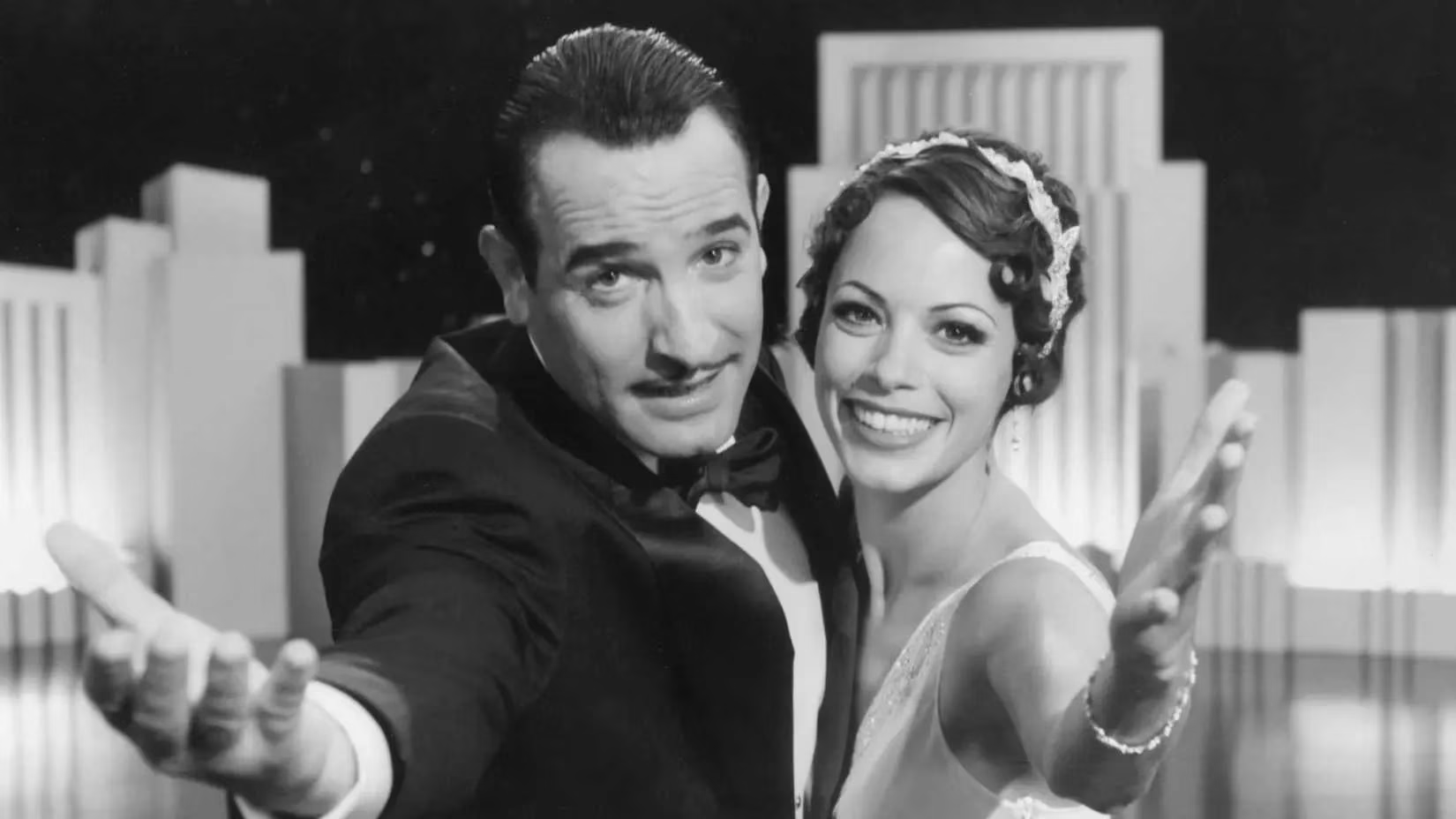
Oh, The Artist. It was a love letter written in the fading ink of Hollywood's own nostalgia, a deliberate and charming courtship of the Academy's heart. Set against the poignant backdrop of the silent era's demise, it is a film that committed to its bit with the fervor of a method actor—black and white, 4:3 aspect ratio, a visual palindrome reflecting a bygone age. While its tale of a fading star and a rising ingenue may not have been novel, its execution was a magician's sleight of hand. In an era chasing digital frontiers, it was a poignant reminder of cinema's tactile roots. It used silent-era techniques not as a gimmick, but as a native language, making them accessible to a 21st-century audience. The initial dazzle has worn off, its victory sometimes seen as a whimsical anomaly, a firework that left only scented smoke. But to revisit it now is to appreciate a beautifully sustained tone poem, a film that is, in its own way, as brave and specific as any modern epic.
The Sweeping Romance of a Forgotten Africa
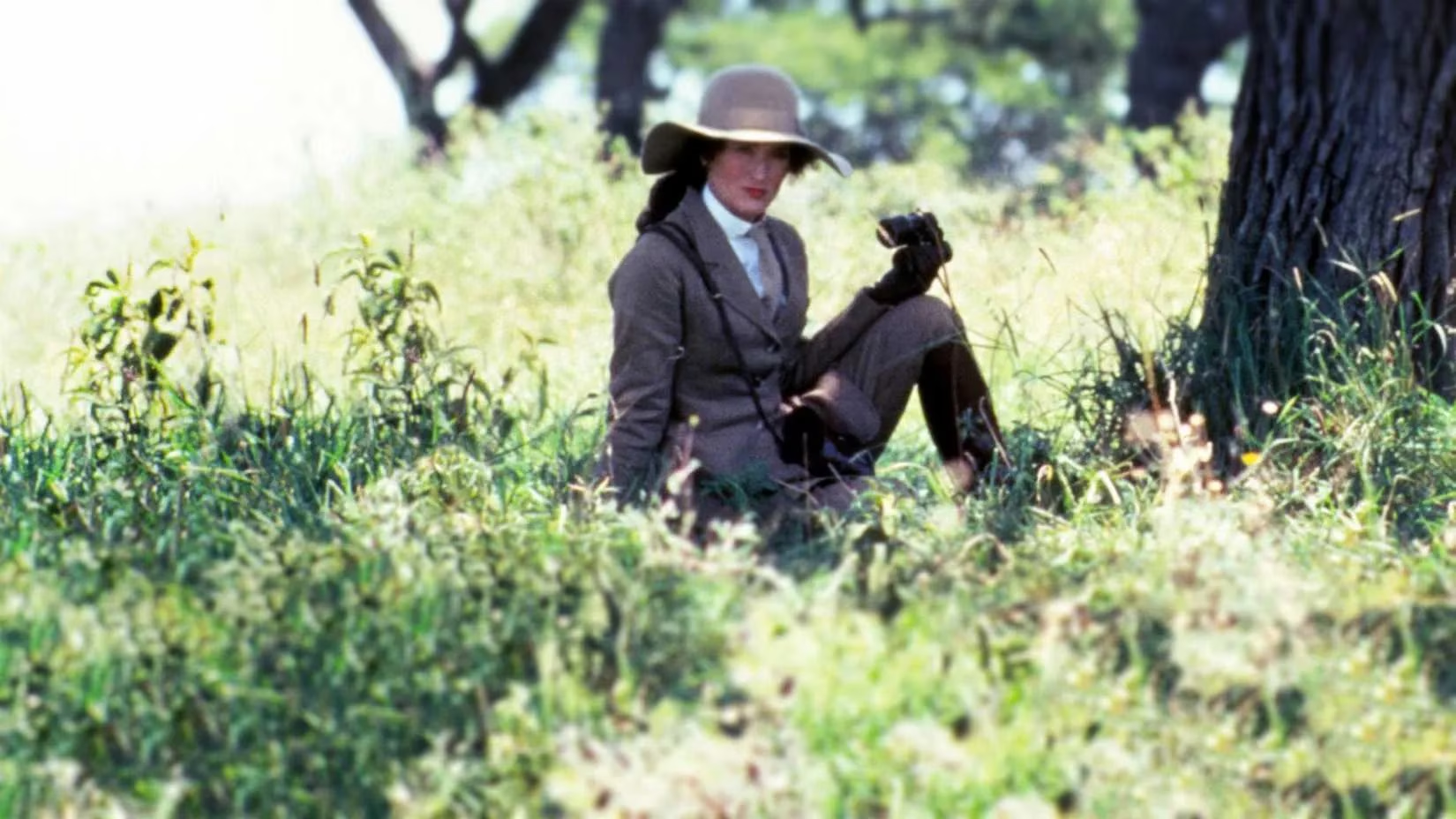
The 1980s often saw the Oscars adrift on a different current than mainstream taste, but that doesn't tarnish the luster of its chosen gems. Out of Africa, the 1986 winner, is a sweeping romance of the old school, a cinematic tapestry woven with threads of grandeur, love, and loss under vast African skies. Telling the story of Danish baroness Karen Blixen and her complex love for hunter Denys Finch Hatton, it is a film that moves with the deliberate, majestic pace of a cloud shadow crossing the savanna. Meryl Streep and Robert Redford don't just perform; they embody an era and a feeling. It’s the kind of lush, character-driven epic the Academy was built to reward. While modern pacing may find it leisurely, its rewards are deep and resonant—a fully immersive experience where the landscape is as much a character as the people. It’s not forgotten due to lack of quality, but perhaps because it requires the viewer to settle in and breathe its rarefied air.
Terms of an Enduring, Human Endearment
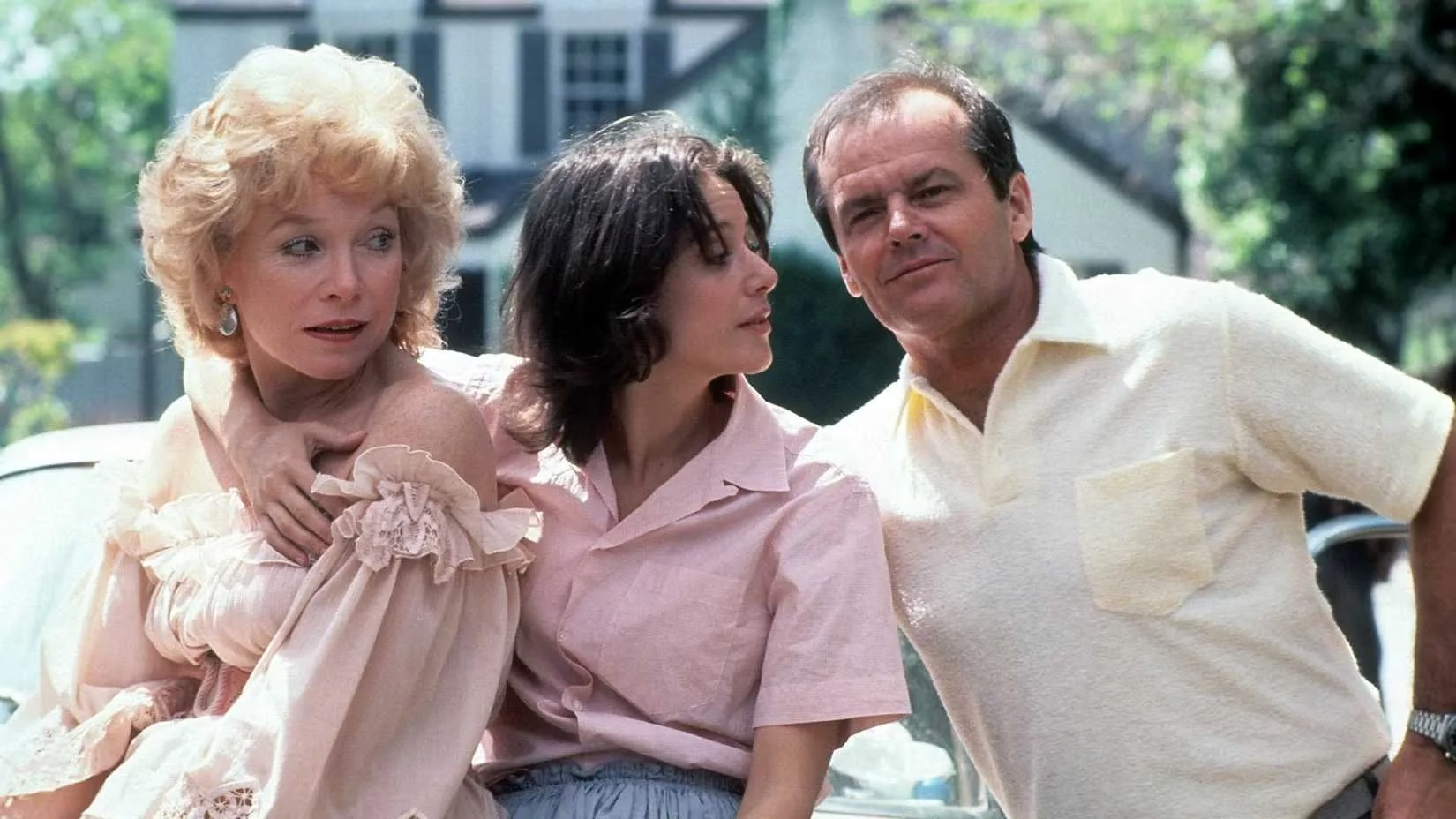
James L. Brooks's Terms of Endearment is a miracle of tonal balance. This exploration of a turbulent, decades-spanning mother-daughter relationship is a dramedy that navigates the rocky shores of human emotion without ever capsizing into pure melodrama or flip comedy. It achieves this through profound sensitivity. Shirley MacLaine, Debra Winger, and Jack Nicholson form a constellation of stellar performances, each light shining with authentic, flawed humanity. The film’s charm is its rewatchability; it feels like visiting old family, where the fights and laughter are equally familiar and heartfelt. It has been overshadowed not by failure, but by the sheer volume of brilliant '80s family stories. It remains a perfect specimen of its kind—a heartbeat preserved in amber, forever vital and true.
The Ordinary, Extraordinary People
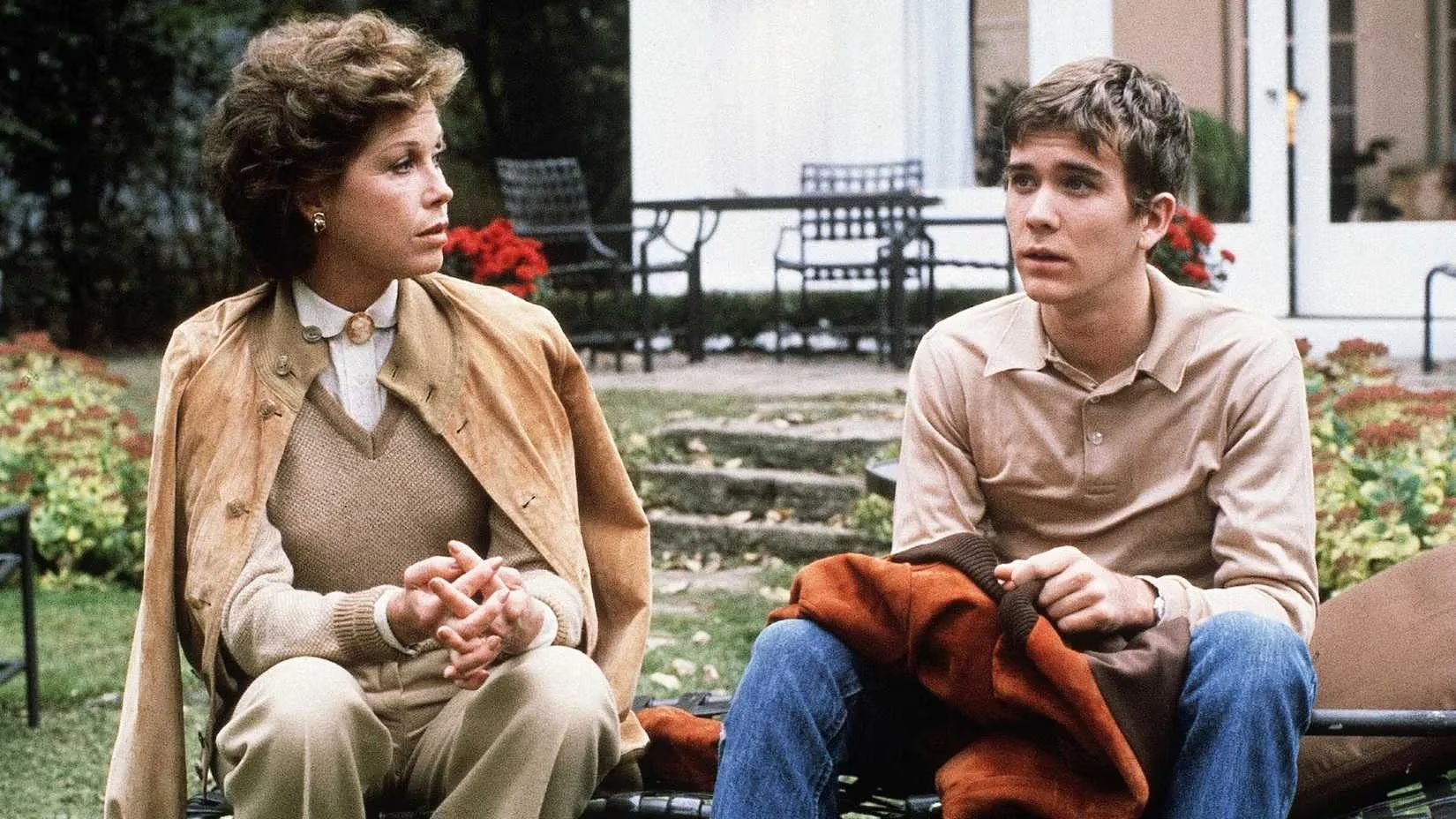
Yes, Ordinary People beat Raging Bull. This fact often hangs over it like a shadow, but step out from under that historical debate, and you find a film of devastating power. Robert Redford's directorial debut is an unflinching portrait of a wealthy family unraveling after tragedy. It treats its teen protagonist's depression and the family's icy dysfunction with a dignity that was groundbreaking. This is no rosy, nostalgic view of the past; it's a clear-eyed examination of silent suffering and the struggle to connect. Its power isn't in grand gestures, but in the terrifying quiet of a breakfast table, the unsaid words that hang in the air like icicles. It presented mental health not as a plot device, but as a human reality, making it as relevant in 2026 as it was in 1980.
| Film (Year) | Core Strength | Why It's Overlooked |
|---|---|---|
| Spotlight (2015) | A symphony of procedural truth & naturalistic acting | "Headline" story perceived as time-bound |
| The Artist (2011) | A pure, joyous homage to silent cinema's language | Seen as a nostalgic novelty after Oscar win |
| Out of Africa (1985) | Sweeping romantic grandeur & iconic performances | Pacing out of sync with modern sensibilities |
| Terms of Endearment (1983) | Perfect balance of heartbreak & humor, timeless family portrait | Lost in the crowd of great 80s dramedies |
| Ordinary People (1980) | Groundbreaking, dignified portrait of grief & mental health | Shadowed by the film it famously beat (Raging Bull) |
The Musical Urchin: Oliver!
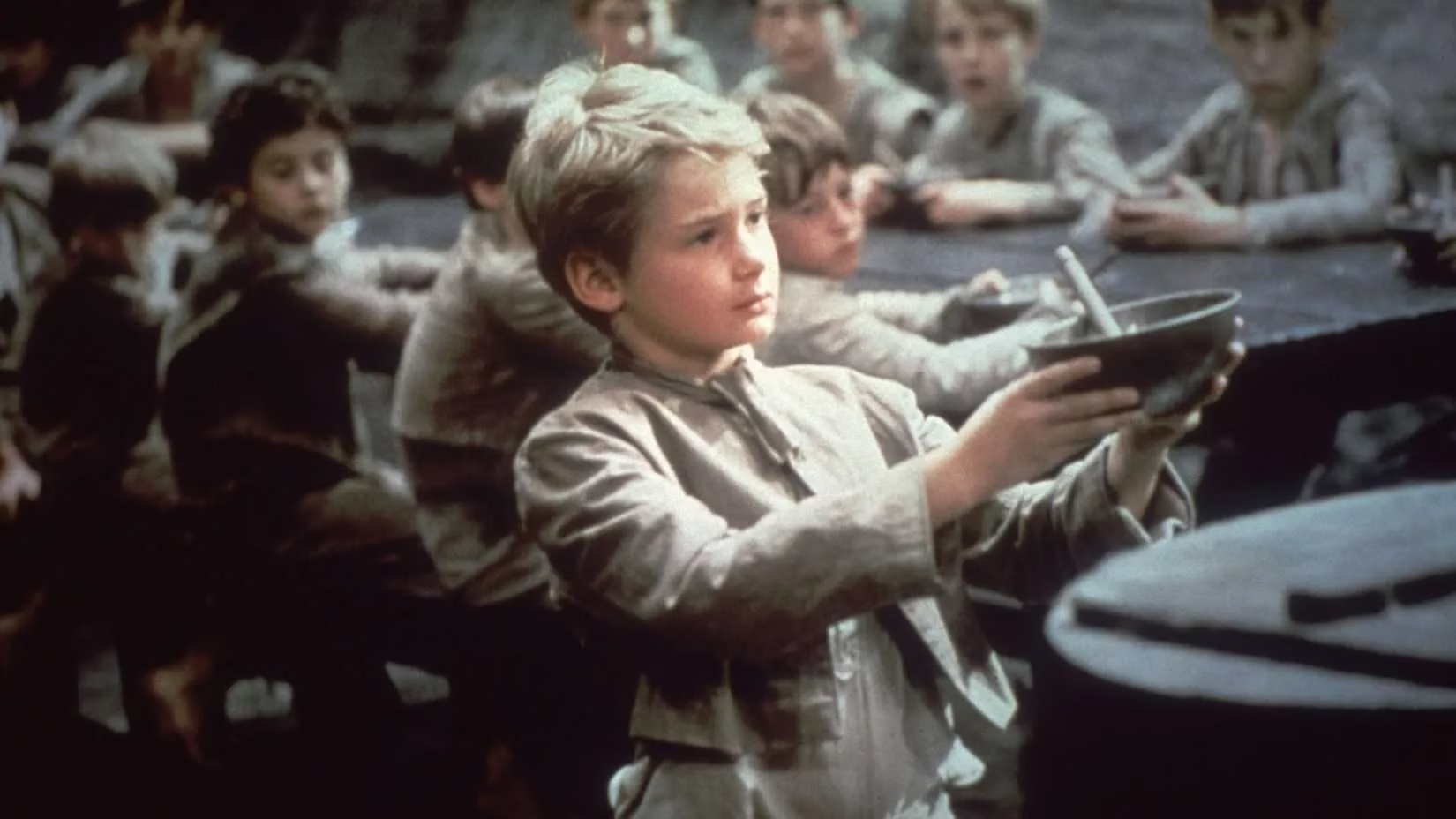
Movie musicals are often a surefire path to Oscar glory, but Oliver!, the 1968 winner, is the cheerful urchin often left out of the conversation. This adaptation of Charles Dickens’s tale is an epic in every sense—grand sets, sprawling cast, and a 150-minute runtime filled with catchy, enduring tunes like "Food, Glorious Food." It represents a golden mean in musical history, blending the opulence of classic Hollywood with a burgeoning simplicity. It’s a feast for the eyes and ears, a clockwork carnival of song and dance that should, by all rights, be a perennial favorite. Its victory over Funny Girl is another piece of Oscar trivia that oddly obscures its own merits. The timelessness of a great musical is its birthright, and Oliver! remains a sparkling, energetic classic waiting to be rediscovered by a new generation.
A Man for All Seasons, A Film for Fewer
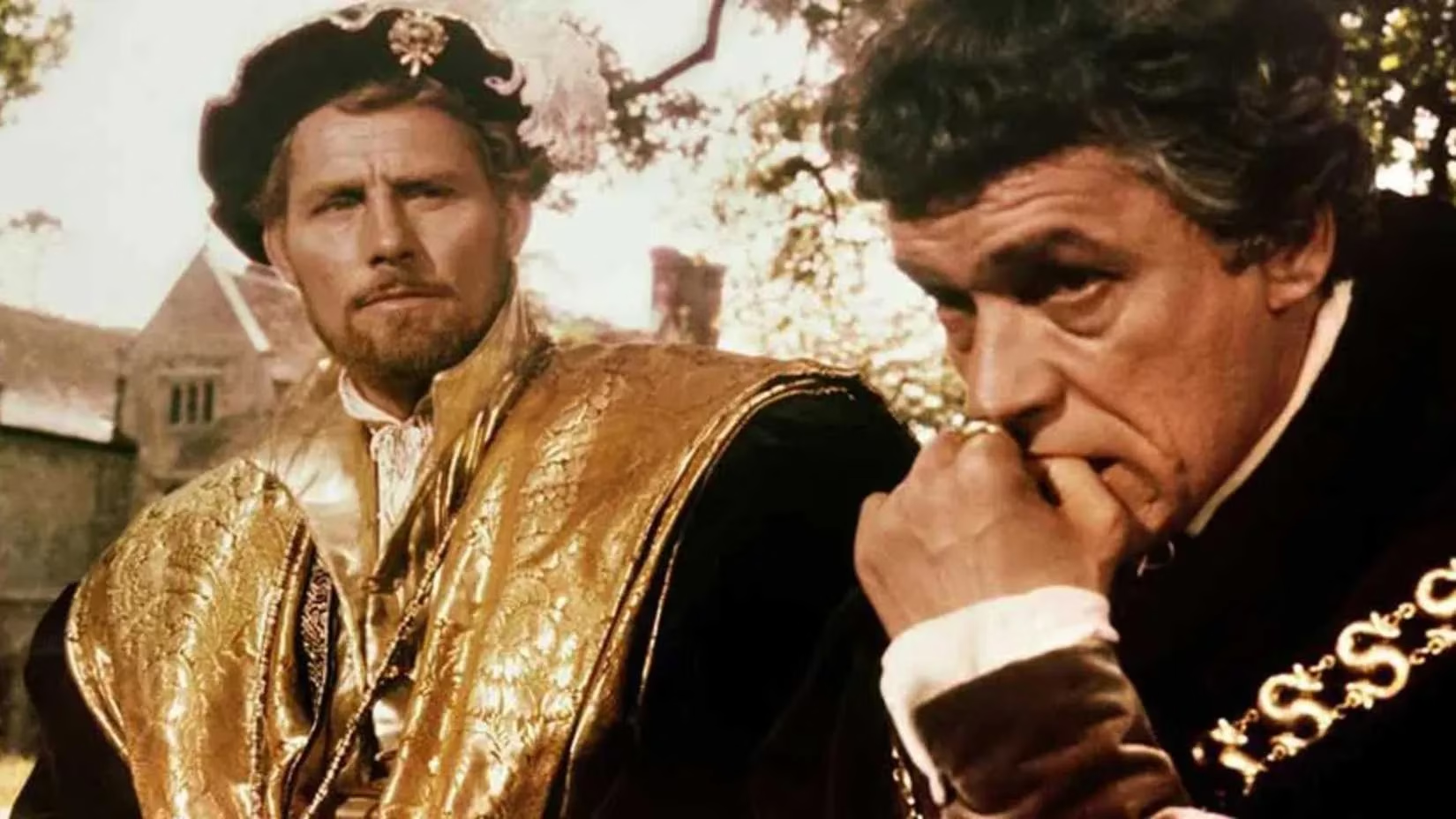
The magnificent A Man for All Seasons (1966) is perhaps one of the most unfairly vanished winners. Adapting one of the greatest plays ever written, it chronicles the moral and political clash between Sir Thomas More and King Henry VIII with breathtaking intelligence and verbal dexterity. It doesn't just film a play; it elevates the material through the unique language of cinema—composition, light, and intimate performance. The acting is of the highest theatrical order, and the craftsmanship is impeccable. As one of the final masterpieces of Hollywood's Golden Age, it has been eclipsed by more overtly revolutionary films of its time. Yet, in its unwavering focus on conscience and principle, it offers a kind of dramatic purity that is both rare and immensely powerful.
The Lost Weekend: A Harrowing Pioneer
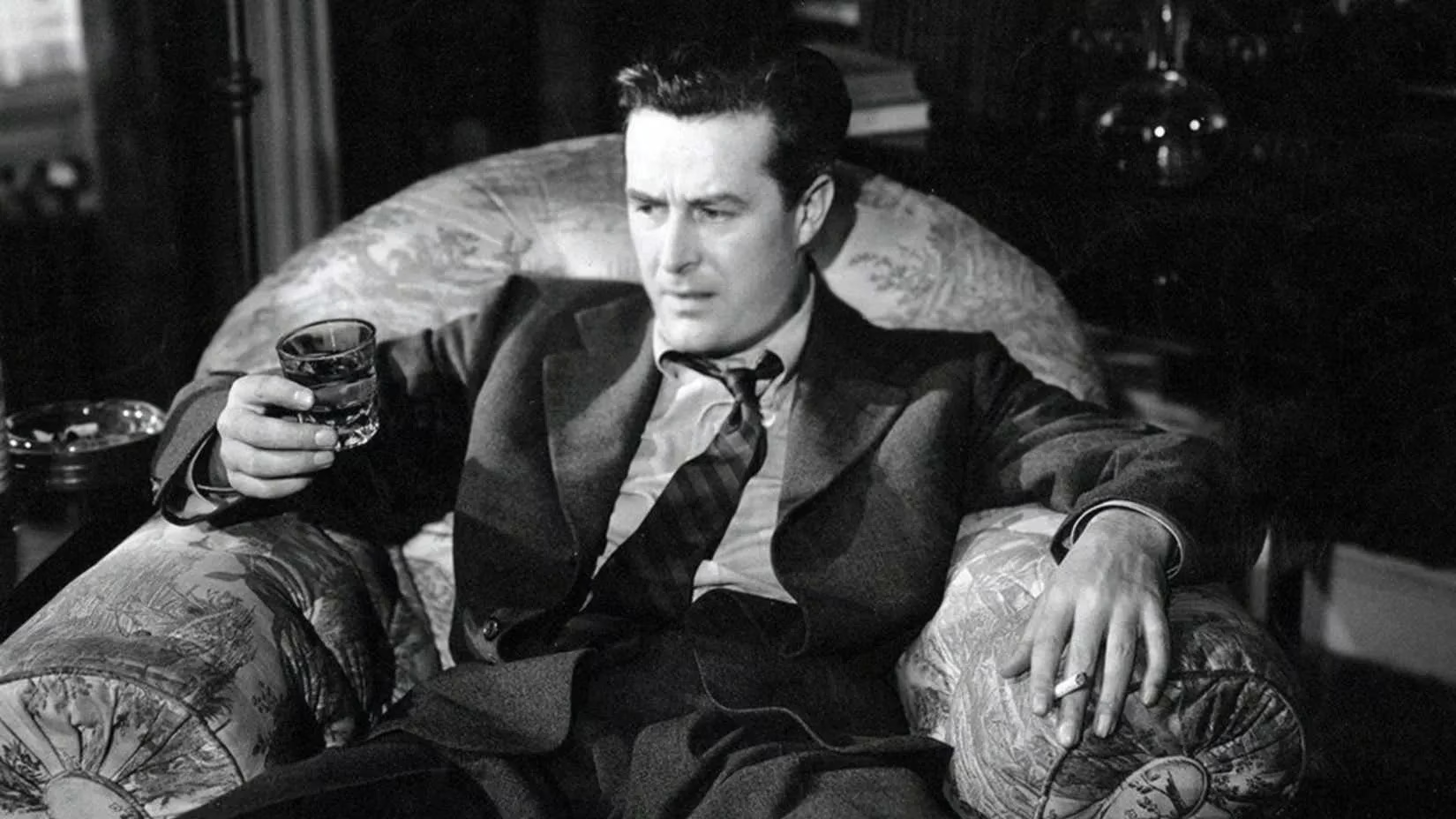
Often lost in the glittering filmography of Billy Wilder, The Lost Weekend (1945) is a stark, courageous anomaly. Released as WWII ended, it was a shocking pivot, focusing not on external battles but on the internal war of addiction. It follows an alcoholic writer on a brutal three-day bender, visualizing his despair and degradation with unflinching honesty. Wilder used the visual language of film noir not for mystery, but for psychological horror, turning everyday objects into symbols of torment. It’s not an "enjoyable" film; it’s a necessary one. A pioneering work that tackled a subject mainstream cinema feared, it demonstrated that the Oscar could honor not just entertainment, but vital, uncomfortable truth-telling.
Rebecca: Hitchcock's Sole Golden Ghost
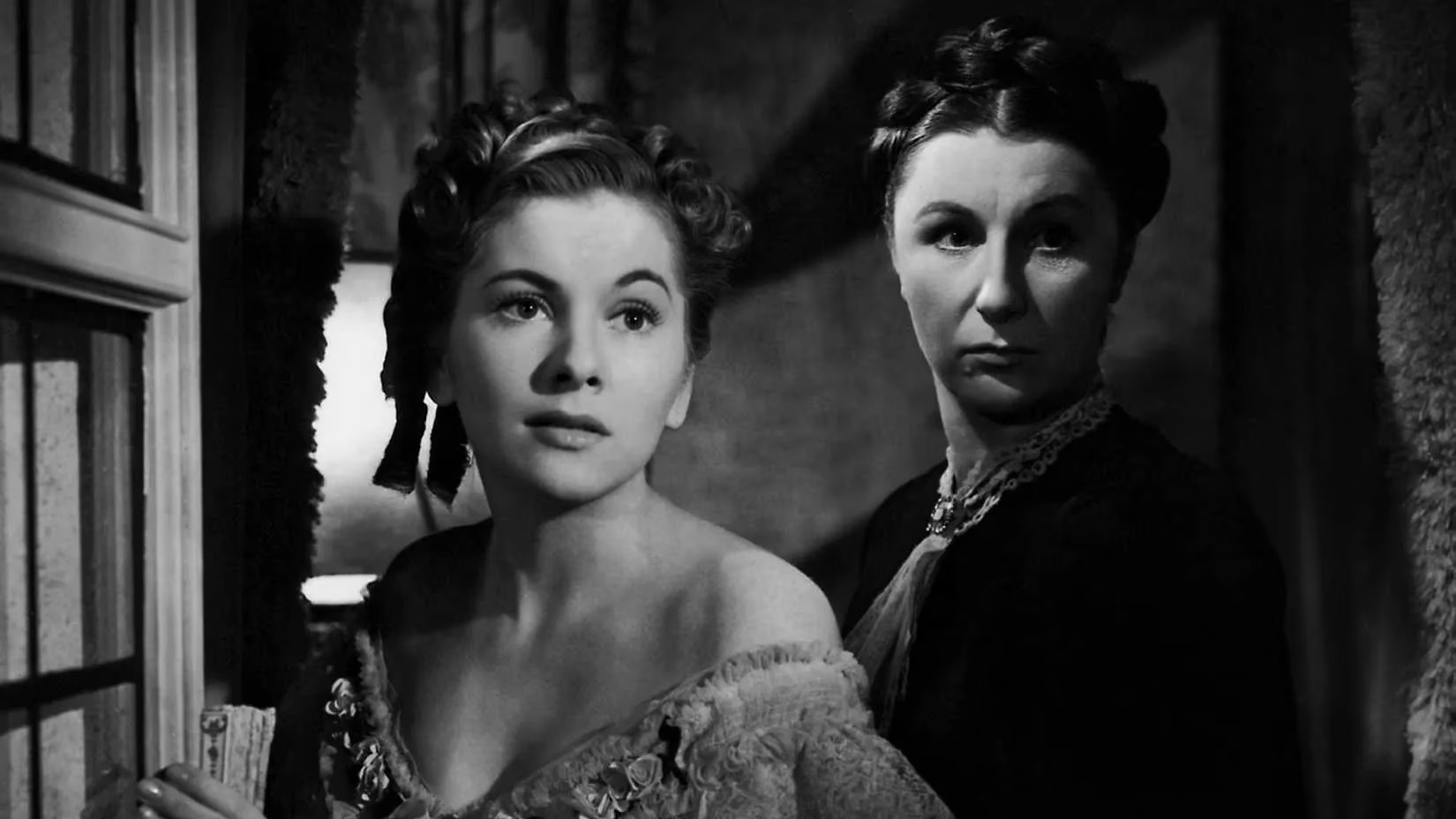
That the great Alfred Hitchcock won his only Best Picture Oscar for Rebecca (1940) is one of history's quiet ironies. This gothic adaptation of Daphne du Maurier's novel is a world away from his later, more famous thrillers. It’s a slow-burn ghost story where the phantom is a memory, and the mansion, Manderley, is a character of oppressive grandeur. The film is drenched in an eerie, haunting atmosphere, with Mrs. Danvers remaining one of cinema's most chilling presences. While it may lack the set-piece brilliance of Psycho or Vertigo, Rebecca is a masterclass in sustained mood and psychological dread. It proves that Hitchcock’s genius was multifaceted—his only Oscar win is not a consolation prize, but a testament to his ability to conquer any genre he touched.
The Western Front That Echoes Through Time
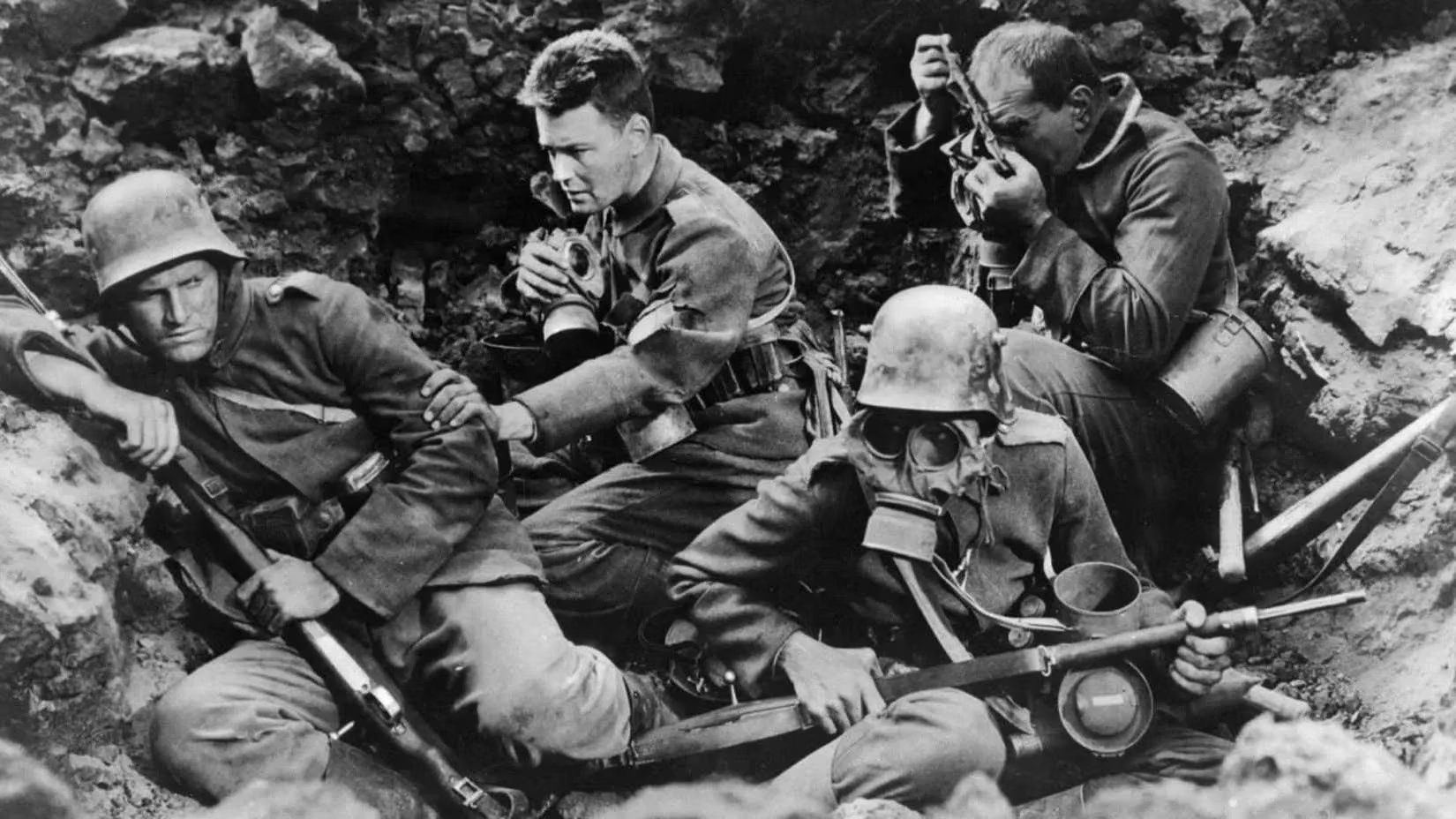
And then we have the ancient giant: All Quiet on the Western Front (1930). Only the third film to ever win the top prize, its age has rendered it a footnote for many, which is a profound loss. This is not a historical artifact; it is a living, breathing, screaming anti-war manifesto. The story of a young German soldier’s idealism shattered by the meat-grinder of WWI trench warfare remains one of the most visceral and effective ever committed to film. It used early sound technology not as a novelty, but as a weapon to convey chaos and terror. It inspired every war film that followed. Watching it now, its black-and-white images are not quaint; they are stark, brutal, and horrifically immediate. Its importance cannot be overstated—it is the root system from which all cinematic war poetry has grown, yet it sits quietly in the archives, its lessons perennially urgent, perennially ignored.
As I sit here in 2026, surrounded by the digital noise of instantaneous reaction and endless new content, these films feel like messages in bottles washed up from a different shore. They remind me that artistic merit is not a trending topic. The Oscar, for all its glamour and controversy, is merely a snapshot—a moment of recognition. The true test is the quiet conversation that happens decades later, in the dark, between the film and a solitary viewer. These forgotten winners have passed that test. They await, not with the blare of a trumpet, but with the patient silence of a deep well, ready to offer their unique, enduring waters to anyone who chooses to draw from them. Their gold may have tarnished in the public eye, but their light, for those who seek it, shines on, undimmed.