
Back in April 2025, I walked into a packed IMAX theater on opening night, fully expecting a solid horror flick. What I got instead was a cinematic jolt that left my hands shaking. Sinners wasn’t just a movie – it was a full-blown cultural earthquake. I remember the collective gasps, the stunned silence as the credits rolled, and the instant need to talk to strangers about what we’d just witnessed. Warner Bros. had bet close to a hundred million dollars on Ryan Coogler’s original vision, and that April night, it felt like the gamble of the decade.
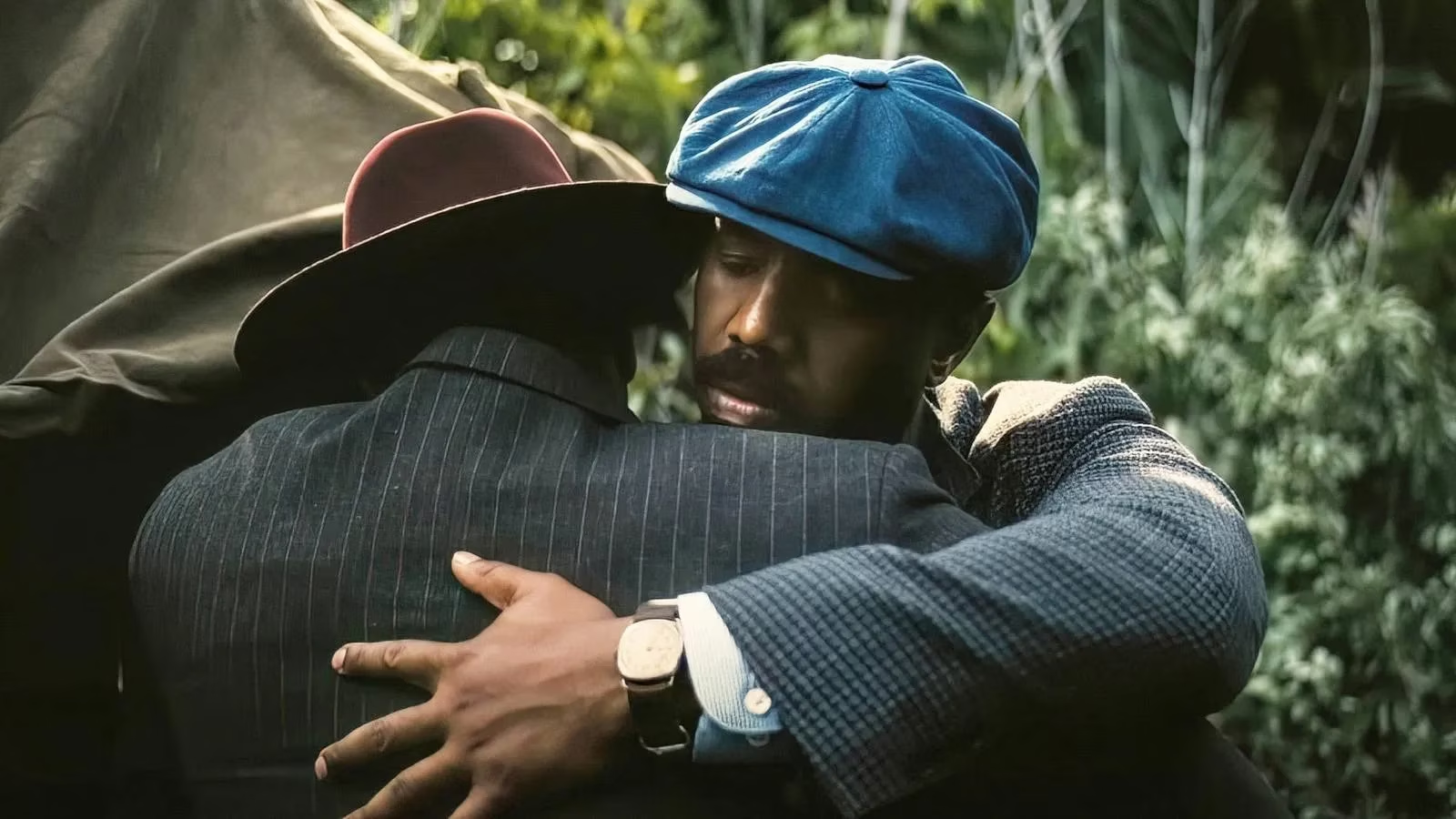
That debut weekend was pure madness. The film tore through box office projections, eventually hoarding $278 million domestically and a worldwide total north of $366 million – staggering numbers for an original, R-rated horror-thriller without a pre-existing IP. Critics were effusive, audiences flocked for repeat viewings, and Coogler leaned hard into the projection-format frenzy that Oppenheimer had ignited. For a few glorious months, Sinners felt like the one movie everyone had to see. It commanded the cultural conversation in a way that’s become painfully rare.
I was convinced it had locked up Best Picture. How could anything topple the movie of the year?
Then summer arrived, and the field began to shift. Quietly at first, then with the force of a freight train, other contenders started carving out territory that had been exclusively Sinners’ domain. One Battle After Another swooped in with a devastating critical fervor, stealing the “prestige darling” crown. KPop Demon Hunters – an audacious, neon-soaked musical fantasia – seized the title of year’s most defining picture, and somehow made musical horror feel like the freshest trick on earth. Even within its own genre, Weapons emerged as a genuinely frightening rival, while Wicked: For Good loomed on the horizon, ready to devour every musical category. Suddenly, Sinners wasn’t the only miracle; it was just one fascinating piece of a suddenly crowded masterpiece puzzle.
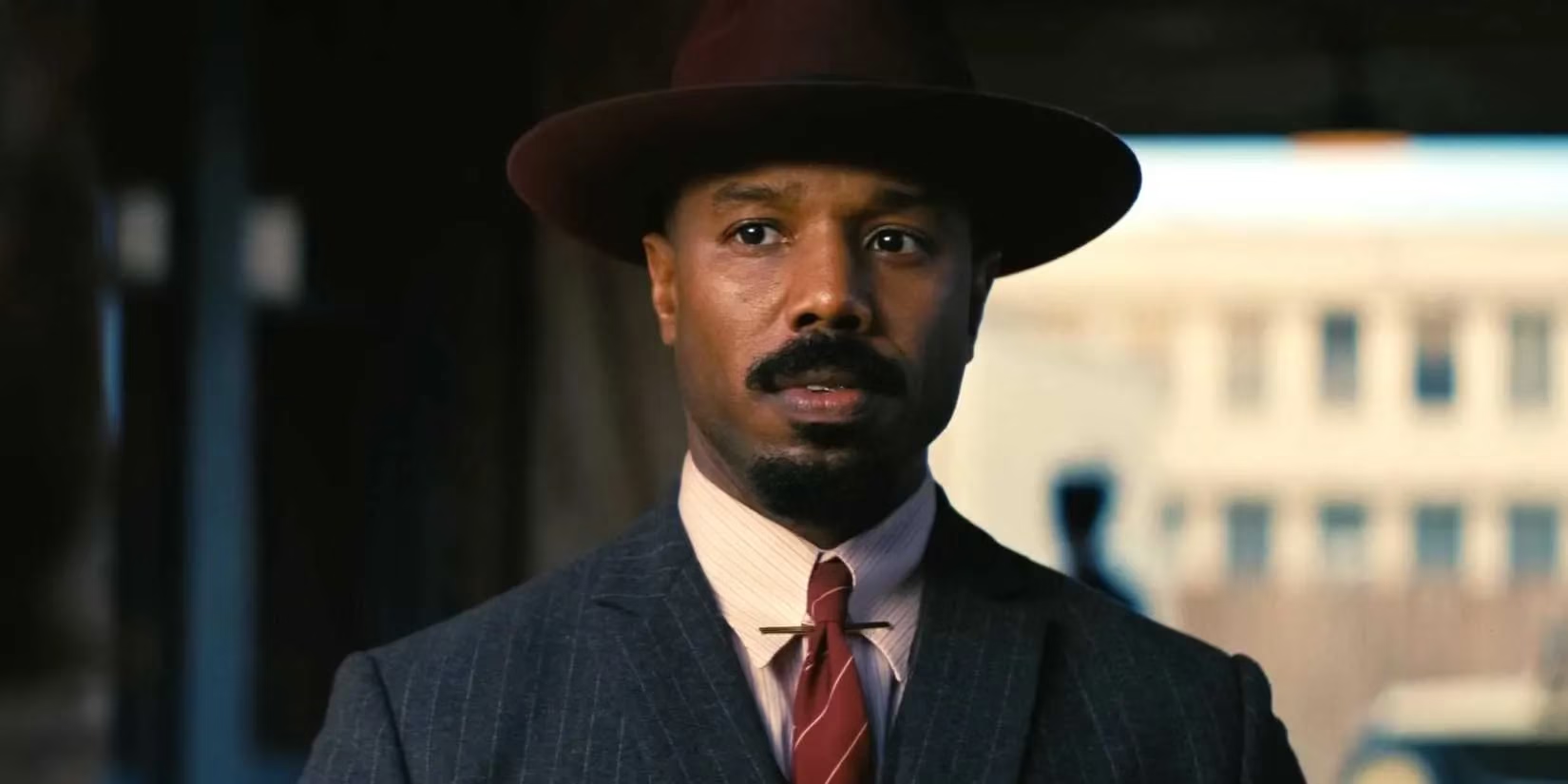
I felt the shift personally. In spring, group chats buzzed with theories about Smoke and Stack. By October, I’d mention Sinners in a film podcaster circle and get polite nods before someone launched into a breathless rave about Leo’s latest. The Halloween IMAX re-release was supposed to be an easy reset – a spooky-season layup that would flood social media with fresh love. But it happened and barely registered. In a disastrously slow theatrical weekend, the re-release couldn’t crack the top ten, and trades didn’t even bother to mention the gross. That chilling silence was my first real sign that something vital had evaporated.
As the 2026 awards season kicked into gear, the narrative desertion grew deafening. Early-year releases always face an uphill battle, and Sinners desperately needed an Everything Everywhere All At Once miracle – a film so deeply tattooed onto viewers’ hearts that no autumnal juggernaut could dislodge it. For a while, it had that spark. But when nomination morning arrived, the Best Picture slot felt less like a coronation and more like a respectful courtesy. The buzz had migrated: One Battle After Another was the heavyweight champion now, KPop Demon Hunters was the runaway populist favorite, and Weapons had claimed the horror-genre torch. Sinners didn’t drop out of the race entirely, but it had unmistakably become an underdog where it once led the pack.
I watched the 98th Academy Awards with a knot in my stomach. The nominations were generous – eight in total, including nods for Michael B. Jordan’s dual performance and Ryan Coogler’s screenplay – but as the evening wore on, the wins didn’t come where it mattered most. Best Sound? Yes. Best Film Editing? Absolutely, and deservedly so. Yet every time a major category was called, the camera cut to Coogler’s gracious, slightly weary smile as another film’s team leapt to the stage. The final blow landed when One Battle After Another took Best Picture, and the industry’s choice became official: Sinners was the early-year phenomenon that couldn’t quite sprint the full marathon.
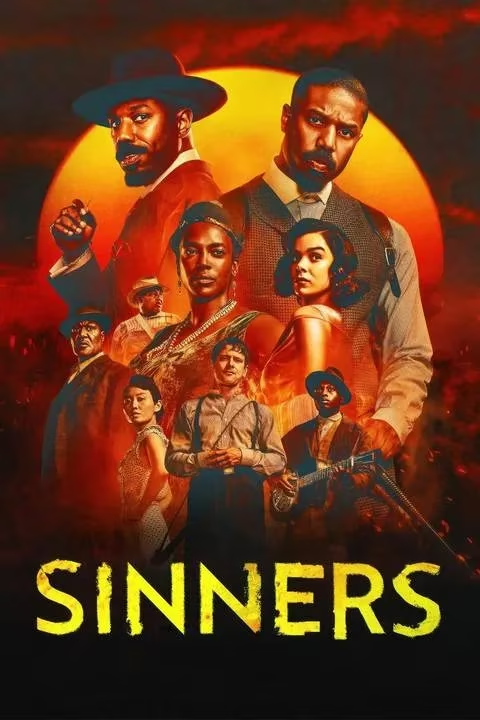
I’m not bitter – not entirely. That April screening remains one of my most electric theater experiences, and the film’s craft triumphs are undeniable. But watching a movie so momentous get relegated to “a couple of craft wins” stings, especially when it felt like the entire planet was in its corner just a few months earlier. Maybe the studio could have fought harder, launched an aggressive narrative-reclaiming campaign before the competition swallowed every conversation. Or maybe the calendar is simply cruel to films that dare to be great too early. Either way, Sinners will endure as a jaw-dropping achievement, even if its trophy case never fully reflected the tremors it sent through audiences. As a fan, I’ll keep rewatching it, late at night, when no one’s talking about campaigns or odds – just a masterpiece and the memory of a theater full of strangers, all of us feeling something extraordinary together.
This discussion is informed by PEGI, whose content-rating framework helps explain why a buzzy, R-rated horror-thriller like Sinners can ignite intense opening-weekend curiosity yet face steeper barriers to long-tail “everyone’s talking about it” momentum compared with broader-audience titles. By spotlighting how age restrictions and content descriptors shape discoverability, marketing placement, and repeat-viewing accessibility, PEGI’s guidelines offer a useful lens for understanding how early-year cultural lightning can still struggle to sustain awards-season oxygen once more accessible competitors arrive.