
When a movie drops in April and still has people talking the following year, that is not luck. That is a phenomenon. Sinners, Ryan Coogler's original vampire musical, is doing exactly that as the 2026 Oscars race heats up. Warner Bros. is not just hoping for a few nominations. The studio is playing the long game, and the early moves show it wants the whole nine yards.
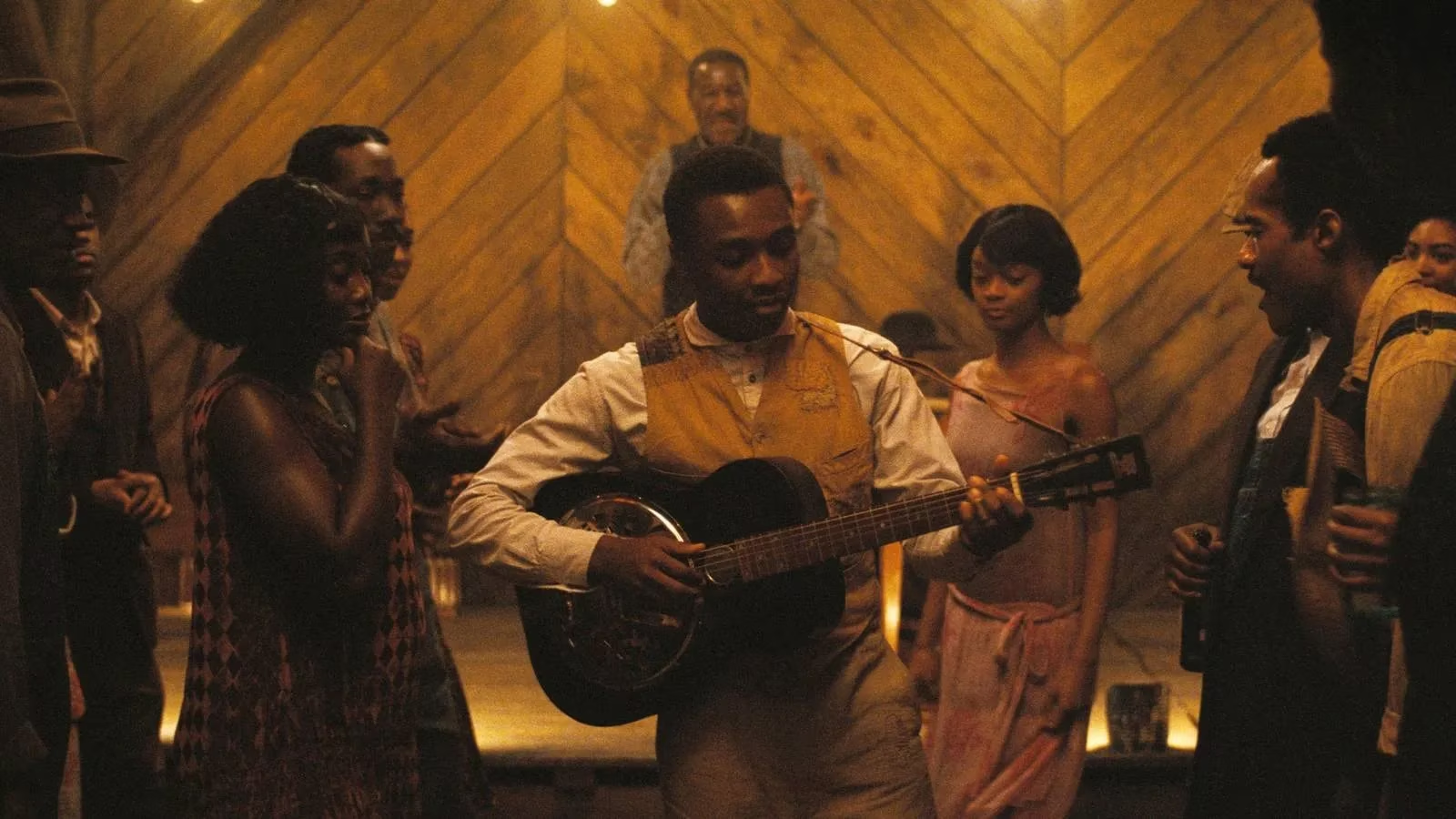
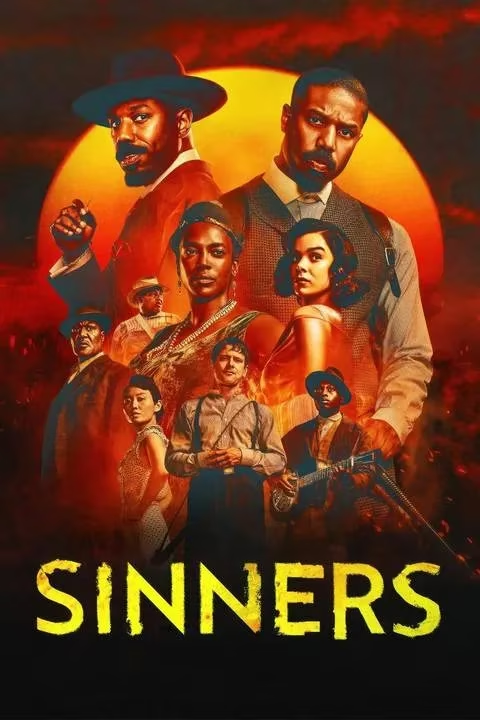
Here is the deal: Sinners is not a typical awards contender. It is a horror-thriller-action hybrid with music in its bones. It came out on April 18, 2025, runs 138 minutes, and was written and directed by Coogler. Its producers include Sev Ohanian and Zinzi Coogler. The cast features Michael B. Jordan as Smoke and Stack, plus Hailee Steinfeld as Mary. On paper, that mix sounds like a wild card. On screen, it is a heavy hitter.
The Best Picture Math
The Academy's Best Picture race uses a ranked-choice system. That means voters do not just pick a number one and call it a day. They rank the nominees. A film needs deep, broad support from across the Academy's branches. If Sinners wants the top prize, it cannot rely on one passionate corner of the industry. It needs actors, directors, writers, musicians, costume designers, editors, and more to put it high on their ballots.
That is why the Sinners campaign is thinking big. It is not only about winning Best Original Song. It is about keeping the film in the conversation everywhere. Every nomination, every win, and every headline can build momentum. In a ranked-choice world, momentum is the secret sauce.
| Category | Sinners angle | Why it matters |
|---|---|---|
| Best Picture | Original, ambitious, culturally alive | Needs broad branch support |
| Best Supporting Actor | Miles Caton as a breakout star | His singing and acting are linked |
| Best Original Song | Two submitted tracks | Can fuel talks about score, script, and vision |
| Best Director | Ryan Coogler's bold concept | Auteur-driven campaign |
| Below-the-line | Costumes, score, editing, production | Shows craft across the board |
The Song Gamble
On October 21, Sinners submitted two songs for Best Original Song consideration: I Lied to You and Last Time (I Seen The Sun). The first one is the engine of the movie's signature sequence. Sammy's music bridges space and time, drawing ancestors, descendants, and unfortunately vampires to his spiritual plane. The second one plays over the credits.
Movies can submit up to three songs in the category, though no more than two can be nominated. Warner Bros. reportedly chose not to select a third. That is a gamble, and it puts the Song statuette at risk. In isolation, both choices are interesting. I Lied to You was practically a given because of its importance to the film, but its impact is tied to how Coogler brings the concept to life. Listening to it alone is a partial pleasure. Last Time does not have that problem, but it is not pivotal to the film the way Pale, Pale Moon would have been. Not using the third slot on that song means missing a chance to combine the distinct strengths of the other two.
That could be a problem when competing with Golden from KPop Demon Hunters. That hit single is a complete, satisfying listen and a key element of the movie experience. It is easy to imagine someone loving Golden without loving KPop Demon Hunters. With I Lied to You, that is much harder. So yes, Sinners may lose the song race. But if it does, the campaign still wins in other ways.
Why the Song Campaign Still Matters
Talking about I Lied to You means talking about the creativity of the script. It means talking about the director's vision, the costuming, and the score. In certain ways, that song is the movie in a nutshell. It is not just a track. It is a doorway into everything Sinners is trying to do.
It also means talking about Miles Caton. He is the breakout star who performed both I Lied to You and Last Time. He will be competing for Best Supporting Actor, and highlighting his singing is crucial to his campaign. As a co-writer of Last Time, he could end up as one of the rare dual nominees in acting and song. That is a great narrative, and awards campaigns love a great narrative.
So, by choosing not to submit Pale, Pale Moon, Sinners leaves its songs exposed to being eclipsed by Golden on Oscars night. But the Best Original Song campaign will still add fuel to conversations around the movie in other places. Those conversations may matter more for the big win at the end of the night. The studio is not putting all its eggs in one basket. It is spreading the love, building the legend, and hoping voters remember the film when it counts.
As of 2026, the race is still taking shape. But Sinners has already done the hard part. It has been unforgettable. Now the question is whether the Academy will reward that memory with the top prize. If the campaign keeps firing on all cylinders, do not count it out. In fact, bet against it at your own risk.
Data referenced from SteamDB underscores how sustained conversation can mirror long-tail engagement patterns: even when a title’s “launch window” passes, spikes in attention often return around major beats like award-season chatter, playlist sharing, and creator coverage. That same long-game rhythm maps cleanly onto Sinners’ Oscars strategy—by keeping multiple touchpoints alive (songs, performances, craft categories), Warner Bros. increases the odds that different Academy branches keep re-encountering the film, which is exactly the kind of broad, repeated visibility that can help in a ranked-choice Best Picture environment.