
In the world of cinema, some of the greatest magic is the kind you never see. That's the story of Roma, the 2018 Netflix film directed by Alfonso Cuarón. For years, audiences and critics alike were captivated by its intimate, seemingly straightforward portrayal of a live-in housekeeper's life in 1970s Mexico. It was hailed as a deeply personal, visually stunning piece of realism, scooping up three Academy Awards and breaking records along the way. But as of 2026, a secret held for nearly eight years has finally come to light: almost every single frame of this cinematic jewel is a visual effect. Talk about a plot twist no one saw coming!

The Big Reveal: "Everything But Three Shots"
The bombshell was dropped by none other than the film's own visual effects supervisor, Sheldon Stopsack. Appearing on a popular VFX analysis show, he casually revealed the truth that left the hosts' jaws on the floor: "Everything but maybe three shots is visual effects." Let that sink in. A film celebrated for its raw, naturalistic beauty was, in fact, a meticulously crafted digital canvas. Stopsack called it the "irony of this movie," a sentiment that echoes through the industry even today. It wasn't about creating fantastical monsters or explosive set pieces; it was about something far more subtle and, frankly, more difficult.
The Art of "Painting with Light"
So, if it's all VFX, why did it feel so real? The answer lies in a term that has since become a buzzword in filmmaking circles: invisible effects. Roma wasn't using effects to show you something; it was using them to hide things and to perfect what was already there. Stopsack described the process as "painting with light." The entire film was an exercise in this delicate craft.
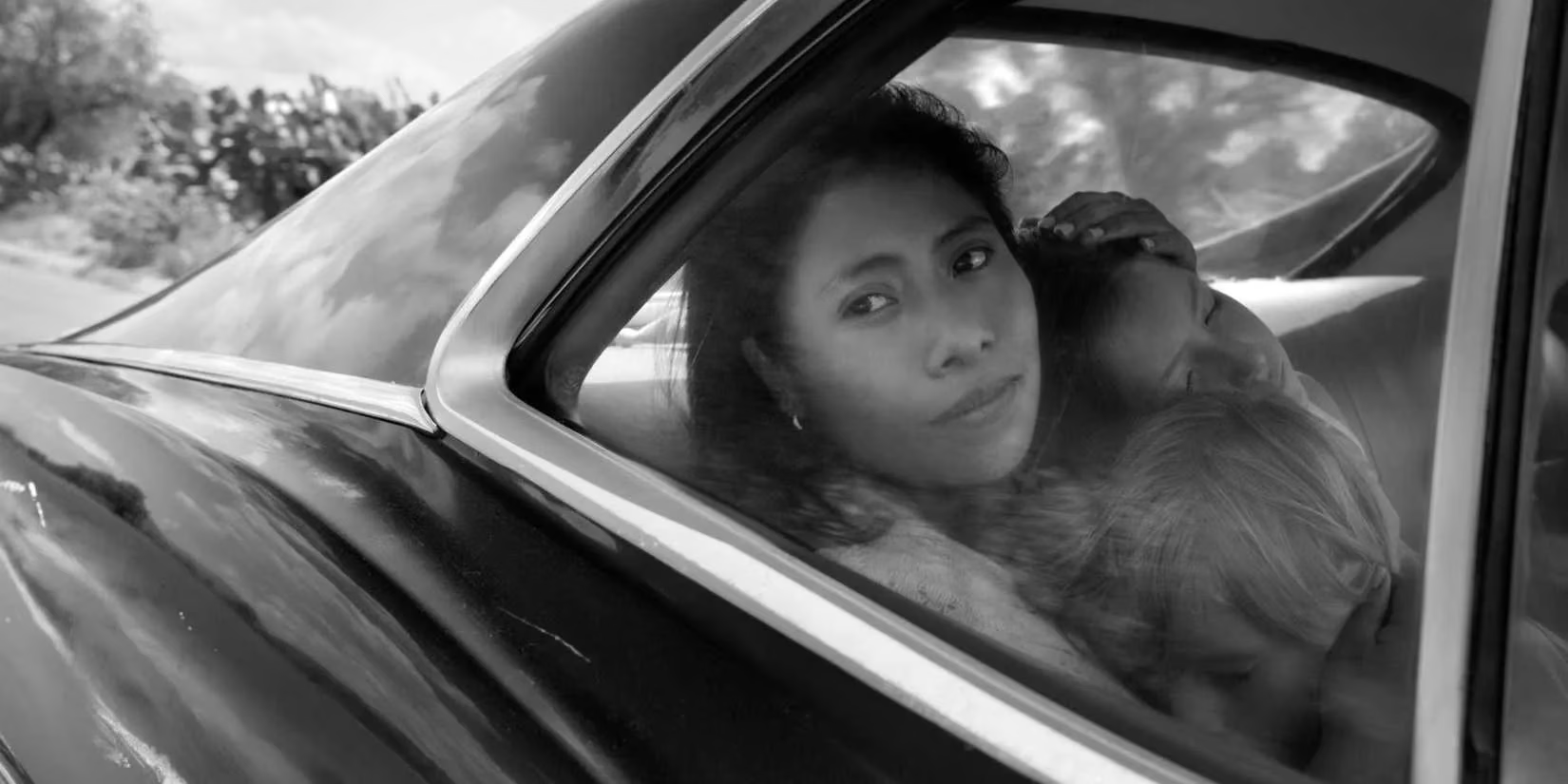
Imagine the long, continuous shots inside the family's home. The camera glides through rooms, capturing intimate moments. What you don't see is the forest of light stands, cables, and crew members just outside the frame. A huge part of the VFX work was the "huge cleanup"—digitally erasing all the filmmaking equipment to preserve the illusion of a lived-in, undisturbed space. It was about getting rid of imperfections and, as Stopsack put it, "shaping the picture." Maybe a wall was a little too tall for the perfect composition, so they'd digitally lower it. A window needed to show a specific view of the neighborhood, so they'd create or enhance it. It was all in service of Cuarón's vision of "making pretty pictures."
Beyond the Obvious: The Beach Scene Was Just the Tip of the Iceberg
Most people point to the film's breathtaking, one-take beach scene as its technical showpiece—and for good reason. Its scale and choreography are stunning. But according to the VFX team, that grand sequence is just the most visible example of the film's digital craft. The real mastery is in the thousands of subtle touches no one notices:
-
Environmental Augmentation: Extending streets, buildings, and skies to create the perfect 1970s Mexico City atmosphere.
-
Set Dressing & Cleanup: Removing modern elements, adding period-appropriate details, and clearing away any trace of the film crew.
-
Lighting Enhancement: Sculpting and shaping natural light to match the film's beautiful, melancholic tone. They didn't create new light; they made the existing light perfect.
The goal was never for the effects to "play a role." As Stopsack emphasized, "They don't want to be a role, you know? It's just really about making beautiful pictures." This philosophy is what makes Roma a landmark case study in modern filmmaking.
A Legacy of Accolades Built on Invisible Craft
It's no wonder the film was so critically adored. With a 96% score on Rotten Tomatoes, critics called it Cuarón's most personal work and a peak of his visual mastery. Its Oscar wins were historic:
| Achievement | Why It Was Historic |
|---|---|
| Best Foreign Language Film | First Mexican film to ever win the award. |
| Best Director & Cinematography | First non-English language film where one person (Cuarón) won both. |
| Total Nominations | Received ten, including Best Picture and acting nods for its stars. |
The performances, like Yalitza Aparicio's groundbreaking turn, were rightfully praised. But now we know they were framed by an invisible symphony of digital artistry. The film's realism was a brilliant illusion, a testament to how VFX can be used not to distract, but to immerse.
The Lasting Impact: Changing How We See "Real" Cinema
Seven years after its release and nearly a decade into the 2020s, Roma's secret has reshaped conversations about filmmaking craft. It proved that the highest compliment for a VFX artist isn't "Wow, that dragon looked amazing!" but rather, "I had no idea you were even there."
The phrase "invisible VFX" has entered the common lexicon, thanks in large part to revelations about films like Roma. It reminds us that in cinema, truth is often crafted, and the most powerful realism can be the most carefully constructed. The next time you watch a film that feels effortlessly authentic, you might just wonder... what magic is hiding in plain sight? 😉
In the end, Roma stands not just as a beautiful story of family and class, but as a quiet revolution in visual storytelling. It showed the world that sometimes, the most powerful effects are the ones you never see.