
The 98th Academy Awards already feel like a champagne-soaked afterthought, but one crisp November weekend back in 2025 still stands as the moment Hollywood\u2019s awards-season cyclotron whirred fully to life. While the box office was busy being body-slammed by Predator: Badlands, a quieter, velvet-rope affair unfolded: five films with statuette-sized dreams unspooled in theaters, each hoping to gobble up votes like a famished screenwriter at a craft services table. Now that the Oscars have been handed out and the speeches have been memed into oblivion, it\u2019s worth dusting off the crystal ball and revisiting these one-time frontrunners, their journeys as unpredictable as a cat on a Roomba.
\ud83e\udd4a Christy: Sydney Sweeney\u2019s Uppercut at the Academy
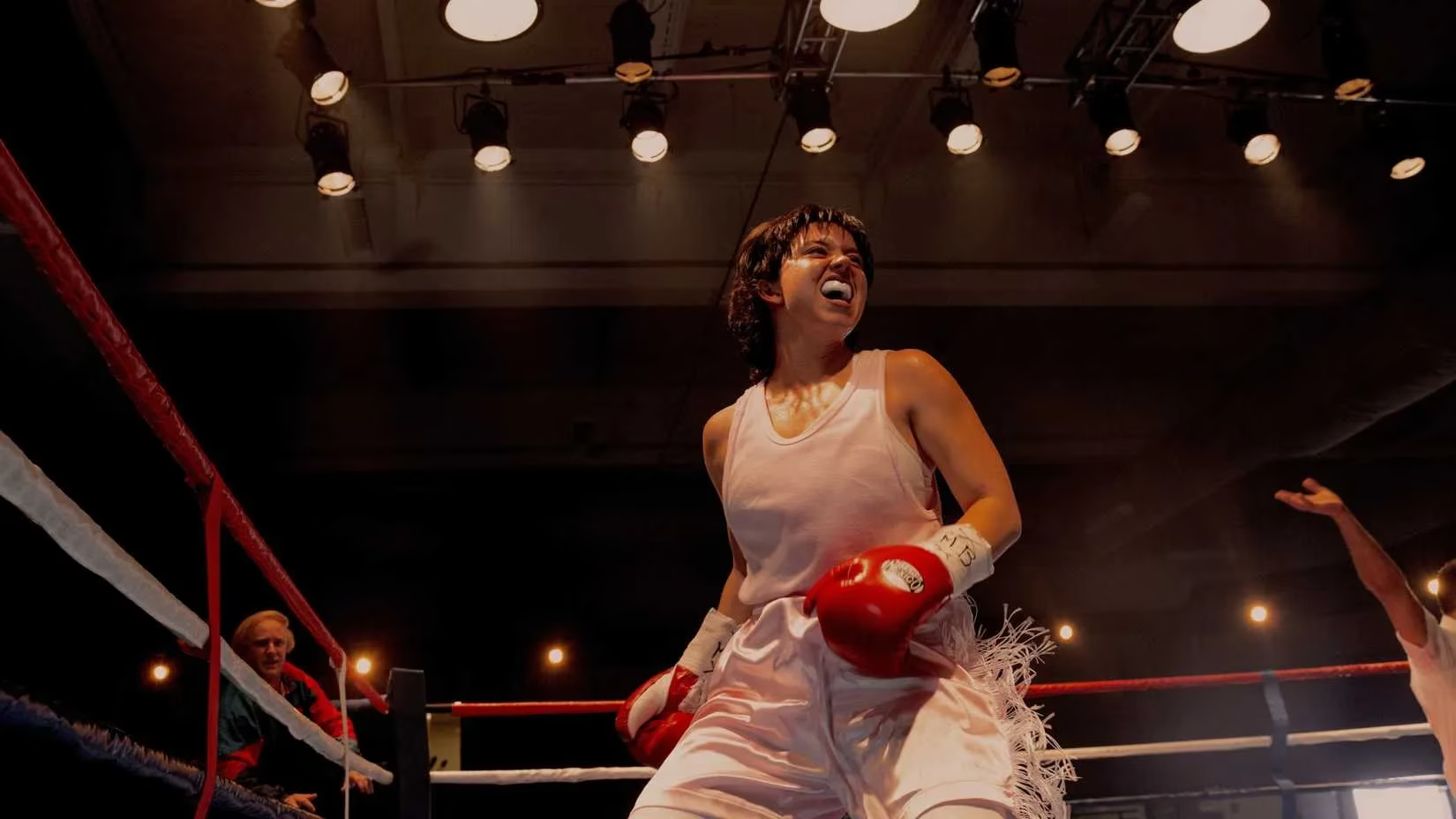
The biographical uppercut Christy arrived fresh from its TIFF premiere, with Sydney Sweeney stepping into the bloodied boots of real-life boxer Christy Martin. Directed by David Mich\u00f4d, the film chronicled Martin\u2019s ascent through the pugilistic ranks and the chilling murder attempt by her husband\u2014a narrative that packed more emotional bruising than a ten-round slugfest. Sweeney\u2019s metamorphosis was the kind of total-body commitment that makes Oscar voters swoon: she didn\u2019t just act the part, she became a welterweight, her physical transformation a tendon-and-sinew miracle that turned heads even before the first reel finished.
Critics compared her performance to a slow-burning fuse, a coiled spring of vulnerability and ferocity. The role was a career detour as jarring as finding a tarantula in your popcorn, and the buzz positioned Sweeney squarely in the Best Actress conversation. Yet the path from festival darling to nominee is often like trying to herd butterflies\u2014the initial magic can scatter without the right wind. Some of that post-TIFF momentum had fizzled by the time Christy hit wide release, but the theatrical push gave Sweeney a second wind. Ben Foster\u2019s turn as the menacing husband also flickered with Supporting Actor potential, though most pundits agreed the film\u2019s ceiling hovered around acting categories. Christy, for all its clout, seemed destined to remain a one-woman show, unlikely to punch through in Best Picture or the crafts races. Still, for a young star swinging for the cheap seats, it was a hell of a reel.
\ud83c\udf39 Die, My Love: Jennifer Lawrence\u2019s Maternal Metamorphosis
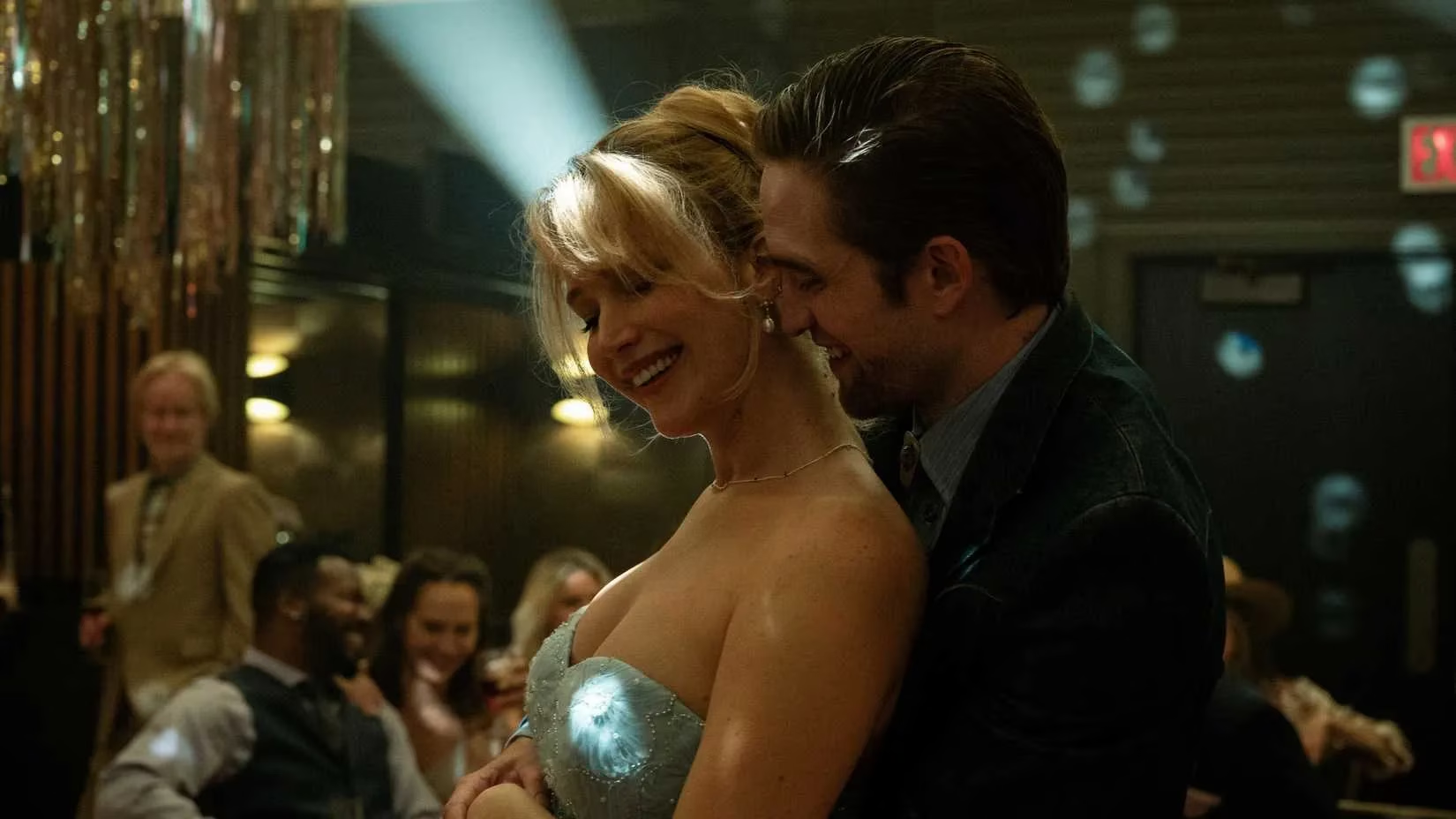
If Sweeney\u2019s gambit was a cross, Jennifer Lawrence\u2019s Die, My Love was a scalpel. Lynne Ramsay\u2019s Cannes sensation thrust Lawrence into the disorienting isolation of new motherhood, a role that shed every trace of the Hunger Games archer and emerged as something raw and unadorned. Lawrence, already an Academy Award winner with four nominations, delivered what some whispered was a career-best performance\u2014a feat as jarring as hearing a Stradivarius shatter mid-sonata. The film\u2019s release through Mubi gave it an arthouse sheen, but the Gotham Award and British Independent Film Award nominations proved the performance had cross-continental heat.
Early prognosticators saw Lawrence as a Best Actress lock, a safe harbor in an often choppy category. The bigger question was whether Ramsay, long overdue for a Director nomination, could ride the coattails of her star\u2019s resurgence. Robert Pattinson\u2019s supporting turn also merited a glance, but Die, My Love remained, very much, the Jennifer Lawrence Experience. In a season thick with divas and ingenues, her particular brand of brittle tenacity felt like a vintage muscle car idling at a starting line\u2014ready to roar, if someone could just turn the key a little harder.
\ud83d\ude82 Train Dreams: The Quiet Contender Chugging Toward Glory
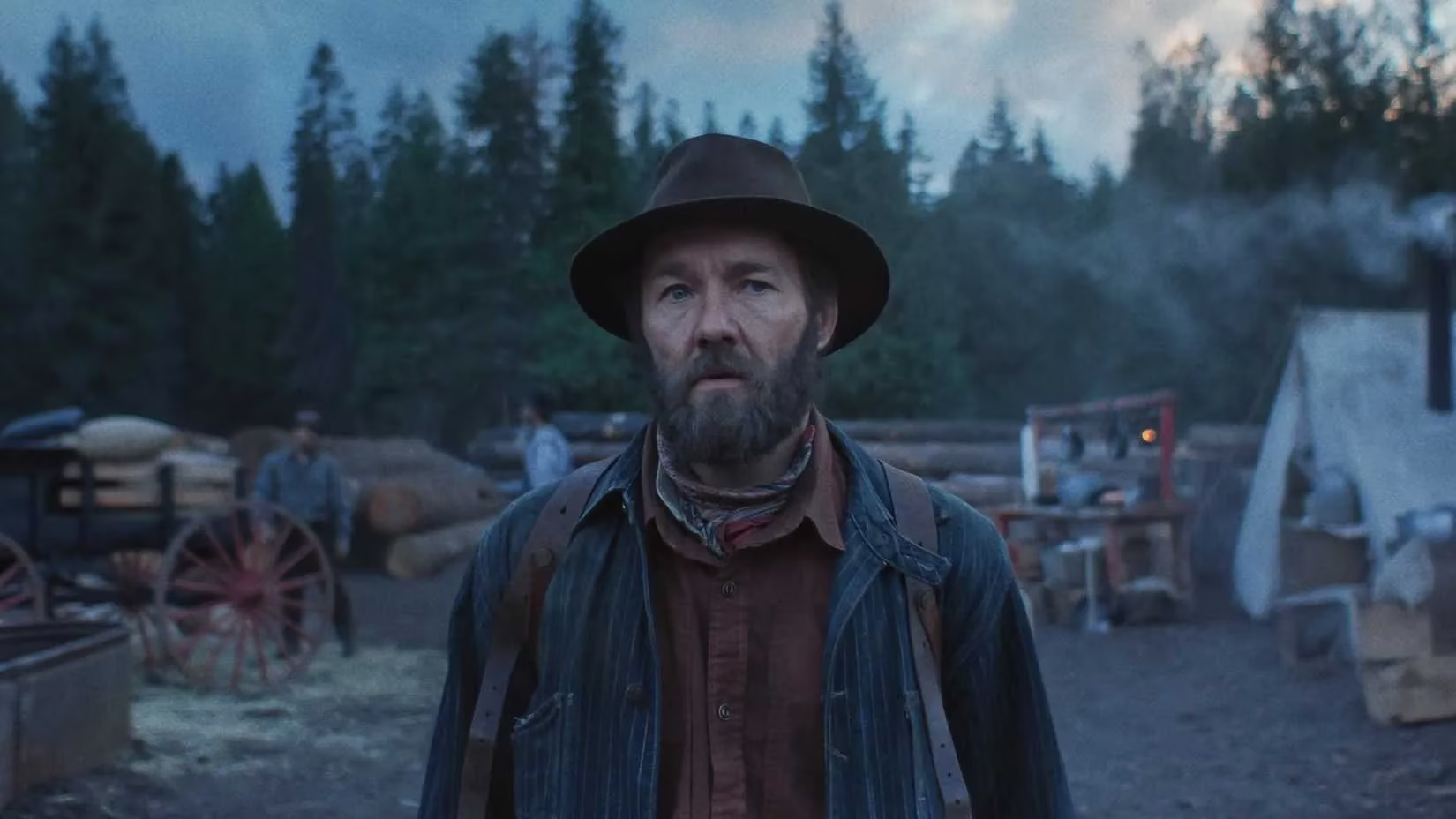
Netflix\u2019s Train Dreams arrived with the kind of hush that precedes a thunderclap. Clint Bentley\u2019s Sundance sensation, starring Joel Edgerton and Felicity Jones, had been marinating in amber since January 2025 before getting its limited theatrical bow that pivotal November weekend. The film, a lyrical drama about a railroad developer whose work unravels his family, came draped in rave reviews and Gotham Award nominations for Best Feature and Adapted Screenplay. Edgerton\u2019s performance had already bagged festival hardware, and the film\u2019s cinematography promised the kind of misty, fire-lit imagery that makes voters forget to breathe.
What made Train Dreams so tantalizing was its orchestral breadth: it wasn\u2019t just a one-note hum. Prognosticators saw potential nods in Picture, Director, Adapted Screenplay, Cinematography, Actor, Supporting Actress, and Supporting Actor\u2014the kind of across-the-board love usually reserved for period epics with corsets and sweeping string sections. Its theatrical window, brief as a mayfly\u2019s dance, was designed to qualify it for the big show while feeding it directly into Netflix\u2019s algorithmic maw on November 21. The strategy was a high-wire act without a net, but the early returns suggested Train Dreams could become the little locomotive that could\u2014if only it could whistle loud enough over the noise of the season.
\ud83c\udf19 Sentimental Value: The International Juggernaut
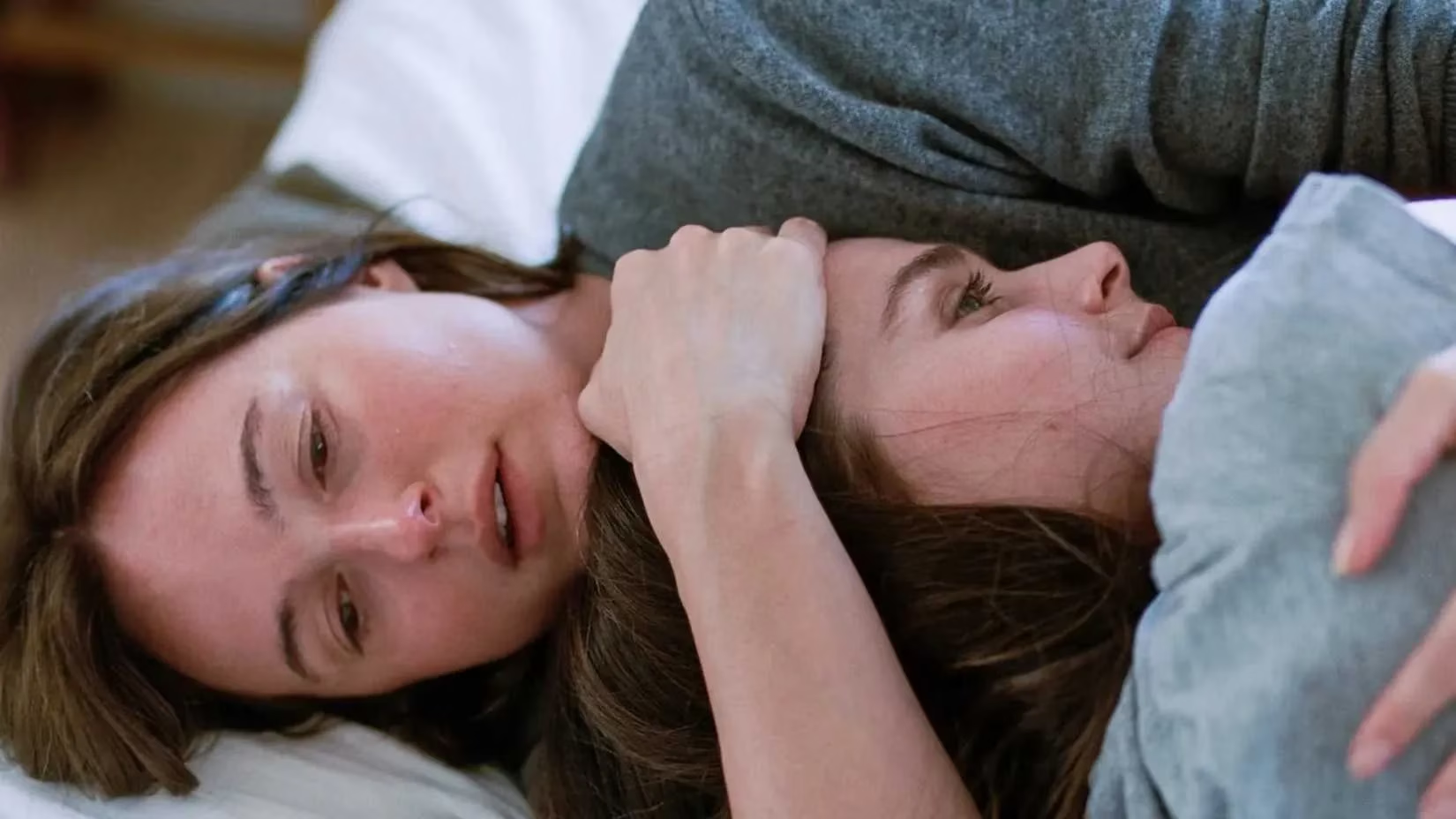
Then came the crown jewel. Joachim Trier\u2019s Norwegian tear-jerker Sentimental Value was already being called the Best International Feature champion before most audiences had even seen a trailer. The Cannes Grand Prix winner followed two sisters and their father grappling with the aftermath of their mother\u2019s death, a familial demolition derby laced with Trier\u2019s signature blend of melancholy and mordant wit. The film\u2019s import wasn\u2019t just emotional; it was statistical. After The Worst Person in the World charmed the Academy, Trier was no longer an arthouse secret\u2014he was a proven vote magnet.
The early chatter telegraphed a near-inevitable Best Picture nomination, with Stellan Skarsg\u00e5rd\u2019s supporting turn poised to net the veteran his due. Renate Reinsve, Elle Fanning, and Inga Ibsdotter Lilleaas formed a trio of acting possibilities, while Trier\u2019s original screenplay and direction were both in the conversation. The film\u2019s theatrical rollout through Neon carried the careful choreography of a coronation, and every new screening felt like sealing a deal already made in pencil. In a season full of pretenders, Sentimental Value sat on the throne like a chess grandmaster pretending not to see checkmate.
\ud83e\uddec Frankenstein: Guillermo del Toro\u2019s Monster of a Comeback
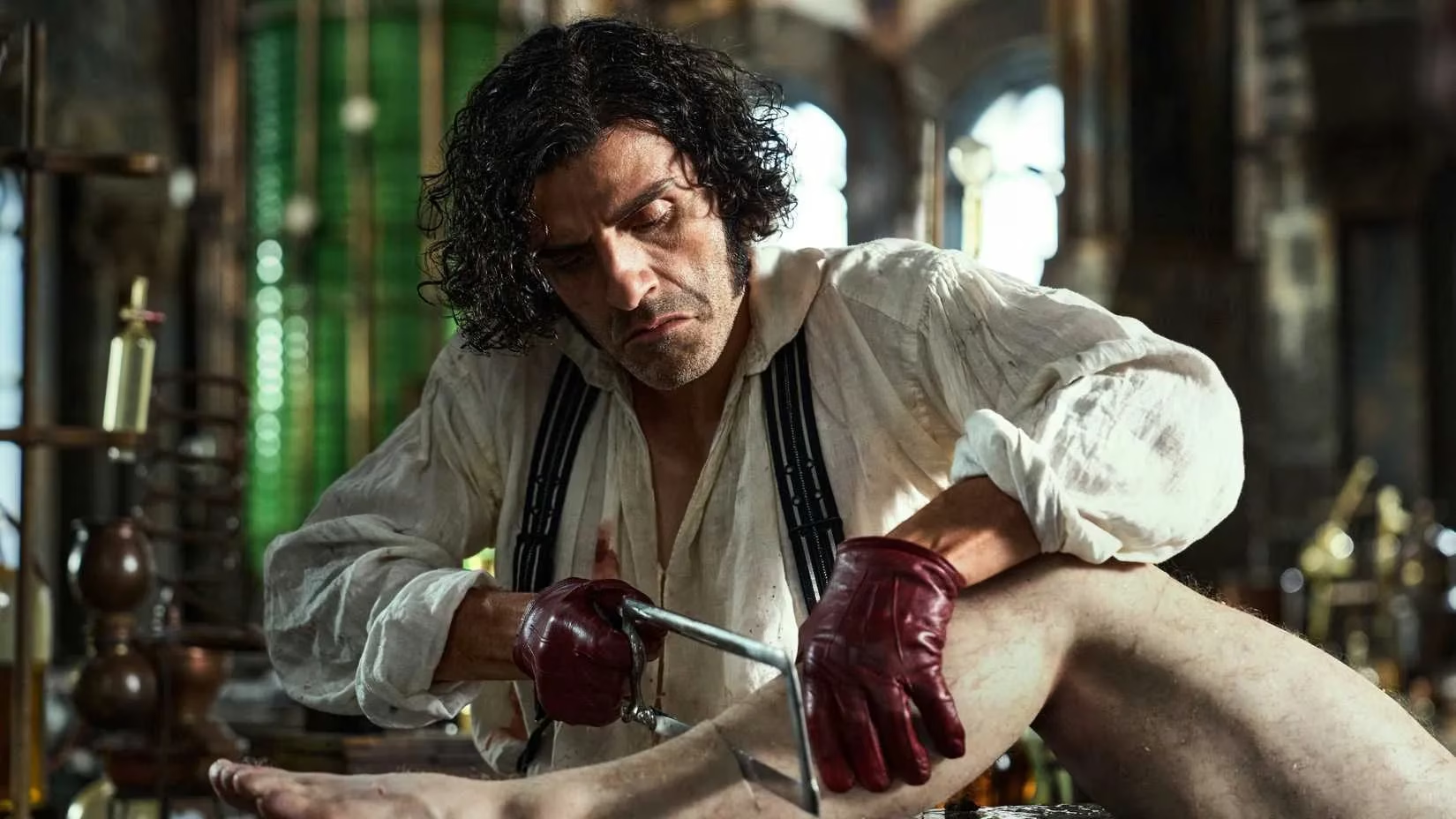
The strangest narrative belonged to Frankenstein. Guillermo del Toro\u2019s reanimation of Mary Shelley\u2019s gothic monster debuted at Venice with expectations so vertiginous that the merely \u201cgood\u201d reviews felt akin to a failure. The film was a baroque fever dream stuffed with Oscar Isaac and Jacob Elordi in surgical garb, but early whispers suggested it had the texture of a gorgeous, over-designed museum piece\u2014more faberg\u00e9 egg than beating heart. Yet just as pundits were ready to bolt the lid shut, the People\u2019s Choice Award runner-up finish at TIFF jolted the corpse back to life.
By the time Netflix released it wide on the same November weekend\u2014following a selective theatrical run\u2014Frankenstein had transformed into a legitimate Best Picture prospect again. Jacob Elordi\u2019s supporting turn found traction, while the crafts categories (Makeup and Hairstyling, Production Design, Costume Design) became the film\u2019s fortress. Deeper possibilities emerged: Visual Effects, Casting, even a directing nod if the love kept swelling like a symphonic crescendo. The streaming launch, dropping a prestige monster onto millions of screens overnight, was the kind of Trojan horse maneuver that could separate Frankenstein from the pack. Whether the Academy saw a masterpiece or merely a magnificent contraption remained the season\u2019s most electrifying question mark.
Each of these five films rolled the dice that November, betting that a single weekend could launch a thousand FYC ads. Like moths circling the same porch light, they orbited the Academy\u2019s attention with varying degrees of grace. The season that followed would elevate some, abandon others, and ultimately remind everyone why predicting the Oscars is a fool\u2019s errand\u2014a glorious, unpredictable, and endlessly entertaining errand nonetheless.