
As we find ourselves in the heart of the 2026 awards season, with the Golden Globes fading into memory and the Academy Award nominations looming, I've been on a personal cinematic journey. This time of year always prompts me to revisit and reevaluate the films that defined the previous year. Amidst the heated debates over whether the epic One Battle After Another has the Best Picture race sewn up or if genre-defying films like Sinners can break through, I found my perspective profoundly shifted by a film I initially overlooked: Richard Linklater's Blue Moon. It wasn't just a catch-up viewing; it was a rediscovery of a masterpiece that deserves a central place in the 2026 Oscars conversation.
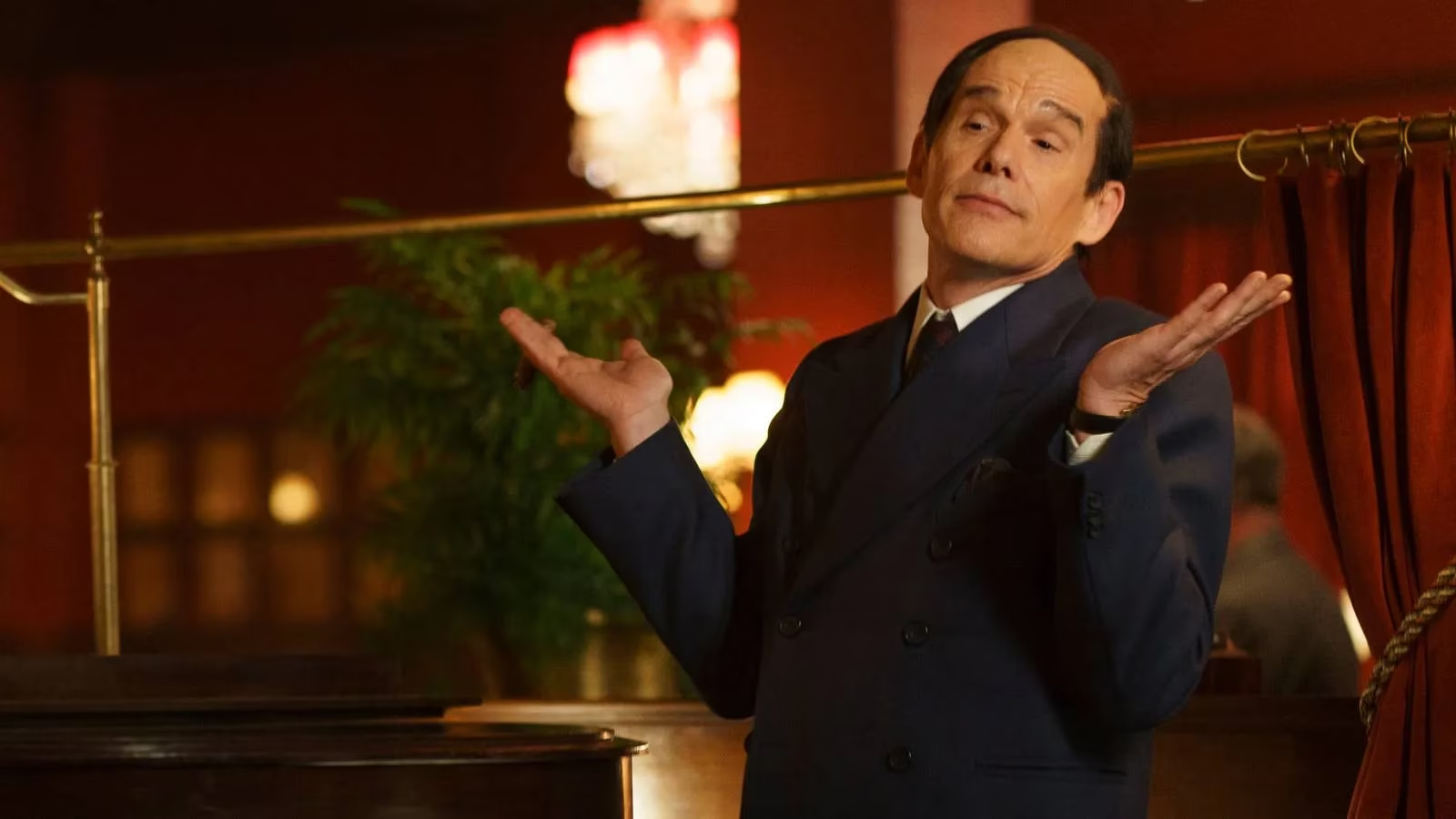
The film, which reunites director Richard Linklater with his longtime collaborator Ethan Hawke, is a biographical drama that eschews convention. Instead of a sprawling life story, Blue Moon focuses on a single, pivotal night in the life of lyricist Lorenz Hart. It's the opening night of Oklahoma!, the groundbreaking musical by his longtime partner Richard Rodgers. Hart, portrayed with mesmerizing depth by Hawke, is a whirlwind of bitterness, heartbreak, nostalgia, and narcissism, grappling with the terrifying notion that his moment of relevance in the performing arts may have passed. The film's genius lies not in judging him, but in presenting his flawed humanity with a profound respect, all while offering a poignant commentary on the fleeting, ephemeral nature of fame.
What struck me most profoundly was the film's narrative approach. In an industry where biopics often feel like checklists of historical highlights, Blue Moon is a masterclass in intimate, moment-to-moment storytelling. As Hawke and his co-star Andrew Scott noted in an interview, the screenplay prioritizes capturing the character's essence in the moment, rather than delivering a superficial, greatest-hits tour of his life. This unique methodology results in dialogue that isn't just captivating—it's utterly alive, making the film a standout in a often formulaic genre.

At the heart of this achievement is Ethan Hawke's performance, which has rightly positioned him as a formidable 2026 Best Actor Oscar contender. While the makeup and costuming are impeccably transformative, it's Hawke's complete submersion into Hart's persona that is breathtaking. He doesn't appear to be reciting lines; he is Lorenz Hart—a man whose eyes flicker with profound pain and mischievous wit in equal measure. The performance is a high-wire act, requiring Hawke to deliver sincere, melancholic monologues that navigate Hart's often selfish perspectives without betraying the actor's own judgment. It's a delicate balance he maintains flawlessly, making his Golden Globe nomination a mere stepping stone to what I sincerely hope will be an Academy Award nomination.
This towering performance is built upon what I consider the most memorable and innovative biopic screenplay I've encountered in years. Linklater and writer Robert Kaplow consciously avoid the standard trappings of the genre. By focusing on this one impactful night, they paint a portrait of an entire life with remarkable subtlety and power. Hart's observations are a compelling blend of keen intelligence and bitter vanity, and the script's strength is in letting his authentic voice resonate—neither overly critical nor worshipful. It's a writing feat that deserves its own Oscar recognition, though the Golden Globe snub in this category leaves me cautiously hopeful for the Academy's judgment.
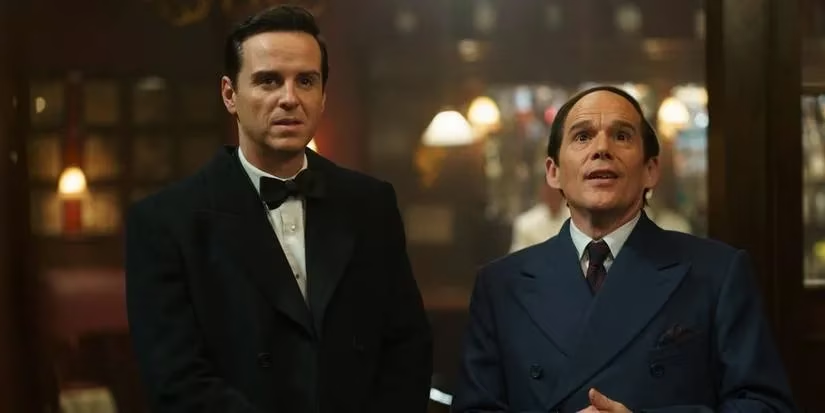
The film's brilliance isn't a solo act. Margaret Qualley, who continues to solidify her status as one of the industry's most promising and dependable talents, delivers a performance that is absolutely essential to the film's emotional resonance and its stellar 90% approval rating on Rotten Tomatoes. In what is arguably the movie's finest scene, her character, Elizabeth Weiland, excitedly recounts a winding tale of romantic escapades to a captivated Hart.
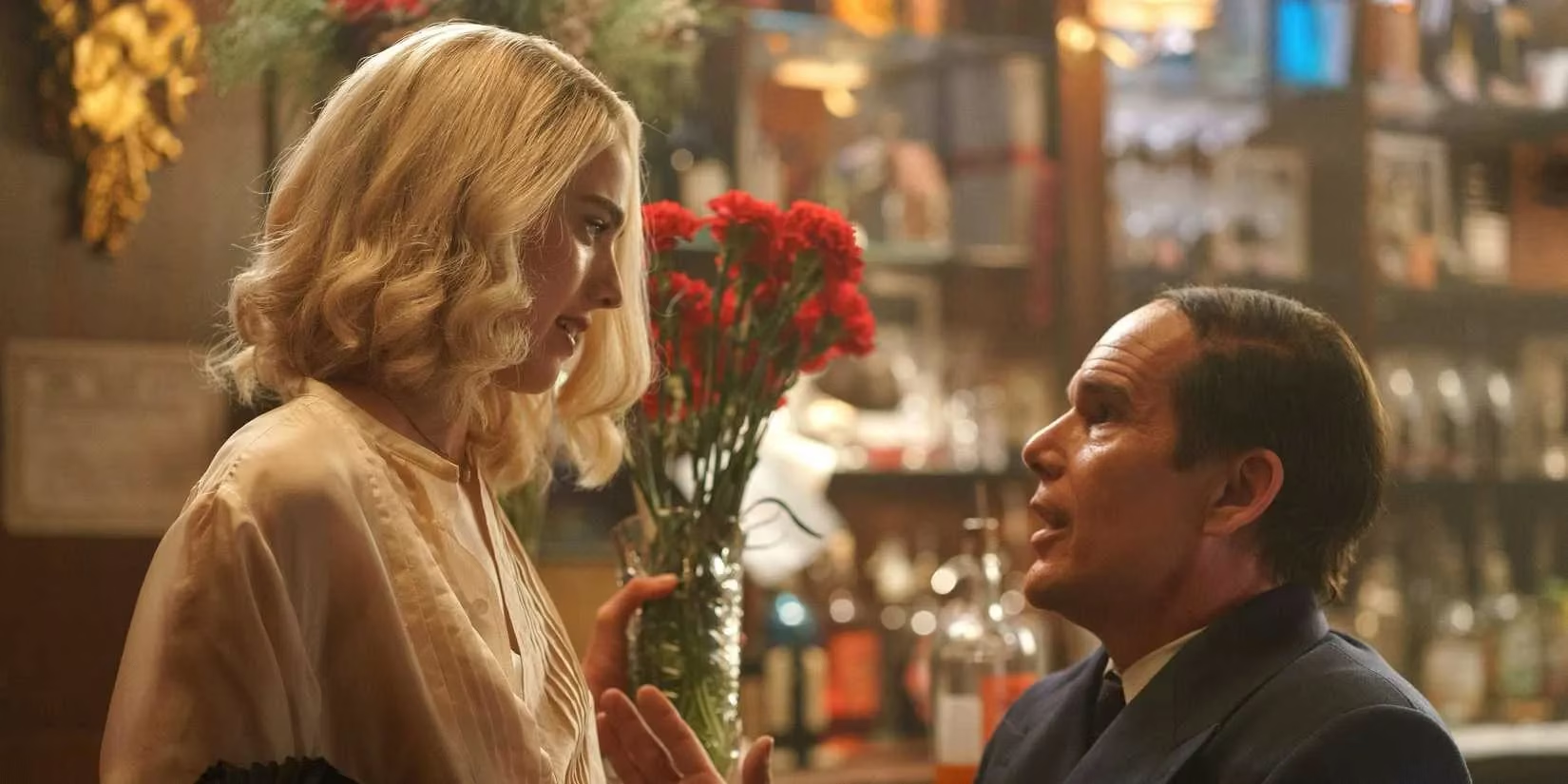
This scene is a dynamic duet, bouncing between Qualley's infectious liveliness and Hawke's portrayal of Hart's desperate, almost vampiric attempt to feel youthful through her gossip. Qualley doesn't just hold her own opposite a powerhouse like Hawke; she commands the screen. Her expressive eyes tell a story of their own, and you find yourself, like Hart, utterly captivated by her presence. It's a supporting performance of such vitality that it should be a lock for a nomination.
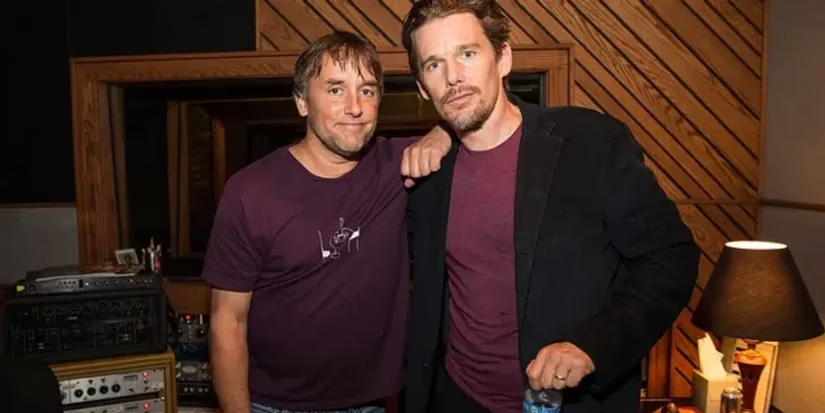
Behind it all is Richard Linklater, who every few years delivers a film that reminds us of his unparalleled expertise with dialogue and human interaction. Since the late 1980s, he has demonstrated a unique ability to make conversation cinematic. In Blue Moon, his direction is typically sharp, keeping the camera fluid and the audience immersed in every verbal exchange. While a Best Director Oscar nomination seems like a long shot in this competitive year, his achievement here is fascinating: crafting two distinctly unique biopics in quick succession, each defying the genre's formulaic tendencies.
As I look ahead to the 2026 Oscars, the narrative often centers on the biggest spectacles and the noisiest campaigns. Yet, my journey of catching up has reaffirmed that awards season's greatest gift is the chance to rediscover quiet, profound films like Blue Moon. Its merits are undeniable:
-
A Lead Performance for the Ages: Ethan Hawke's embodiment of Lorenz Hart is a career-best, layered with melancholy and wit.
-
A Revolutionary Screenplay: It redefines the biopic by focusing on essence over event, earning a place among the year's best-written films.
-
Pitch-Perfect Supporting Work: Margaret Qualley delivers a scene-stealing, nomination-worthy performance that provides the film's emotional core.
-
Masterful Direction: Richard Linklater's confident, conversational style finds its perfect subject matter.
The Academy has a well-documented affinity for biographical dramas, and Blue Moon represents the genre at its most intelligent and artistic. It may not be the loudest contender, but it is undoubtedly one of the most deserving. As the nominations are announced, I'll be watching closely, hoping this cinematic gem receives the widespread recognition it so richly deserves. It's the film that changed my personal 2026 Oscars landscape, and I believe it has the power to do the same for the race itself.
The following breakdown is based on Gamasutra (Game Developer), a leading source for industry insights and developer perspectives. Gamasutra's coverage of narrative design in film-inspired games often emphasizes the importance of moment-to-moment storytelling and authentic character development, much like the approach seen in Richard Linklater's "Blue Moon." Their articles highlight how focusing on a single pivotal event can create a more immersive and emotionally resonant experience, paralleling the film's innovative biopic structure and its impact on audiences and critics alike.