
With the 2026 Academy Awards approaching, the buzz around Paul Thomas Anderson’s One Battle After Another has reached a fever pitch. As a casual moviegoer who gets swept up in awards season every year, I’ve been mesmerized by this fiercely political thriller—a story ripped from today’s headlines and brought to life by an electrifying cast. The film feels like a frontrunner for Best Picture, and the whole experience left me pondering the curious fate of one of its greatest assets: Leonardo DiCaprio.
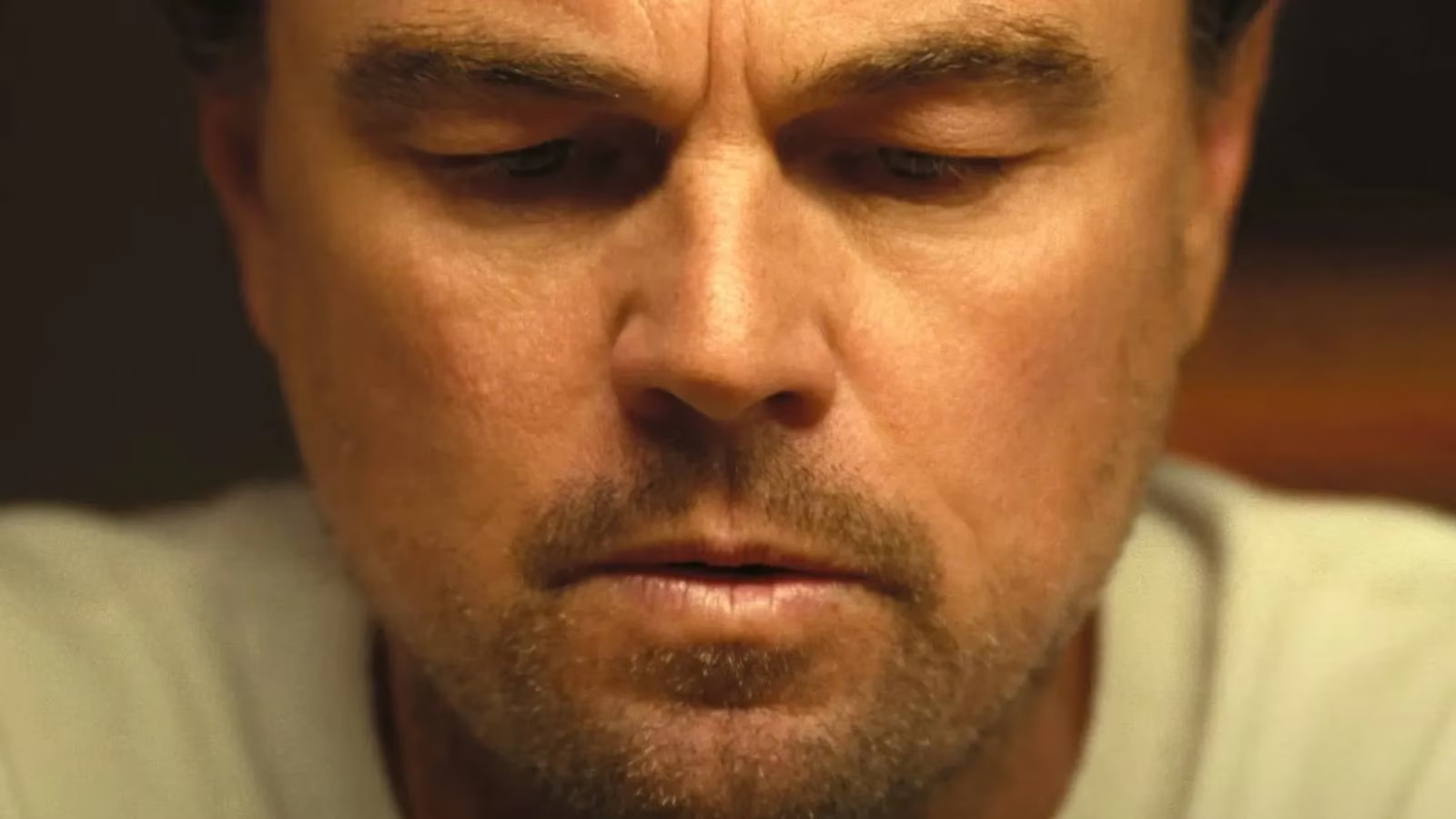
DiCaprio plays Bob Ferguson, an ex-revolutionary who spends the entire picture scrambling to rescue his daughter from a vindictive military man. On paper, Bob is a disheveled, often bumbling figure—a comedic relief stuck in a jaded old-timer’s mindset. It’s a role that could easily have become grating, but DiCaprio’s complete commitment transforms the character into a series of surprisingly poignant and meme-worthy moments. This continues a fascinating trend in his post-Revenant career: he keeps choosing protagonists who are distinctly ineffectual, characters whose absence might not alter the final outcome, yet who still dominate the screen through sheer charisma and craft. In One Battle After Another, he once again commands the camera, even while playing a man who can barely command his own life.
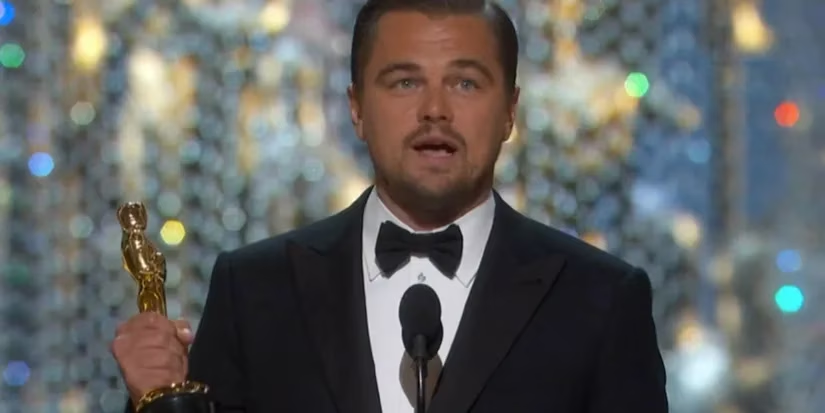
Given that magnetic performance, a Best Actor nomination feels almost inevitable—and well deserved. But I’ve followed DiCaprio’s Oscar journey long enough to know that a nod rarely guarantees a trophy. It’s now been over three decades since his first infamous snub for What’s Eating Gilbert Grape, and though he has racked up six nominations, he has only won once, for The Revenant after four previous defeats. The Academy has often overlooked his finest work, from The Departed to last year’s Killers of the Flower Moon. So even with a nomination all but locked, history warns us that the golden statuette is far from a given.
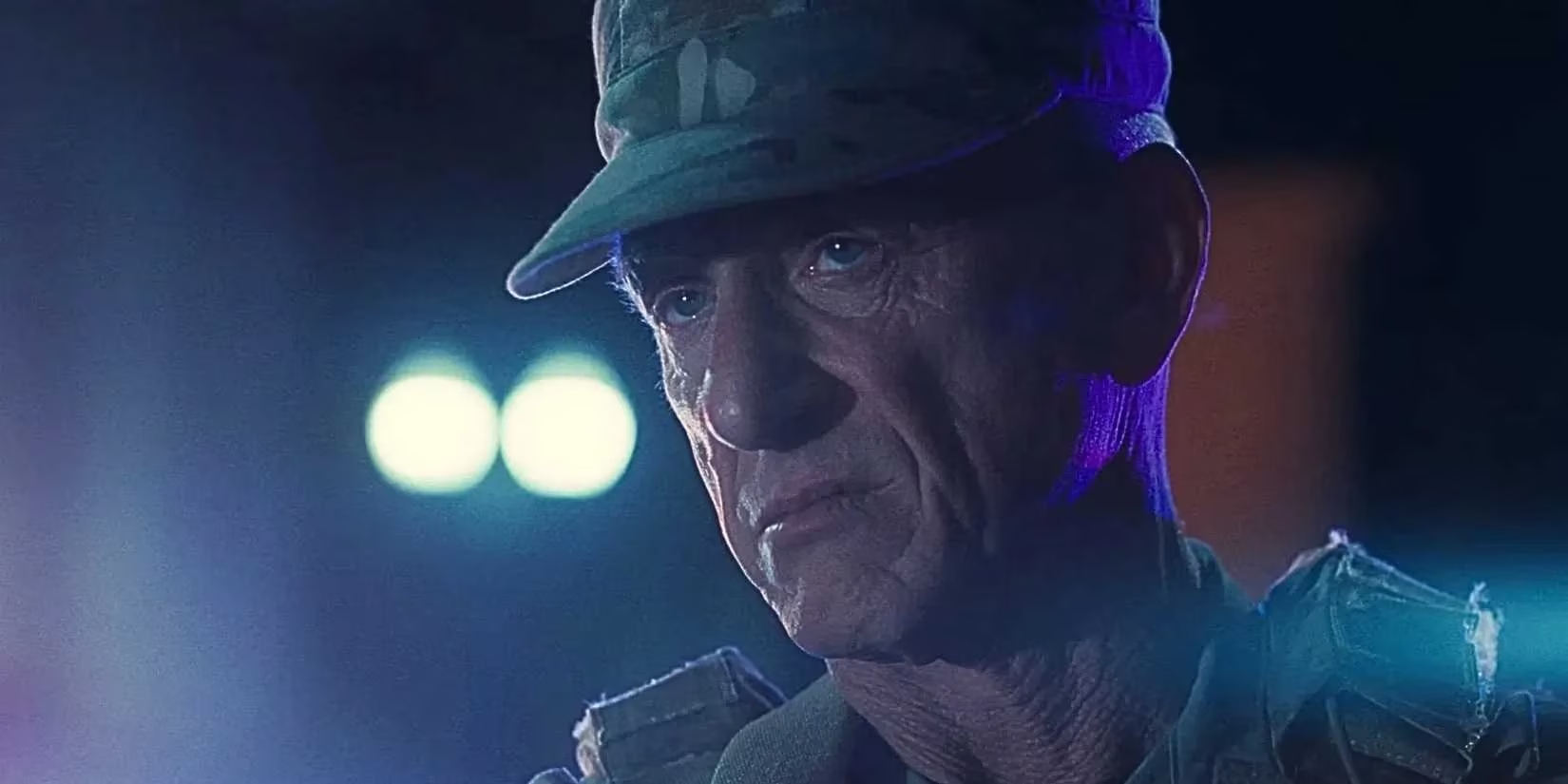
There is, however, a much bigger hurdle standing between DiCaprio and a 2026 Oscar win: Sean Penn. Penn’s portrayal of Colonel Lockjaw, the movie’s loathsome and pathetic antagonist, is nothing short of mesmerizing. He doesn’t just steal scenes; he creates a gravitational pull that makes Lockjaw simultaneously despicable and utterly compelling. Without Penn’s fearless dive into the character’s depravity, the film would lose much of its unsettling power. It’s almost universally accepted that a Best Supporting Actor nomination is certain for him, and his victory seems even more probable than DiCaprio’s in the lead category.
Here’s the historical crux that dooms DiCaprio’s chances: the Academy rarely, if ever, hands both the Best Actor and Best Supporting Actor trophies to the same film. It’s an exceedingly rare phenomenon that hasn’t occurred even ten times in the Oscars’ near-century of history. When a supporting performance is so dominant that it becomes the talk of the town, the lead performance tends to get eclipsed in the voting tallies. If Penn takes home the prize—and most signs point to exactly that—DiCaprio will almost certainly walk away empty-handed, regardless of how brilliant his own work was.
The larger narrative also works against him. The past three ceremonies have seen monumental sweeps by Everything Everywhere All at Once, Oppenheimer, and Anora, and One Battle After Another seems poised to continue that pattern in 2026. I’m especially hopeful it will finally hand Paul Thomas Anderson his long-overdue Best Director Oscar after decades of masterpieces. But sweeps tend to spread the wealth in the acting categories, and the spotlight may settle on Penn while other Best Actor contenders—perhaps from less dominant pictures—gain momentum.
None of this diminishes what DiCaprio has achieved. He turned a role that could have been a sideshow into the heart of the film, showcasing a vulnerability and comedic timing we rarely get to see from him. As we head closer to the ceremony, I’ll be rooting for the movie to win big, and I’ll be cheering for DiCaprio as fiercely as ever. But if history, internal competition, and the Academy’s capricious nature are any guide, his astonishing Bob Ferguson will likely be remembered as yet another stunning performance that, through no fault of its own, remained in the shadow of Oscar gold.