
As the 98th Academy Awards crept closer in early 2026, the Best Picture race had taken on the feel of a classic underdog story. For months, Paul Thomas Anderson’s 'One Battle After Another' had been the presumed frontrunner, a bombastic political epic that dominated critical conversations and box office chatter since its September debut. But quietly, patiently, Chloé Zhao’s 'Hamnet' had been gathering the kind of emotional momentum that could topple even the most formidable contender.
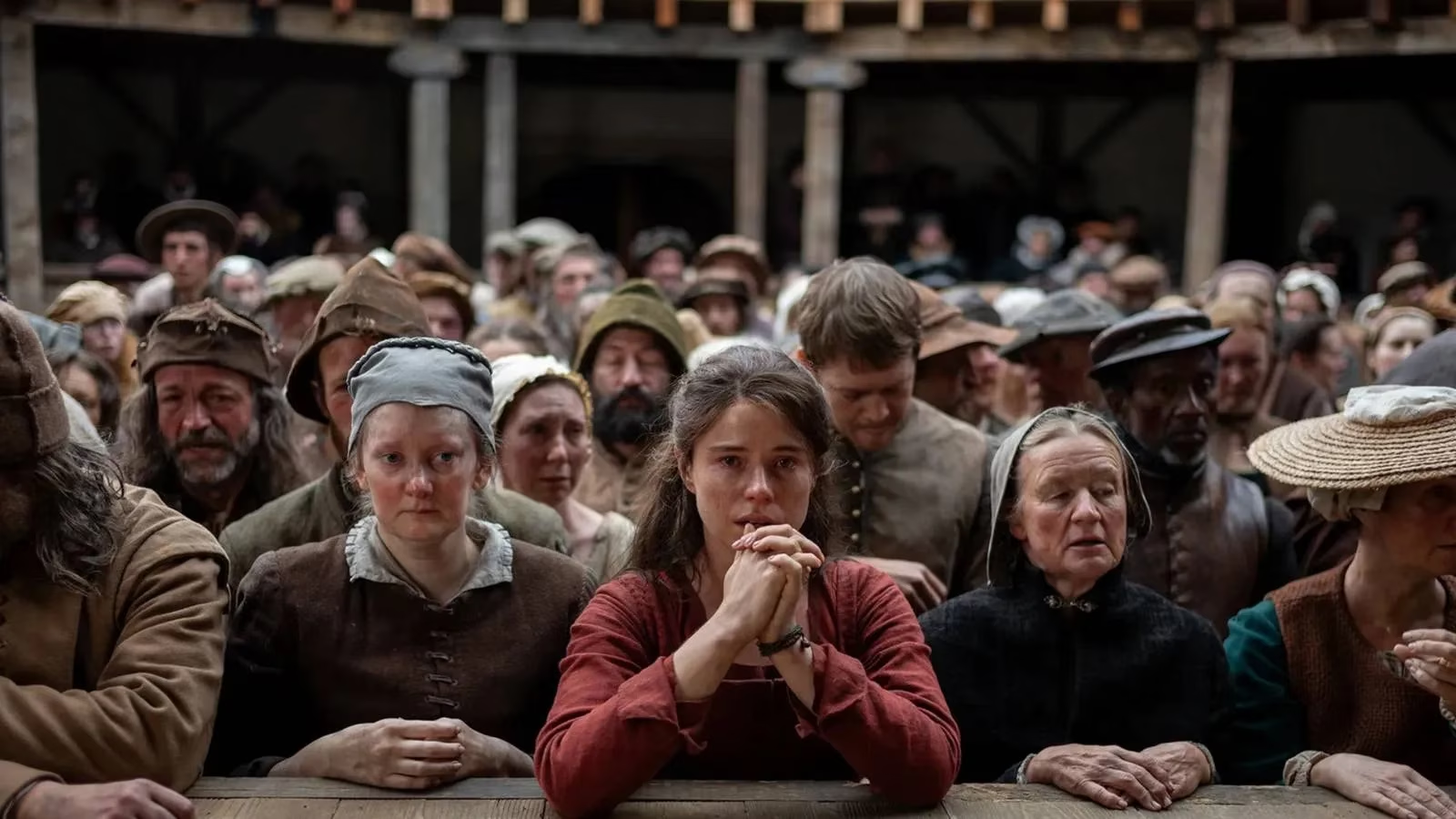
The shift began at Telluride, where Hamnet premiered to rave reviews. From there, Zhao’s adaptation of Maggie O’Farrell’s novel about Shakespeare’s family and the healing power of art began to win over audiences one festival at a time. Its Audience Award at the Toronto International Film Festival felt like a turning point. In any ordinary year, a TIFF Audience Award would cement a film’s status as a lock for a Best Picture nomination. Since the category expanded to ten films in 2009, only one TIFF Audience Award winner had failed to secure a nomination. Hamnet seemed destined for greatness.
Then came One Battle After Another. Anderson’s film had avoided the festival circuit, but its thunderous critical reception and timely political themes transformed the race. The movie’s bold, often absurd tone and big-name cast made it the kind of spectacle that lingers in voters’ minds. Warner Bros., with its deep pockets and aggressive awards machinery, pushed the film to the front. For a while, it seemed as though Anderson’s overdue recognition narrative would carry the day.
But Hamnet refused to fade. At the San Diego, Virginia, Mill Valley, and Middleburg film festivals, Zhao’s film kept collecting Audience Awards. Each win was a small stone in a growing avalanche. These victories mattered because they suggested something crucial: real voters, not just critics, were connecting with Hamnet’s exploration of grief, family, and art on a deeply emotional level. The film’s tearjerker approach was not a weakness; it was the very thing that made audiences fall in love.
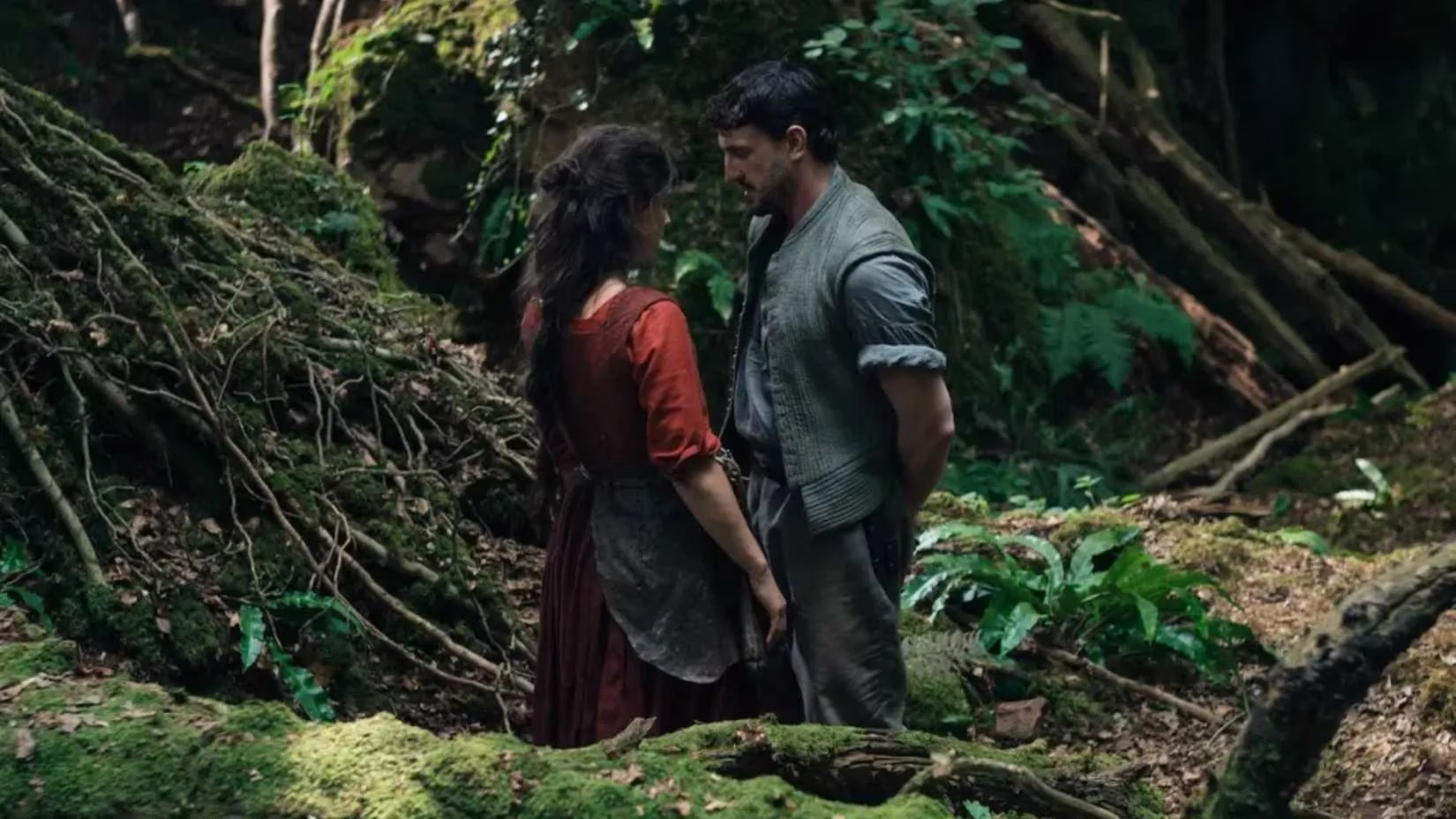
The performances played a major role in this emotional surge. Jessie Buckley and Paul Mescal had been pushed to the front of the pack for Best Actress and Best Supporting Actor, respectively. Their work gave the actor branches of the Academy a reason to rally behind the film. Zhao herself, already an Oscar winner for Nomadland, brought a filmmaker’s prestige that voters clearly respected. Below-the-line categories also looked favorable for Hamnet, thanks to its meticulous period design, cinematography, costume work, editing, and original score.
Still, the race was far from settled. One Battle After Another had advantages that could not be ignored. Its September release meant it would be available on home video and streaming just as Oscar voting began, giving it a potential leg-up among the general voting population. Anderson’s reputation as a master filmmaker, combined with his long-overdue status in the Best Director race, gave him an edge over Zhao, who had won relatively recently. The film’s technical elements and blockbuster appeal kept it in contention for casting, adapted screenplay, production design, cinematography, sound editing, film editing, and original score.
A side-by-side comparison of the two frontrunners revealed the strategic battle behind the scenes.
| Factor | Hamnet | One Battle After Another |
|---|---|---|
| Emotional tone | Tearjerker, grief, healing | Bombastic, absurd, political |
| Festival circuit | Multiple Audience Awards | Avoided festivals |
| Release timing | Not yet wide | September, home video soon |
| Director narrative | Recent Oscar winner | Long overdue |
| Studio campaign | Neon, smaller push | Warner Bros., major push |
| Acting contenders | Jessie Buckley, Paul Mescal | Benicio del Toro, Teyana Taylor |
The Gotham Award nominations for One Battle After Another reminded everyone that indie circles still had affection for Anderson’s film, with Chase Infiniti, Benicio del Toro, and Teyana Taylor thriving in the actor races. But Hamnet’s festival streak could not be dismissed. If it continued at the precursor awards—the guilds, the Critics Choice, the BAFTAs—then the tide might truly turn.
The key moment would come in the weeks before Oscar voting closed. Would Hamnet’s grip on the heart prove stronger than One Battle After Another’s grip on the zeitgeist? Festival audiences had already spoken. Now, the Academy would have to decide whether quiet devastation could defeat audacious spectacle.
For Zhao and her team, the path was clear. Keep winning hearts, one screening at a time. For Anderson, the challenge was different: maintain the roar loud enough to drown out the whispers of grief. In a year defined by competing visions of cinema, the 98th Oscars promised to be a battle between memory and momentum—and no one could yet say which would prevail. 🎬🏆