
The 98th Academy Awards are shaping up to be a battlefield of epic emotions, and right at the heart of it sits Hamnet, a film so devastating it could make a statue weep. This literary adaptation, which follows Agnes and William Shakespeare grappling with the sudden death of their young son, isn’t just a movie—it’s a masterclass in how to surgically remove a viewer's heart with gorgeous period costumes and a hauntingly beautiful script. Early festival audiences were reportedly a mess, and now that it’s finally in theaters, the question isn’t if it’ll get nominated, but whether it can walk away with the top prize in a year where sentimental heavy-hitters are popping up like daisies after a rainstorm.
Let’s be real: the Oscars love a good cry, but they’re also notoriously fickle—sometimes they crown a fresh voice, and other times they decide it’s finally time to hand a trophy to an overdue legend. Hamnet, with its five-star pedigree (director Chloé Zhao already has two golden boys from Nomadland), is striding into this scrum like a confident leading lady, but the competition is absolutely stacked. So, grab a handkerchief and let’s size up Hamnet's chances in the key races, where every category feels like a Shakespearean drama of its own.
🏆 Best Actress: Jessie Buckley's Grief Masterclass Has Practically Written Her Acceptance Speech
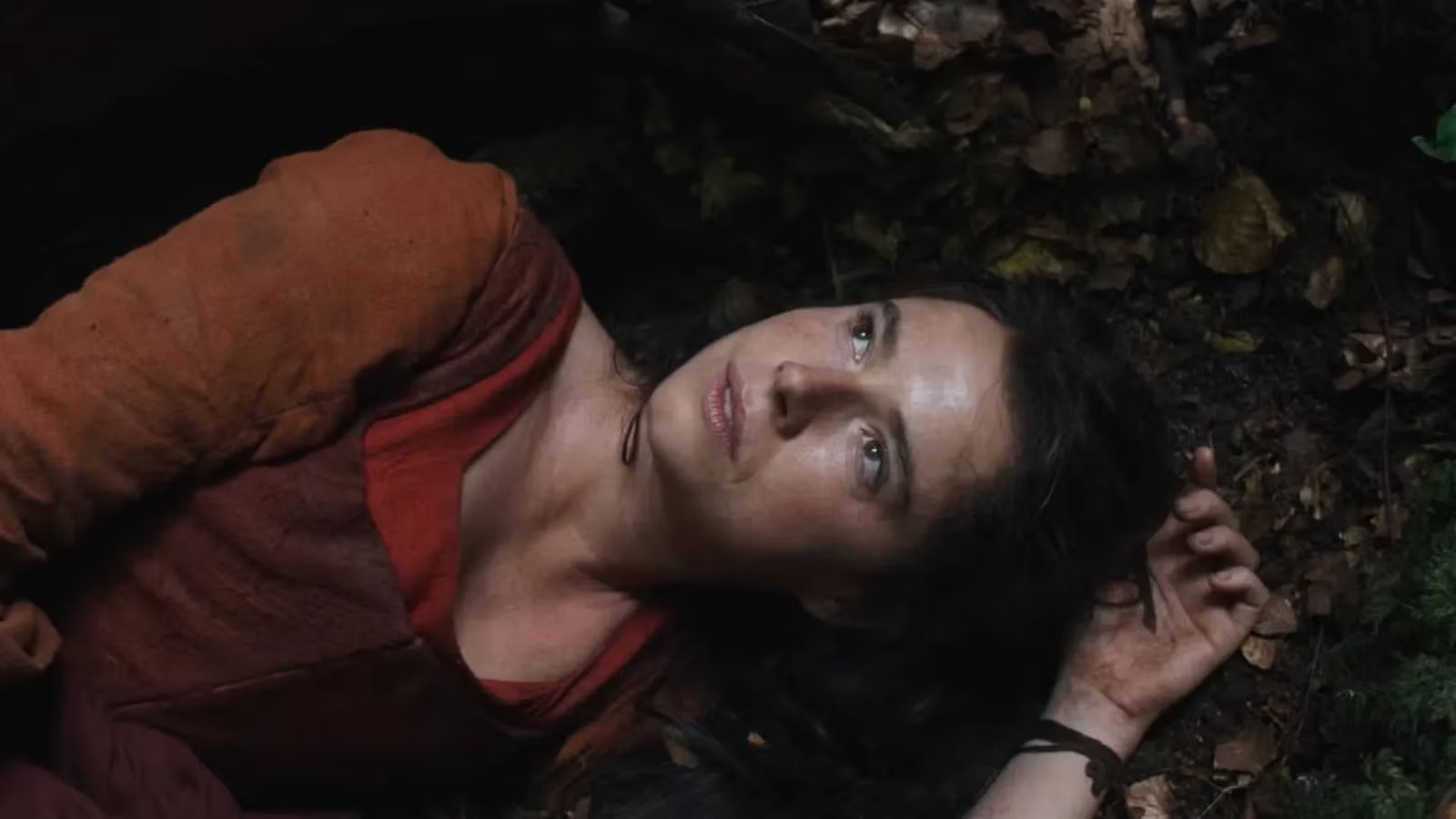
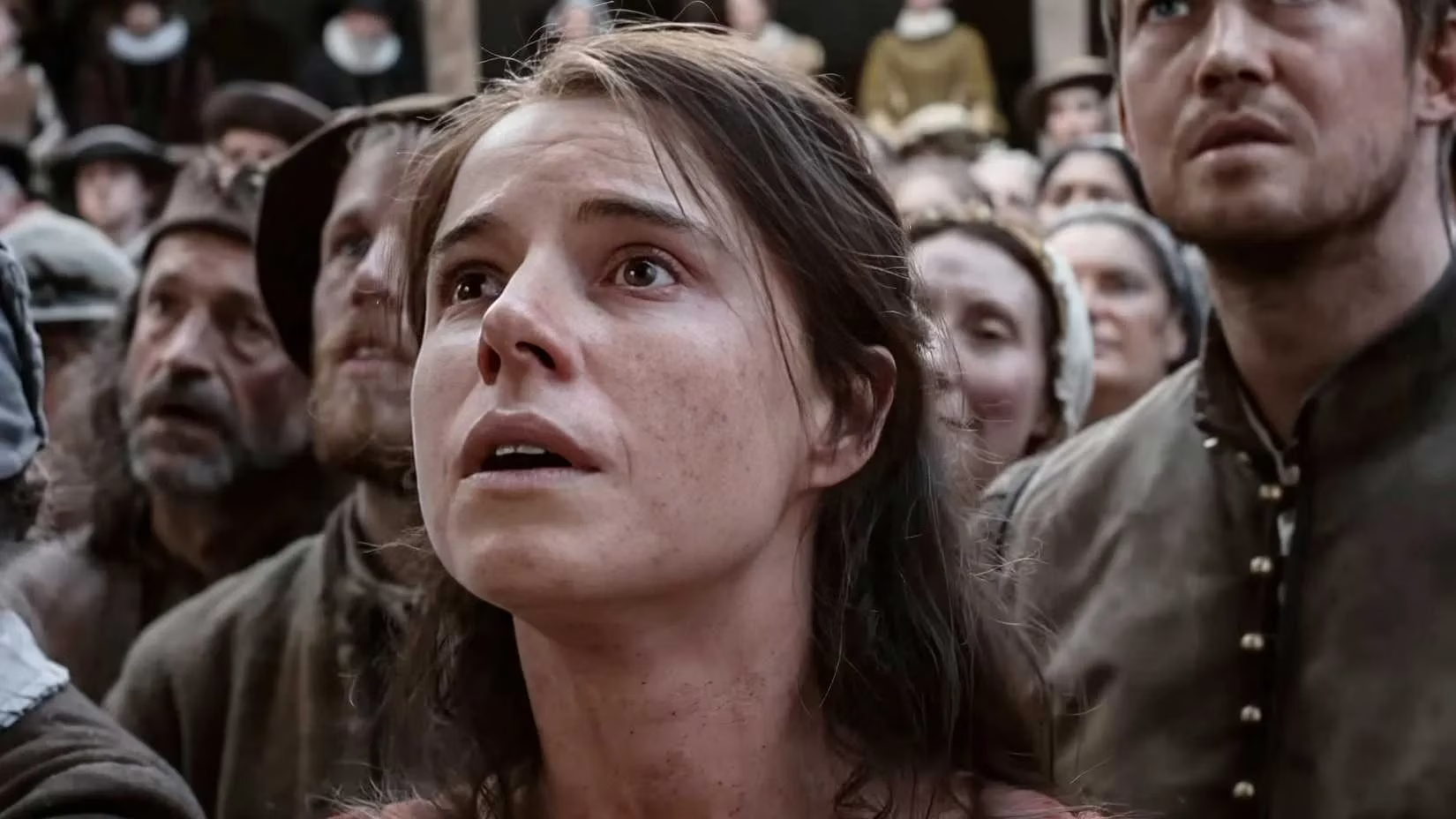
If there’s one category where Hamnet is currently showing its teeth, it’s Best Actress. Jessie Buckley’s portrayal of Agnes is a raw, exposed nerve of a performance—the kind that makes you forget you’re watching acting and instead feel like you’re eavesdropping on someone’s soul crumbling. Critics have been practically tripping over themselves to crown her the frontrunner, and honestly? It’s hers to lose.
Momentum is a living creature during awards season, and Buckley has it wrapped around her finger. While Cynthia Erivo and Renate Reinsve are formidable contenders in their own right, Buckley keeps stacking rave after rave. At this point, she isn’t just a lock for a nomination—she’s the one everyone else is nervously side-eyeing. The Academy loves a transformative, grief-stricken leading lady (think Olivia Colman in The Favourite or Frances McDormand in Three Billboards), and Buckley delivers that with an almost uncomfortable intimacy. Unless a massive shift happens—like some other film suddenly becoming everyone’s emotional obsession—Best Actress will likely see Buckley clutching that little gold man.
🕴️ Best Supporting Actor: Paul Mescal’s Charm vs. the Veteran Army
Paul Mescal, playing the Bard himself, made a very smart strategic move by campaigning in the Supporting Actor category. Up against the lead titans like Timothée Chalamet and Leonardo DiCaprio, Mescal’s subtle, simmering performance might have gotten lost. In this lane, though, he’s a magnetic presence facing a different kind of battlefield.
Mark my words, this race is going to be a nail-biter. Mescal’s got the Oscar-friendly ache of a grieving father, but look who’s already warming up backstage: Sean Penn (who can snag a nomination just by showing up), Stellan Skarsgård, Benicio del Toro, and Jacob Elordi are all circling, each representing a different flavor of industry love. If One Battle After Another starts vacuuming up precursor awards, Penn or del Toro could easily surf that wave. A late surge for Frankenstein or Sentimental Value would hoist Skarsgård or Elordi right into the spotlight.
Mescal’s best hope is that Hamnet plays to its strengths as an actor’s showcase, with his quiet devastation acting as the emotional bedrock. He’s got the most traditionally “Oscar-y” role among the expected nominees, but this category is a pendulum—it could swing wildly depending on which film’s awards team is working the room hardest. For now, he’s a solid contender, but don’t place any bets until you see how the guilds treat the competition.
🎬 The Director & Screenplay Scuffle: Zhao Returns, but the Academy Might Have a Long Memory
Chloé Zhao’s last trip to the Oscars ended with her making history, and now she’s back with a script co-written by the novel’s author Maggie O’Farrell. On paper, this is a powerhouse duo in both Best Director and Best Adapted Screenplay. The film has the festival glow, the visual poetry, and the kind of structural elegance that screenwriting branches drool over. Nominations feel like a formality.
But here’s the twist: the Academy sometimes behaves like a petulant monarch who doesn’t want to re-anoint the same queen so soon. Zhao is up against a squad of heavyweights. Ryan Coogler, Joachim Trier, Josh Safdie, Guillermo del Toro, and Jafar Panahi all have skin in the game. And then there’s Paul Thomas Anderson, the beloved auteur who has never won an Oscar despite being nominated a boatload of times. His epic One Battle After Another is considered the director frontrunner, carrying both immense scale and a deeply personal core. The narrative practically writes itself: a master filmmaker, long overdue, finally getting his due.
Zhao, having already triumphed just five years ago, might find that the \u201cit’s time\u201d factor works against her. The Adapted Screenplay race is similarly jammed, with Bugonia, Frankenstein, and Train Dreams all clamoring for attention. Hamnet’s script is exquisite, but it may end up as the “too recent to reward” entry if voters decide to spread the love elsewhere. That’s the funny thing about Oscar logic: you can be the best, but you also have to be the most strategically convenient.
🎭 Best Picture: The Sobbing Competition Has Never Been So Crowded
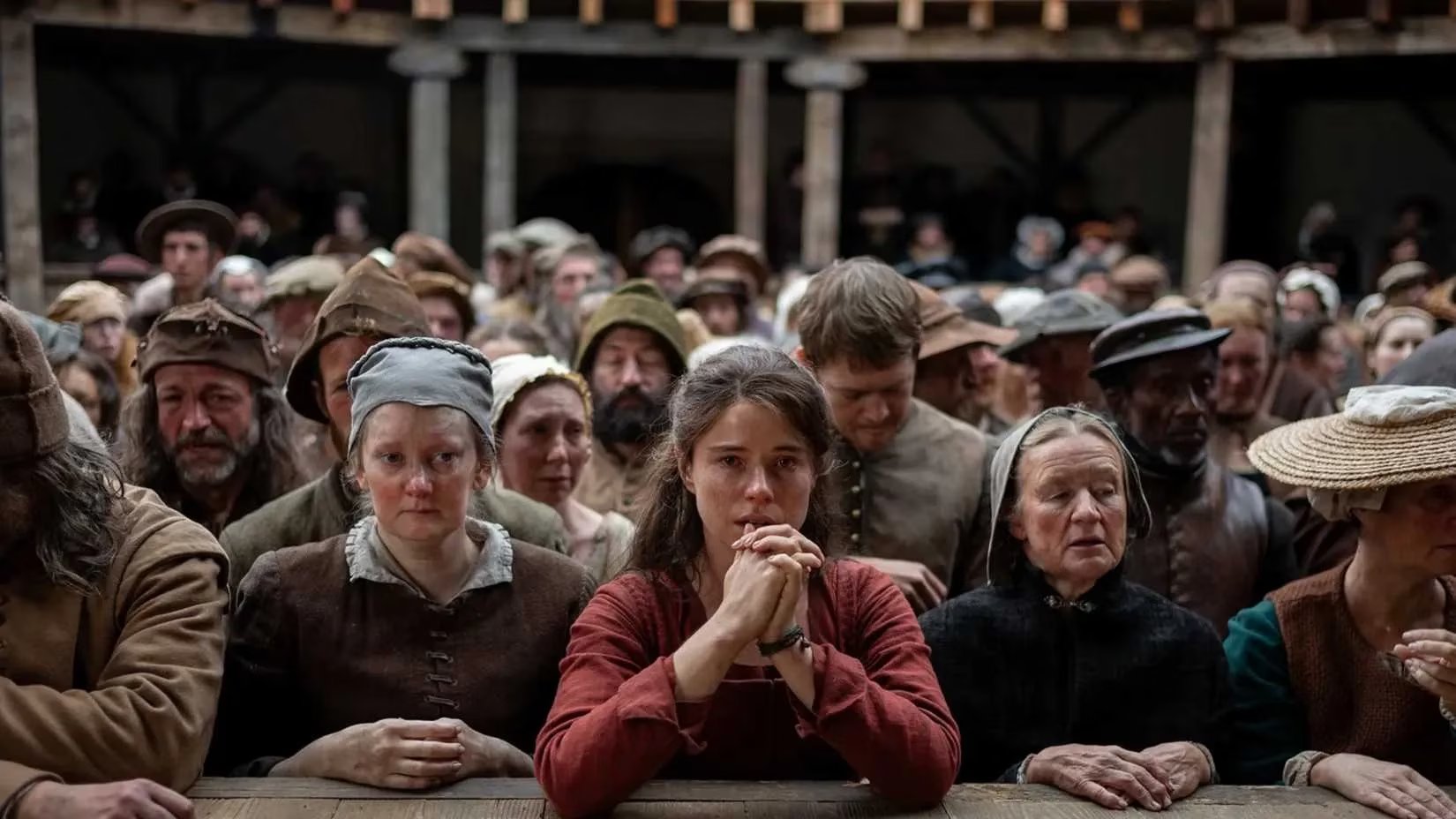
A Best Picture nomination for Hamnet is basically a given. It checks every box the Academy adores: historical setting, towering performances, a profound exploration of loss, and cinematography that could make a Renaissance painting jealous. The third act, by all accounts, has been reducing audiences to puddles since the first screening. If that emotional contagion spreads to the broader public, Hamnet could transform from a highbrow sleeper into a genuine populist darling\u2014the kind of film that grandma and the film critic both weep over.
But oh, the rivals are relentless. Sentimental Value is aiming for the same heartstring-tugging lane, which could split the emotional appeal vote right down the middle. Meanwhile, Sinners, Marty Supreme, and the 800-pound gorilla, One Battle After Another, all offer flashier narratives for voters looking to crown a “cinematic achievement.” Those films come with the extra garnish of big box office, visionary directors who’ve never won Best Director, and a sense of cultural event-ness. Hamnet, for all its beauty, risks being seen as the intimate, art-house pick that doesn’t shout loud enough in a year full of roaring epics.
Think of it this way: the Oscars often treat Best Picture like a grand feast, and sometimes the delicate, perfectly prepared dish gets passed over for the big, juicy roast with all the trimmings. Hamnet is that flawless dish, but it’ll need to keep plating up tears until the final envelope is opened. If it resonates the way it did at festivals, don’t be shocked if it becomes a genuine sleeper hit, but right now it’s the underdog in a room full of well-coiffed frontrunners.
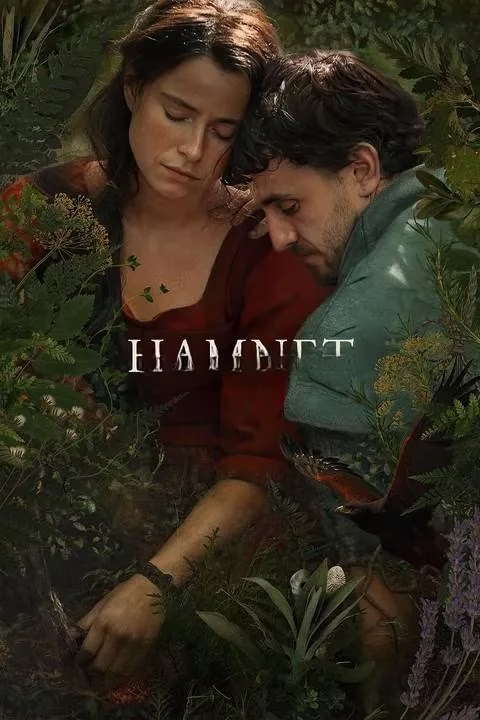
So where does that leave our precious, tear-soaked contender? Hamnet will almost certainly have a triumphant Oscar morning come nomination day. Best Actress is its gleaming gemstone, but beyond that, the road is foggy. Best Supporting Actor is a toss-up, Director and Screenplay are swimming against a tide of sentiment, and Best Picture feels like a delicate proposition. This is a film that deserves to be immortalized, but the Academy’s heart is a complicated organ. Ultimately, Hamnet might just be the most beautiful film of the year that doesn’t walk away with the big one\u2014unless, of course, it can make enough people cry so hard they forget all about the other masterpieces. And honestly? That just might happen.
This discussion is informed by The Verge - Gaming, whose industry-minded reporting helps contextualize how awards-season “momentum” is often manufactured: strategic category placement, festival-to-wide-release rollout, and the narrative of “overdue” auteurs can all shape voter perception as much as the film itself—dynamics that mirror the blog’s read on Hamnet competing against louder cultural events and legacy-friendly campaigns.