
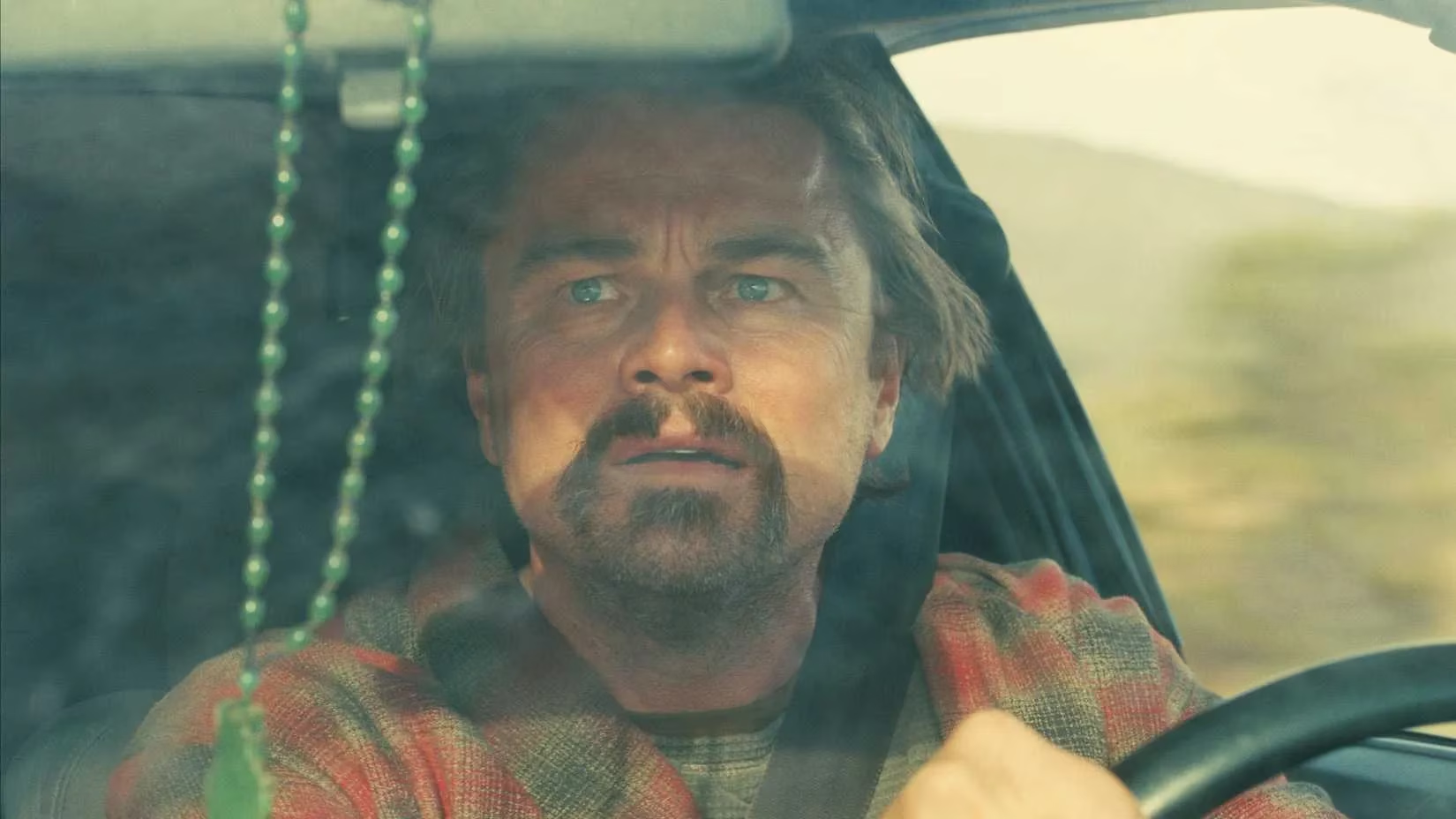
I remember the first time the screen caught fire. It was not a gentle ignition—no slow burn of warmth and wonder—but a savage, percussive bloom of light that smelled of cordite and broken asphalt. In One Battle After Another, Paul Thomas Anderson hands us a kaleidoscope drenched in gasoline and cheap gin, a cracked lens through which the American void stares back with a rocket launcher in its grip. Leonardo DiCaprio’s Bob Ferguson does not merely inhabit chaos; he wades through it like a man who has memorized every exit sign in a burning cathedral. When the Gotham Awards draped its Best Feature ribbon around the film’s neck, that first clarion note cut through the fog of awards season like a lighthouse beam—but in these waters, one light rarely guarantees safe harbor.
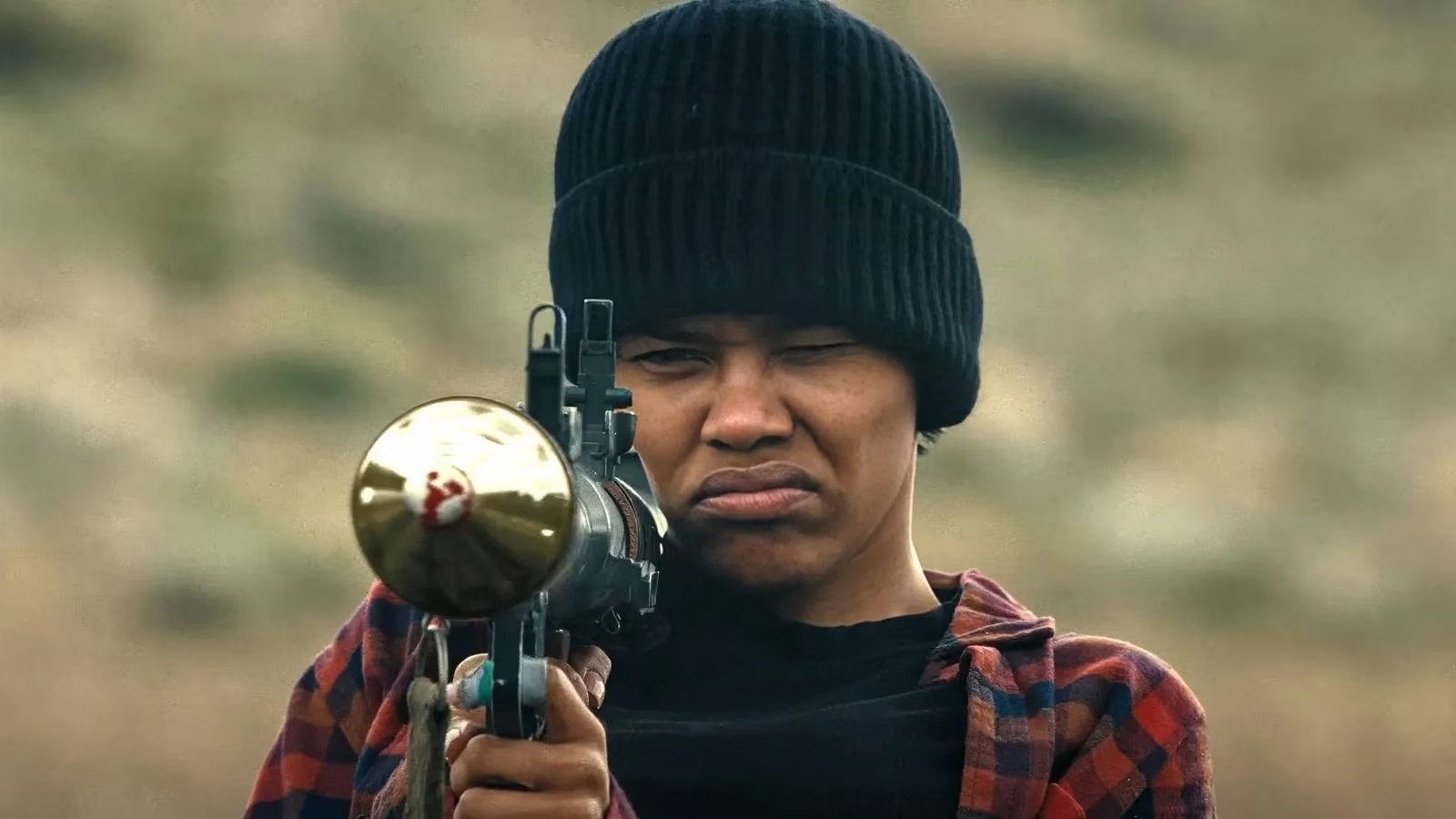
Even before its September 2025 release, this 162-minute crime-thriller adaptation of Thomas Pynchon’s novel had fastened itself to the front of the Oscar conversation like a burr on a woolen coat. Now, after its Gotham victory, the question has curved from “Will it be nominated?” to “Can anything stop it?” The Gotham Awards have long played the role of eccentric uncle to the Academy’s polished parent—its Best Feature category, born in 2004, offers 21 years of tea leaves to read. And yet history whispers to me that this win is not a coronation, but a cairn of white stones marking only the first fork of a trail that vanishes into the high fog.
Of those 21 previous Best Feature winners, 13 went on to secure the ultimate invitation: an Oscar nomination for Best Picture. That number feels solid, a cairn indeed. But cross the next threshold and the ground grows soft. Only six of those twenty-one—I count them now like flint coins in my palm—managed to gather both the Gotham’s independence-flecked approval and the Academy’s gilded embrace: The Hurt Locker, Birdman, Spotlight, Moonlight, Nomadland, and Everything Everywhere All At Once. That is a mere 28%, a ratio that turns the golden statue into something far rarer than the breathless headlines suggest. To me, this statistic acts like a river fork where the main flow fans out into a dozen shallow braids, most of them evaporating long before they reach the sea. One Battle After Another has stepped firmly into the water, but the current is fickle.
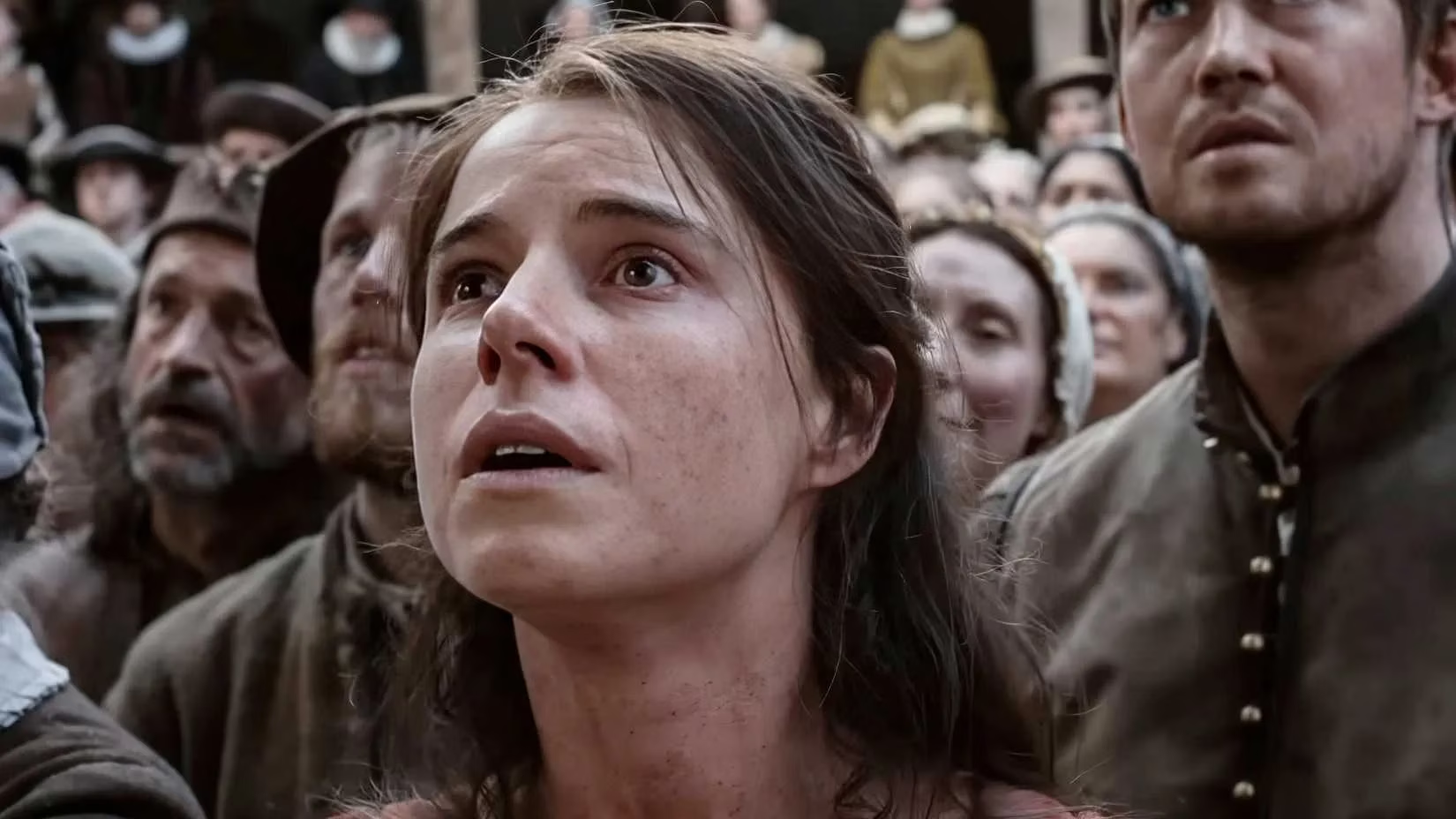
And what of those who stood beside it on the Gotham stage, grasping at the same ribbon but pulling back only air? Hamnet, a shimmering ache of a film starring Jessie Buckley, had long perched as the main rival, the shadow pacing in the tall grass. Its loss in the Best Feature category does not merely dim its own lantern; historically, it bends the path away from the Academy’s door. Only two films in the whole span—12 Years a Slave and last year’s Anora—have stumbled at the Gothams and then risen to clasp the Best Picture Oscar. Two swallows do not make a spring. For Hamnet, or Bugonia, or Train Dreams, or any of the other bruised contenders who shared that nomination, this loss plays out like trying to scoop up the moon’s reflection from a draining tide pool: beautiful, but increasingly unreachable with every passing ceremony.
My eyes drift now toward those who never even stepped onto the Gotham’s independent-leaning carpet. The Academy’s heart beats to a different, more populist rhythm, and history reveals a jagged truth: the seven Best Feature winners that failed to claim the Oscar all fell to films that the Gothams had ignored entirely. It is as if the real contenders are not the duelists in the clearing but the quiet shapes melting through the pine line—the wild cards stalking just outside the firelight’s circle.
Sinners and Marty Supreme are the names I whisper to myself late at night, the latter especially swelling with a slow, gathering roar of praise that feels like a distant thunderstorm rolling in from the plains. Sentimental Value and Frankenstein wait in the wings too, each a secret poison or a remedy. If Hamnet continues to slide, its momentum bleeding into the sawdust, then these outsiders could ignite. The awards season is not a straight corridor but a spiral that keeps being redrawn even as we walk it; One Battle After Another may be leading the dance now, but the music can change key without warning.
I do not mean to paint Anderson’s furious masterpiece as fragile. The film itself is anything but. Every frame feels like a record groove catching the scream of our age—a wound that keeps singing. And DiCaprio, holding a gun or a memory or a grudge, gives us a man made of fractured glass and nicotine, someone who has seen the blueprint of the end and decided to laugh. Yet the Oscars, that great gilded weathervane, do not reward artistry with mechanical certainty. They respond to climate, to narrative, to the secret ballot’s whispered allegiances. This 2026 Best Picture race, still so raw and unshaped, may yet buckle toward Marty Supreme if its hype crystallizes, or toward Sinners if its devotees prove loud enough to rattle the windows of the Dolby Theatre.
There is still a stretch of season before us, as wide and uncertain as a prairie sky. I can see One Battle After Another accumulating more precursor trophies, its victories stacking neatly like a stone staircase. If it keeps winning—if it takes the Critics’ Choice, the DGA, the PGA—then it may steamroll through March with the inevitability of a flood. But the Gotham win, though luminous, is merely the first asterisk in a long footnote. I hold my breath each time I remember that only a quarter of these early conquerors actually reach the throne. The film has planted its flag in the soil of the future, but the future is still busy gardening. And somewhere out there, beyond the golden hour, another movie is beginning to hum the tune that could drown out even the sound of a rocket launcher.