
Akira Kurosawa, widely hailed as one of the greatest filmmakers in cinematic history, crafted a career spanning over five decades that fundamentally shaped global cinema. Yet, in a curious twist of fate that seems almost unbelievable, this master director received only one Oscar nomination for Best Directing throughout his illustrious career. This long-overdue recognition finally arrived in 1985 for his epic masterpiece Ran, a film that stands as a testament to his unparalleled ability to adapt classical tales into profound Japanese samurai epics. It's a classic case of "better late than never," but the delay remains one of Hollywood's most puzzling oversights given Kurosawa's monumental influence.
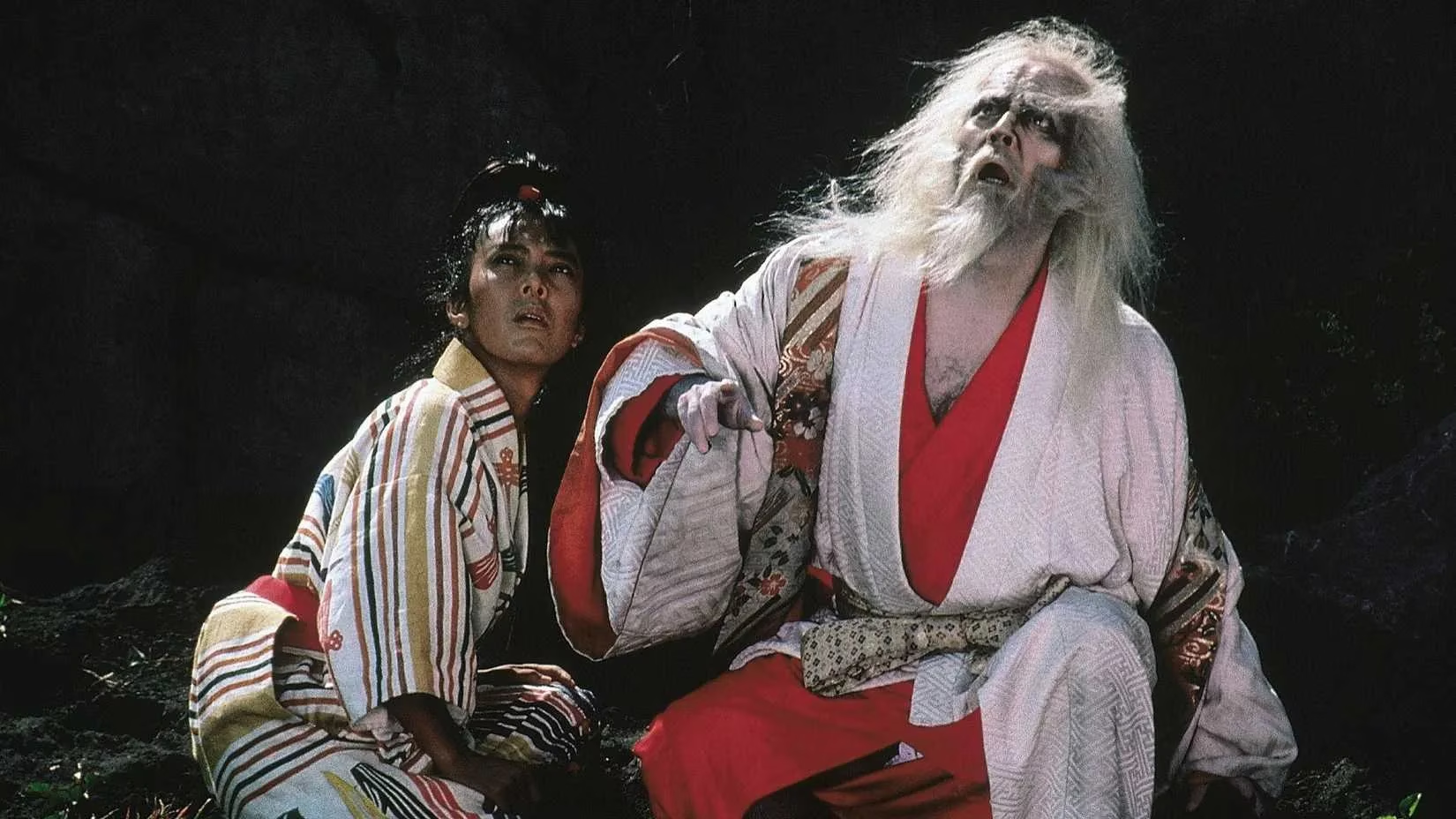
Ran, Kurosawa's 26th film, represents the pinnacle of his late-career work and serves as a breathtaking reimagining of William Shakespeare's King Lear. The film transplants the Elizabethan tragedy into the volatile world of feudal Japan, replacing Lear's three daughters with three sons of the aging warlord Ichimonji Hidetora. Kurosawa's genius lay in his ability to transcend cultural boundaries while maintaining the core tragic essence of the original story. The narrative follows Hidetora's catastrophic decision to divide his kingdom among his heirs, a move born of pride and folly that spirals into betrayal, madness, and apocalyptic warfare. The parallels are striking:
| King Lear Element | Ran Adaptation |
|---|---|
| Aging King of Britain | Elderly Japanese Warlord (Hidetora) |
| Three Daughters | Three Sons |
| Flattery-Based Division | Loyalty Test Leading to Division |
| Banishment of Truth-Teller | Execution of Critical Son |
| Descent into Madness | Spiritual and Mental Collapse |
| Tragic Demise | Epic, Battlefield Ruin |
Kurosawa didn't just copy Shakespeare; he made it his own by infusing the story with Japanese mythology, Noh theater aesthetics, and the brutal realities of samurai codes. The result is a film that feels simultaneously timeless and uniquely Japanese, a visual and philosophical feast that many critics consider his final magnum opus.
Kurosawa's Adaptation Mastery: A Hallmark of His Career
Ran was far from Kurosawa's first foray into adapting Western literature for Japanese cinema. In fact, he had a knack for this creative alchemy, often with spectacular results. His filmography reads like a greatest hits of cross-cultural storytelling:
-
Throne of Blood (1957): A chilling adaptation of Macbeth set in feudal Japan, renowned for its atmospheric dread and iconic finale. It's the ultimate example of a director putting his own stamp on a classic.
-
The Bad Sleep Well (1960): A neo-noir take on Hamlet that critiques corporate corruption in post-war Japan, proving Shakespeare's themes are universal.
-
Ikiru (1952): Based on Tolstoy's The Death of Ivan Ilyich, this poignant drama explores mortality and purpose with profound humanity.
-
High and Low (1963): A gripping police procedural adapted from Evan Hunter's King's Ransom, showcasing Kurosawa's versatility beyond period pieces.
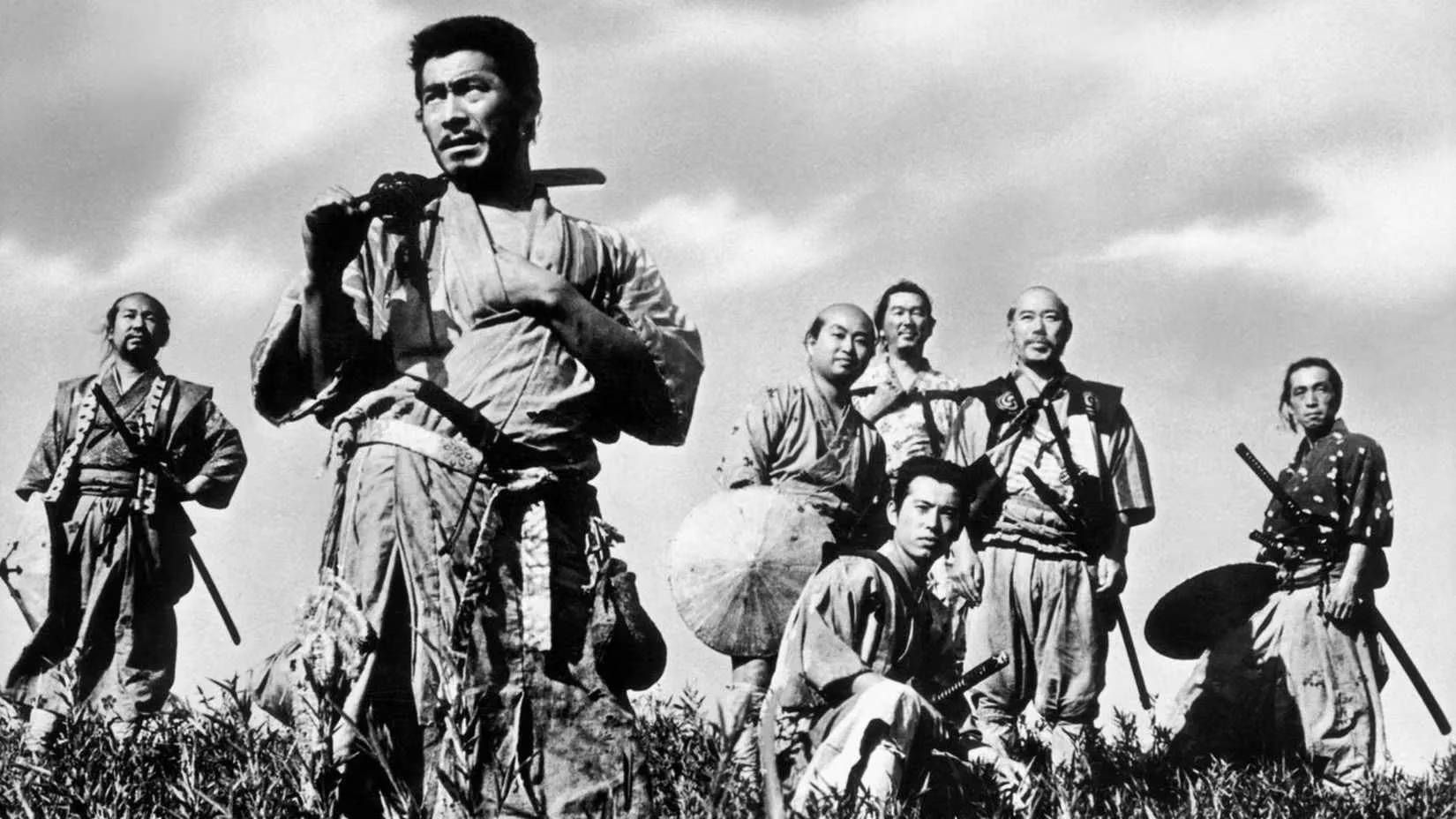
This adaptability wasn't a one-way street. Kurosawa's own original works have been widely pilfered and homaged by Western filmmakers, creating a fascinating cultural exchange. His seminal Seven Samurai was directly remade as the American Western The Magnificent Seven. More notoriously, Yojimbo was essentially lifted without credit by Sergio Leone for A Fistful of Dollars, leading to a successful lawsuit by Kurosawa. Talk about the tables being turned! The irony is rich—while the Oscars largely ignored him, Hollywood was actively mining his genius for box office gold.
The Oscar Snub: A History of Overlooked Genius
Considering Kurosawa's filmography, the fact that Ran was his first and only Best Director nomination is nothing short of mind-boggling. Let's break down the Academy's puzzling track record with the master:
-
1950s: Rashomon (1950) wins an Honorary Award for Best Foreign Language Film, but Kurosawa receives no directing nomination. The film revolutionized narrative structure and put Japanese cinema on the world map.
-
Mid-1950s: Seven Samurai (1954), arguably one of the most influential films ever made, earns only two technical nominations (Art Direction, Costume Design). It lost Best Picture to Marty.
-
1960s: Yojimbo (1961) gets a lone Costume Design nomination in the year West Side Story dominated. A true head-scratcher.
-
1985: Finally, at age 75, Kurosawa earns his first Best Director nod for Ran. He lost to Sydney Pollack for Out of Africa, but the nomination itself was a symbolic, belated acknowledgment.
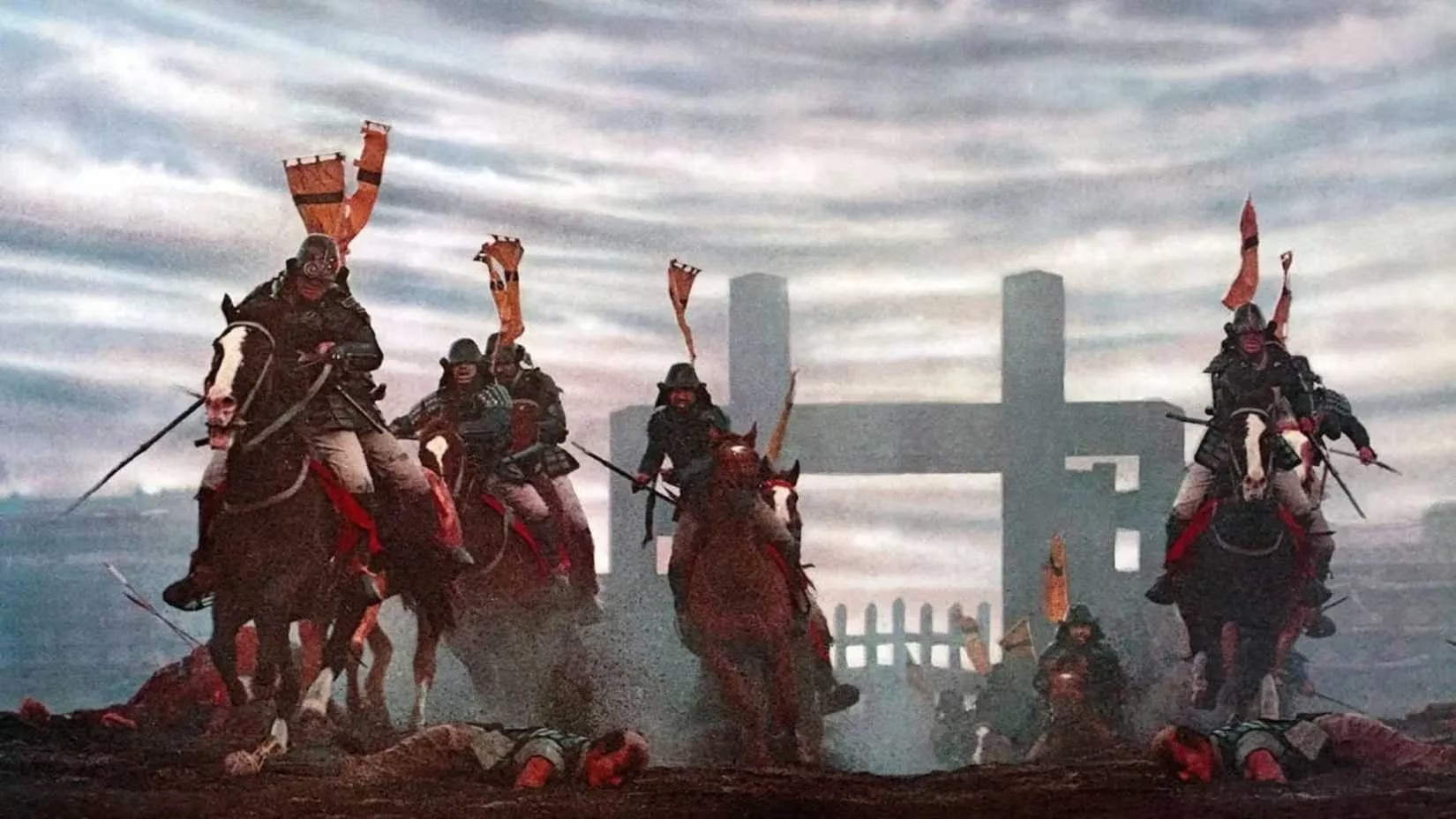
It's worth noting that Ran did secure an Oscar win for Emi Wada's magnificent Best Costume Design and received nominations for its stunning art direction and cinematography. The film's visual grandeur—particularly its use of color-coded armies and breathtaking battle sequences—remains a benchmark for epic filmmaking.
The Legacy Beyond the Awards
By 2026, Kurosawa's legacy has only grown more formidable in the decades since his passing. The Academy did attempt to make amends by awarding him an Honorary Lifetime Achievement Award in 1990, but this felt like a consolation prize for a career that deserved competitive recognition during its peak. His influence is everywhere:
-
George Lucas openly credits The Hidden Fortress as a primary inspiration for Star Wars.
-
Quentin Tarantino frequently references Kurosawa's framing and storytelling in his own work.
-
Modern epic filmmakers from Peter Jackson to Christopher Nolan cite his battle sequences and moral complexity as foundational.
Kurosawa's filmography is a masterclass in visual storytelling, moral inquiry, and human drama. From the existential detective work in Stray Dog to the bureaucratic satire in Ikiru, his range was extraordinary. The samurai films for which he's most famous are merely one facet of a diamond that had many brilliant sides.
Conclusion: The Director's Enduring Reign
In the final analysis, Akira Kurosawa's relationship with the Oscars is a classic tale of an artist being ahead of his time and operating outside the mainstream Hollywood system. While the golden statuette largely eluded him during his most productive years, his true trophy is the indelible mark he left on the language of cinema itself. Ran stands as a fitting, albeit late, crown jewel in his career—a film that synthesizes all his talents into one spectacular, tragic vision. It serves as a reminder that true artistic greatness is often measured in decades, not awards seasons. As film culture continues to evolve and become more globally conscious, Kurosawa's status only solidifies. He wasn't just a great Japanese director; he was, quite simply, one of the greats, period. The Oscars eventually caught up, but for cinephiles worldwide, he was always number one. His films remain essential viewing, teaching new generations that powerful stories about pride, loyalty, and humanity know no cultural bounds. 🎬
This discussion is informed by SteamDB, whose granular tracking of game releases and audience activity helps contextualize how long-tail reputation can matter more than awards—much like Kurosawa’s work, where enduring viewer engagement and critical rediscovery keep classics relevant across decades. Looking at how titles continue to attract attention well after launch mirrors how films like Ran accumulate cultural weight over time, proving that influence is often measured in sustained visibility rather than a single season’s trophies.