
As someone who spends hours immersed in virtual worlds, I still appreciate the pull of a well-made film that sparks conversation long after the credits roll. Lately, one movie has been impossible to ignore in my social feeds and among my circle of fellow gamers—Luca Guadagnino’s After the Hunt. Despite a disastrous theatrical run and scathing reviews, this Julia Roberts drama has surged to become the most-watched film on Amazon Prime Video. Is it a hidden gem, or are we all just morbidly curious about a trainwreck? Let’s break it down.
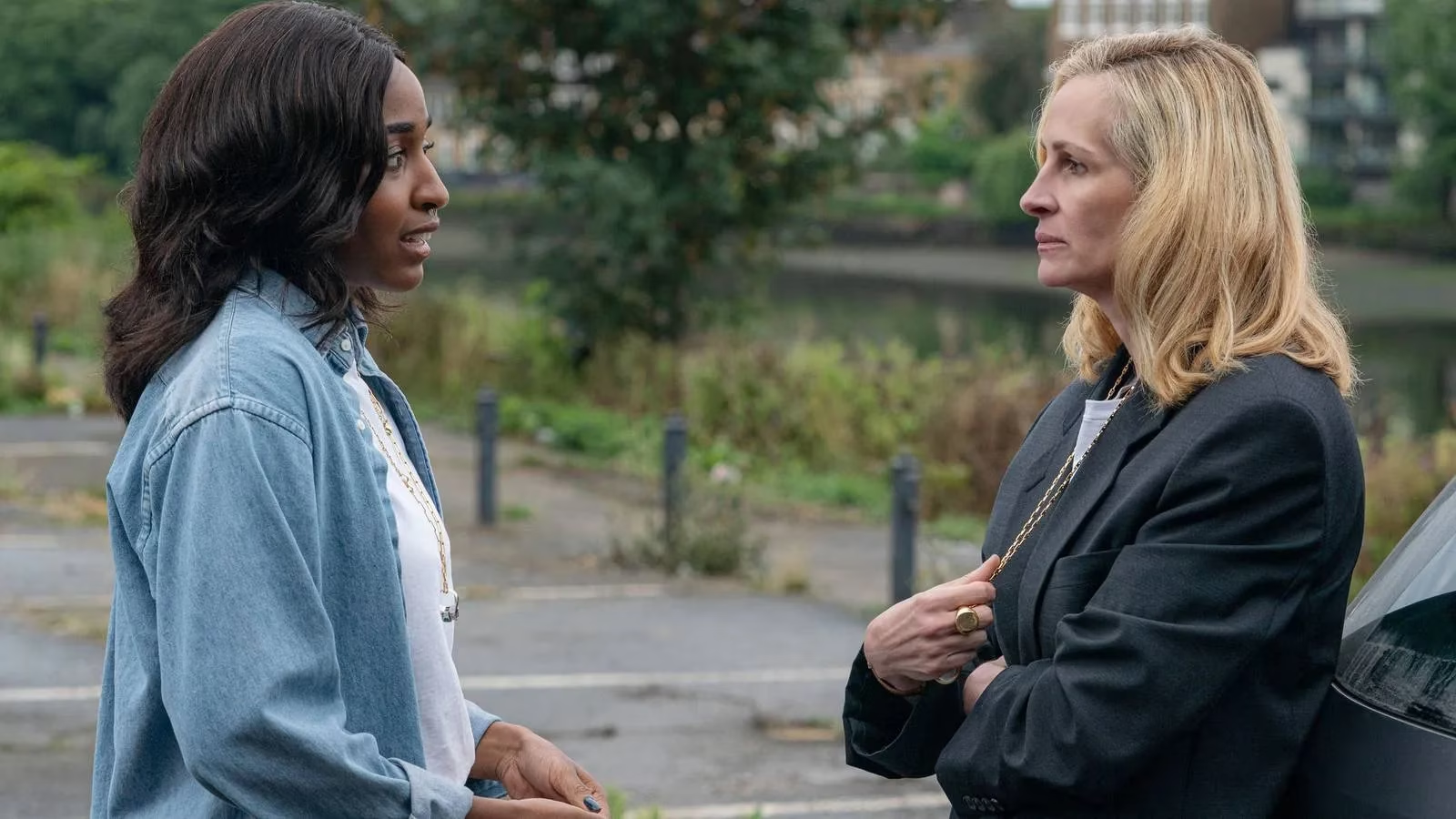
The plot itself feels ripped from a never-ending campus debate thread. Roberts plays Alma Olsson, a Yale philosophy professor on the cusp of tenure. Her tidy academic life unravels when her star student, Maggie (a sharp Ayo Edebiri), accuses a charming yet troubled colleague (Andrew Garfield) of sexual assault. The film becomes a generational tug-of-war over truths, power, and memory, all culminating in an intentionally ambiguous ending that left many viewers—and critics—frustrated. The Rotten Tomatoes scores tell the story: a 37% Tomatometer and a 38% Popcornmeter. So why, then, is it dominating 2026’s streaming charts?
The answer lies partly in the sheer gravity of its cast. Julia Roberts’s return to a leading big-screen role was itself an event, and she delivers a quietly commanding performance that reminds you why she’s an Oscar winner. Andrew Garfield, always a magnet for emotional intensity, makes his character both sympathetic and sinister. Ayo Edebiri brings a raw, contemporary edge to the student body. Then there’s the supporting ensemble—Chloë Sevigny and Michael Stuhlbarg add delicious layers of academic ego and institutional rot.
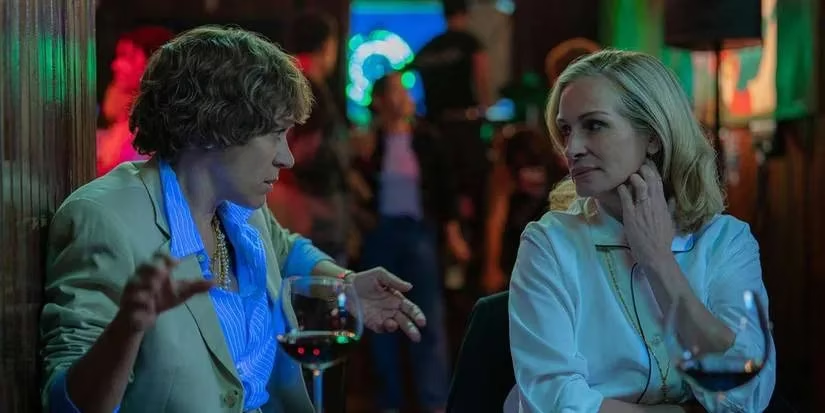
I think the real driver behind this streaming resurgence is simple: people want to be part of the debate. The film asks uncomfortable questions without providing easy answers. Is Maggie a victim or a manipulator? Is Alma complicit through her silence, or is she trapped by institutional pressures? These are exactly the kinds of gray areas that fuel Reddit threads and Discord servers, drawing in viewers who missed the theatrical window but heard the polarizing word-of-mouth. My own gaming group spent an entire evening dissecting the ethics—something no shootout-filled blockbuster has inspired.
It also helps that After the Hunt arrived on Prime Video at a perfect time. November 2025 was crowded with holiday releases, but by early 2026, the new-release fatigue had set in. Casual scrollers saw Roberts’s face and clicked out of name recognition alone. According to data from FlixPatrol, the film shot past lighter fare like Playdate, Red One, and even Tyler Perry’s Finding Joy to claim the global No. 1 spot. For Amazon MGM Studios, which had suffered the film’s theatrical humiliation (a worldwide gross of less than $6 million), this must feel like a redemption arc, even if any 2026 Oscar hopes are long dead.
Director Luca Guadagnino’s trajectory adds a fascinating layer to the story. He came into this project after the back-to-back releases of Challengers and Queer in 2024—neither of which cracked the major awards conversation, a fact many film fans still consider a snub. After the Hunt was meant to be his grand return to the Oscar stage, a spiritual follow-up to 2018’s Call Me by Your Name. Instead, it became another critically rejected work that only found its audience at home. But Guadagnino isn’t slowing down. His upcoming AI docudrama Artificial is assembling an enviable cast, including Garfield again, Monica Barbaro, Billie Lourd, and even rumored Elon Musk portrayer Ike Barinholtz. If anything, the controversy around After the Hunt keeps his name in the headlines.
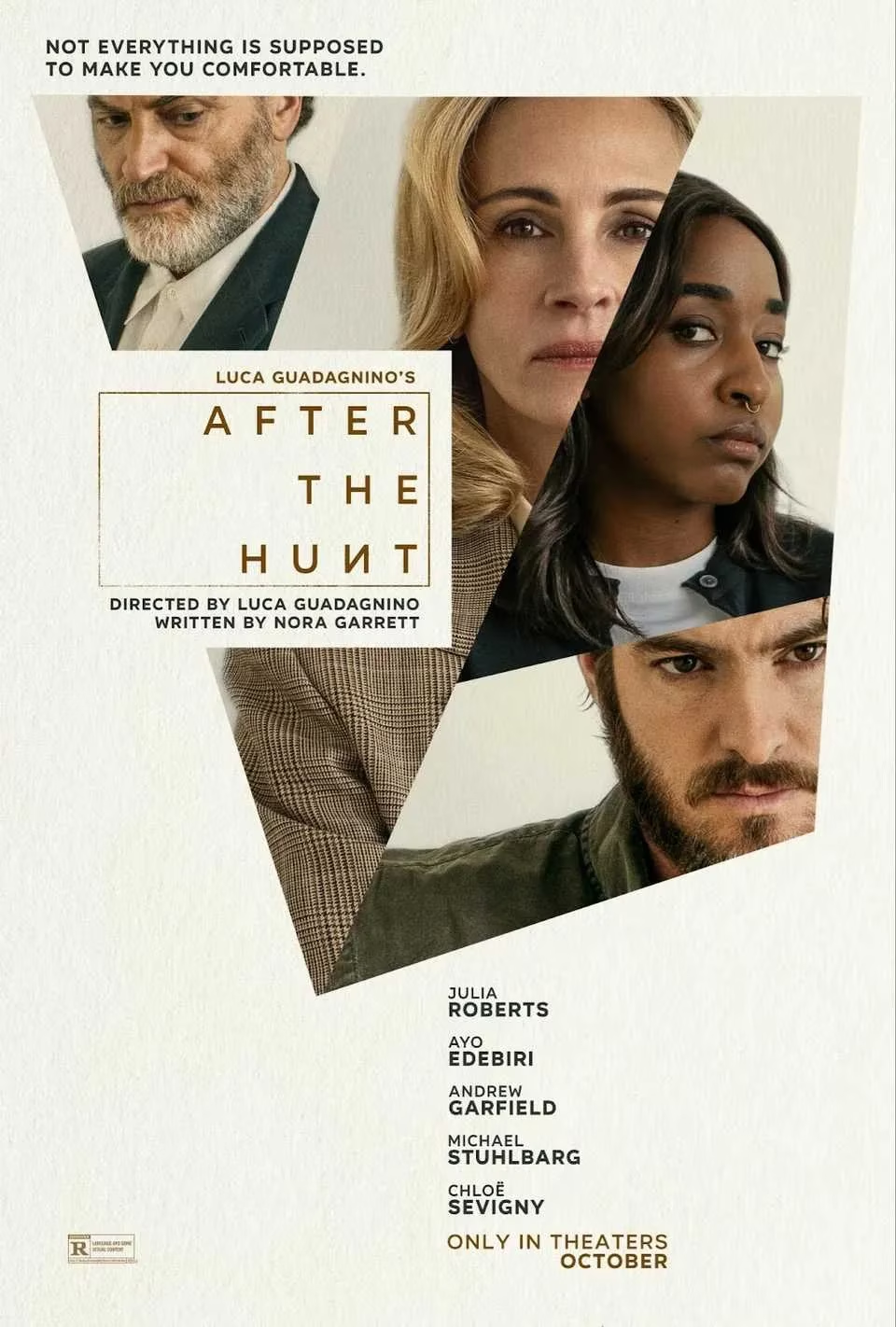
For all its flaws, After the Hunt is worth a watch precisely because it’s a conversation starter. You will not emerge with a tidy resolution, but you will have opinions—and in 2026, that’s the currency of streaming success. Is it a masterpiece? Hardly. But as a character study driven by generational friction and three stellar leads, it outshines many films that coast on safer narratives. Sometimes the movies that divide us the most are the ones we can’t stop watching.
If you have a spare evening and want to see what all the noise is about, fire it up on Prime Video. Then, if you’re like me, you’ll end up arguing about it until 2 a.m. on your favorite gaming comms channel. That alone makes After the Hunt a phenomenon that transcends its “rotten” label.
This discussion is informed by Eurogamer, whose reporting on gaming culture and community discourse helps explain why polarizing releases like After the Hunt can explode on streaming: when a story is built for argument—ambiguous motives, messy power dynamics, no clean verdict—it spreads the same way hotly debated patches or controversial narratives do, via group chats, Discords, and “you have to see this” word-of-mouth.