
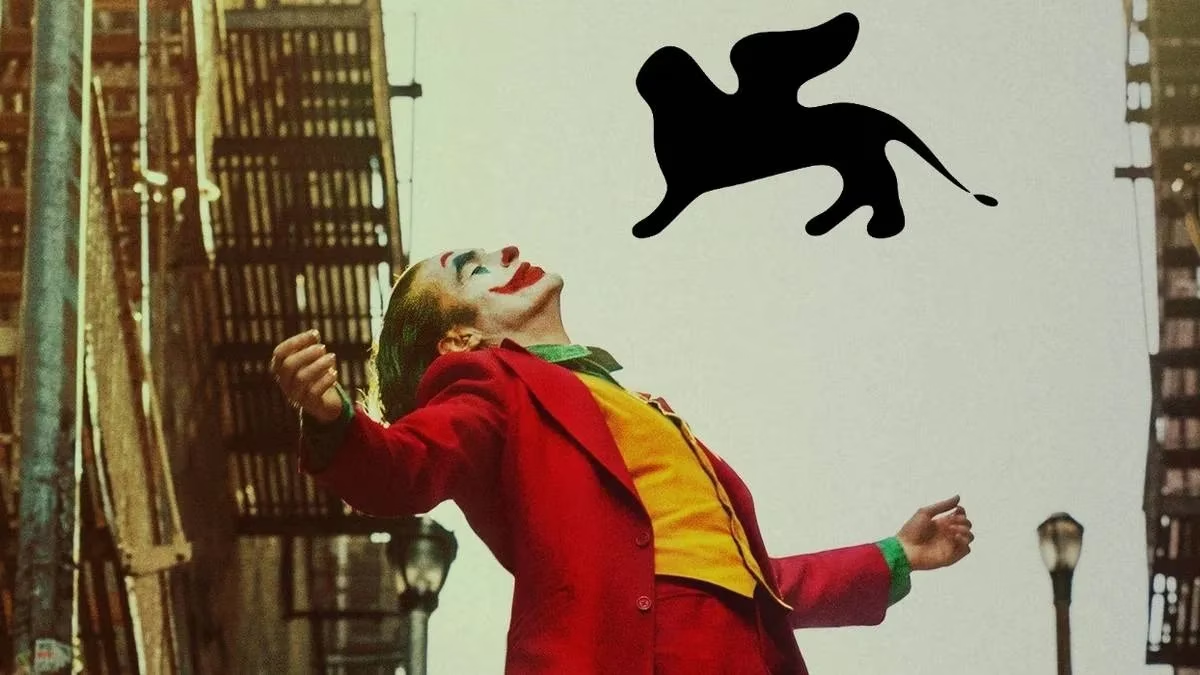
I still remember the buzz in the air when news broke that Todd Phillips' Joker had clinched the Golden Lion at the Venice Film Festival. As someone who's followed comic book adaptations for years, this felt like watching a caterpillar unexpectedly transform into a monarch butterfly—not just evolving, but completely redefining what was possible for the genre. The victory wasn't just a win; it was a seismic shift that sent ripples through the entire film industry.
An Unprecedented Victory
What made this achievement so extraordinary was its groundbreaking nature. Joker became the first comic book movie ever to win the prestigious Golden Lion, breaking through barriers that many thought were permanent. The film's reception at Venice was nothing short of electrifying, with critics using words like "masterpiece" to describe what they'd witnessed. It was like watching a street performer suddenly command the stage at the Metropolitan Opera—completely unexpected yet undeniably brilliant.
Phillips' acceptance speech captured the moment perfectly when he thanked Warner Bros. and DC for "stepping out of their comfort zone and taking such a bold swing." But his most poignant words were reserved for Joaquin Phoenix: "There is no movie without Joaquin Phoenix. Joaquin is the fiercest and brightest and most open-minded lion I know."
🎭 Phoenix's Transformative Performance
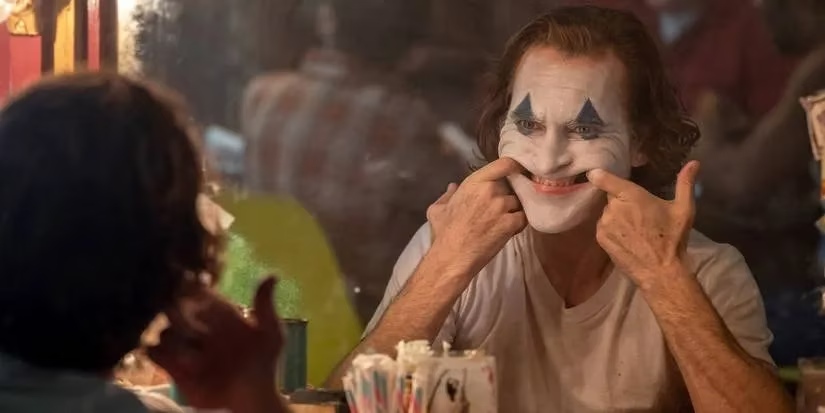
Phoenix's portrayal of Arthur Fleck became the film's beating heart. His performance was described as both transformative and terrifying, a delicate balancing act that few actors could achieve. Watching him evolve from a failed stand-up comedian into the Clown Prince of Crime felt like observing a master watchmaker assemble a timepiece with nothing but intuition—every movement precise, every emotion calibrated to perfection.
What made Phoenix's achievement even more remarkable was his track record:
-
Three previous Oscar nominations already under his belt
-
A reputation for completely immersing himself in roles
-
The physical and emotional transformation he underwent for the character
The Venice victory immediately positioned him as a front-runner for Best Actor honors, and rightly so.
📊 Prestigious Company
Joker found itself in elite company among Golden Lion winners. Recent recipients included:
| Film | Director | Subsequent Oscar Success |
|---|---|---|
| Roma | Alfonso Cuarón | Best Director |
| The Shape of Water | Guillermo del Toro | Best Picture & Director |
| Brokeback Mountain | Ang Lee | Multiple Oscar wins |
| The Wrestler | Darren Aronofsky | Oscar nominations |
This historical context made Joker's victory even more significant. The film wasn't just winning an award; it was joining a legacy of cinematic excellence that often translated into Oscar glory.
⚡ The Controversy Factor
Interestingly, Joker wasn't even the most controversial winner at that year's festival. That distinction went to An Officer and a Spy, which took the Silver Lion Grand Jury Prize despite the controversy surrounding director Roman Polanski. The juxtaposition was striking—both films pushing boundaries, but in very different ways.
Joker's controversy stemmed from its unflinching portrayal of mental health and societal decay, themes that sparked intense debate among critics and audiences alike. Yet, as often happens with provocative art, the controversy only fueled public interest.
🎬 Awards Season Momentum
The Golden Lion victory gave Joker tremendous momentum heading into awards season. However, as I reflected on previous front-runners, I remembered how A Star Is Born had dominated early conversations the previous year only to ultimately fall short. Joker faced similar challenges:
🔥 Strengths:
-
Critical acclaim from prestigious festival
-
Groundbreaking genre achievement
-
powerhouse lead performance
💧 Potential Obstacles:
-
Genre bias among more traditional voters
-
Divergent critical opinions
-
The unpredictable nature of awards season
🌟 Lasting Impact
Looking back from 2025, Joker's Venice victory stands as a watershed moment for comic book cinema. It proved that superhero films could be more than entertainment—they could be art. The victory was like watching a brilliant student not only ace the exam but rewrite the entire curriculum in the process.
The film's success opened doors for more daring adaptations and proved that audiences were ready for complex, challenging material within the genre. Phoenix's performance remains a benchmark for character immersion, and the film's cultural impact continues to be studied and discussed.
What made Joker's achievement so enduring wasn't just the award itself, but the conversation it started about what comic book movies could aspire to be. It reminded us that even within established genres, there's always room for innovation, artistry, and unexpected brilliance.